
Palilula market began as a spontaneous market in 1949, the kind that grows by itself wherever farmers with something to sell meet townspeople with little to eat. The name of the district is older and less certain. Folk etymology takes it from pali lulu, "light your pipe", and ties it to smoking bans inside the town under the Ottomans and later under Prince Miloš Obrenović; the chroniclers prefer the brickyards along the Bulbulder, a creek whose name comes from the Turkish for nightingale valley and which ran down to the Danube until the city put it underground into the sewers in the 1930s; the smoke vents of the kilns were called lule, pipes. Either way the name was about smoke, which suits a place where meat is now grilled. The old market closed in November 2017, and its vendors spent the next two years on the pavement of the street outside while the city missed one opening date after another. The new building opened on 30 December 2019, over 12,500 square metres on four levels, two of them underground parking. The architects were pointed at La Boqueria in Barcelona, and Siniša Mali, then mayor, promised "the most modern market in this part of Europe". Promises of that kind are best left unchecked. What the building did take from Barcelona is the useful part: you can buy food and eat it under the same roof, often at the counter of the person who sold it to you. I know of no other market in Belgrade where that is the arrangement rather than a coffee kiosk in a corner.
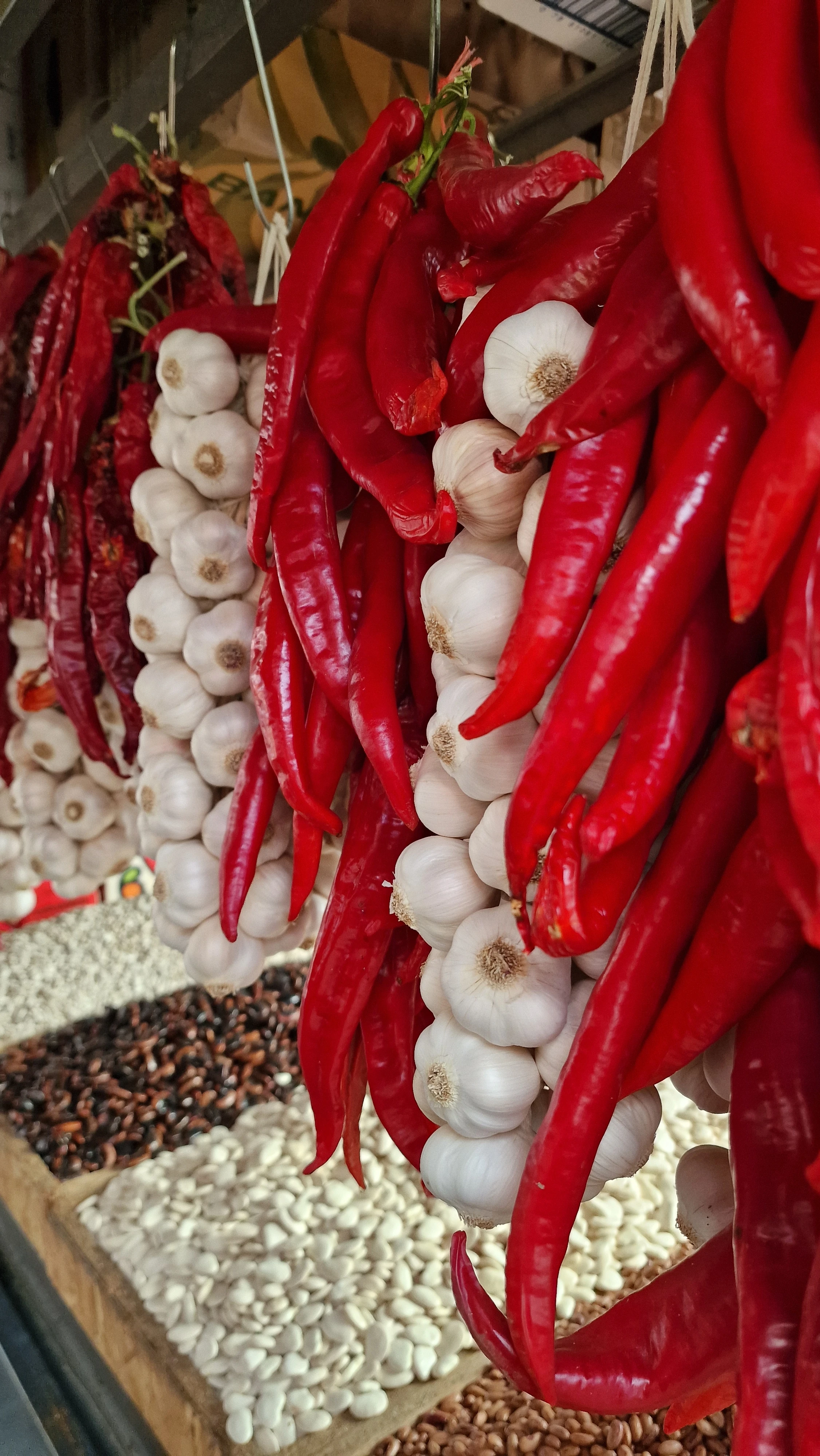
On a Saturday in the middle of September my fiancée and I went to Palilula to buy farmers' produce, which we would always rather do at a market than order from a supermarket, and to eat some meat. Autumn announces itself on Belgrade markets with braids of dried red peppers and garlic hung over the stalls, and they were up. Lunch was at Mesara Morava.
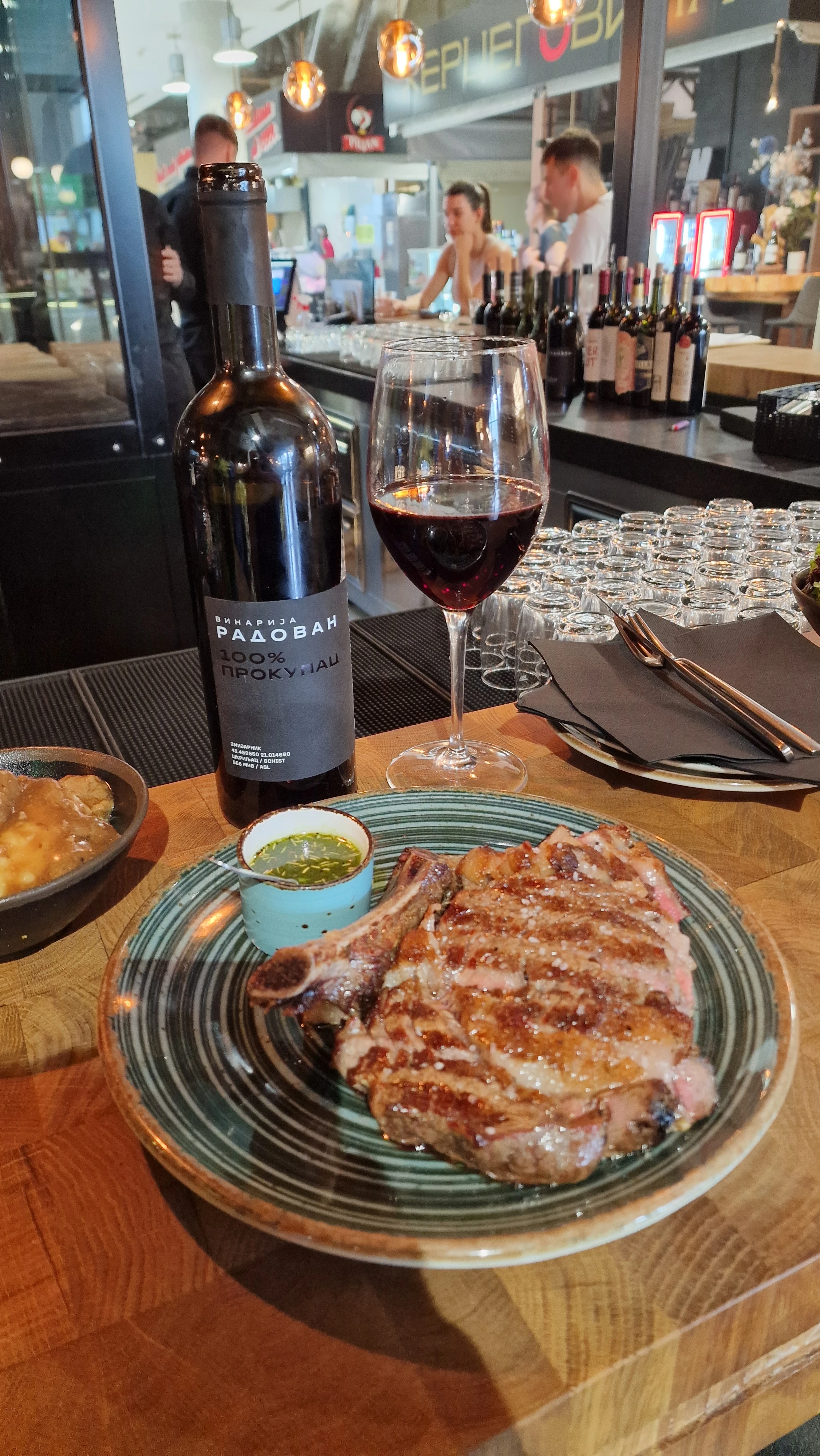
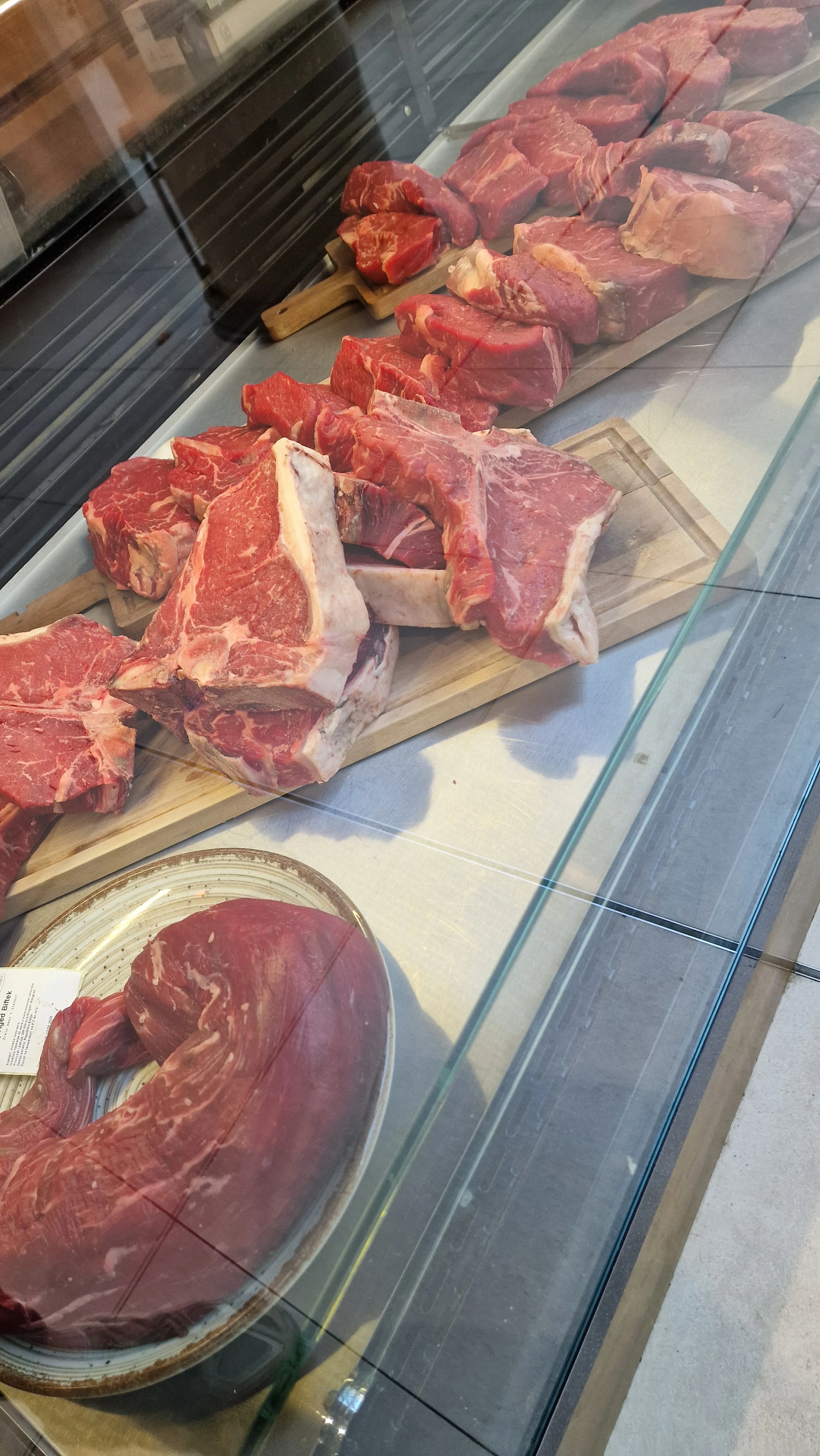
Mesara is Serbian for a butcher's shop, and Morava is the kind of family firm Belgrade has fewer of every decade. Dragan Mijajlović opened it in 1984 at the old market, in premises that had belonged to Morava Svetozarevo, a company from the town on the Great Morava that was called Svetozarevo from 1946 to 1992 and is Jagodina again today. He kept the sign. In 2005, when he fell ill, his three sons took over; Branko, the eldest and the owner today, has said that none of them planned to become butchers. They learned the foreign cuts partly from an American cookbook a friend brought back, and the caricature of a bull that serves as their logo since 2007 was drawn by one of their customers. The demolition that put the market's vendors on the pavement did Morava a favour: the shop moved to street level on Ilije Garašanina, where the whole neighbourhood could see it. In November 2021, after a two-year delay caused by the pandemic, the brothers opened what they call a Meat Concept Store inside the new market, a butcher's counter and a steak bar in one. The format is the point. You stand at the glass as you would at any butcher's, choose a piece, are told where it came from and how long it has aged, and instead of wrapping it in paper they take it to the grill. Mine was a bone-in ribeye.
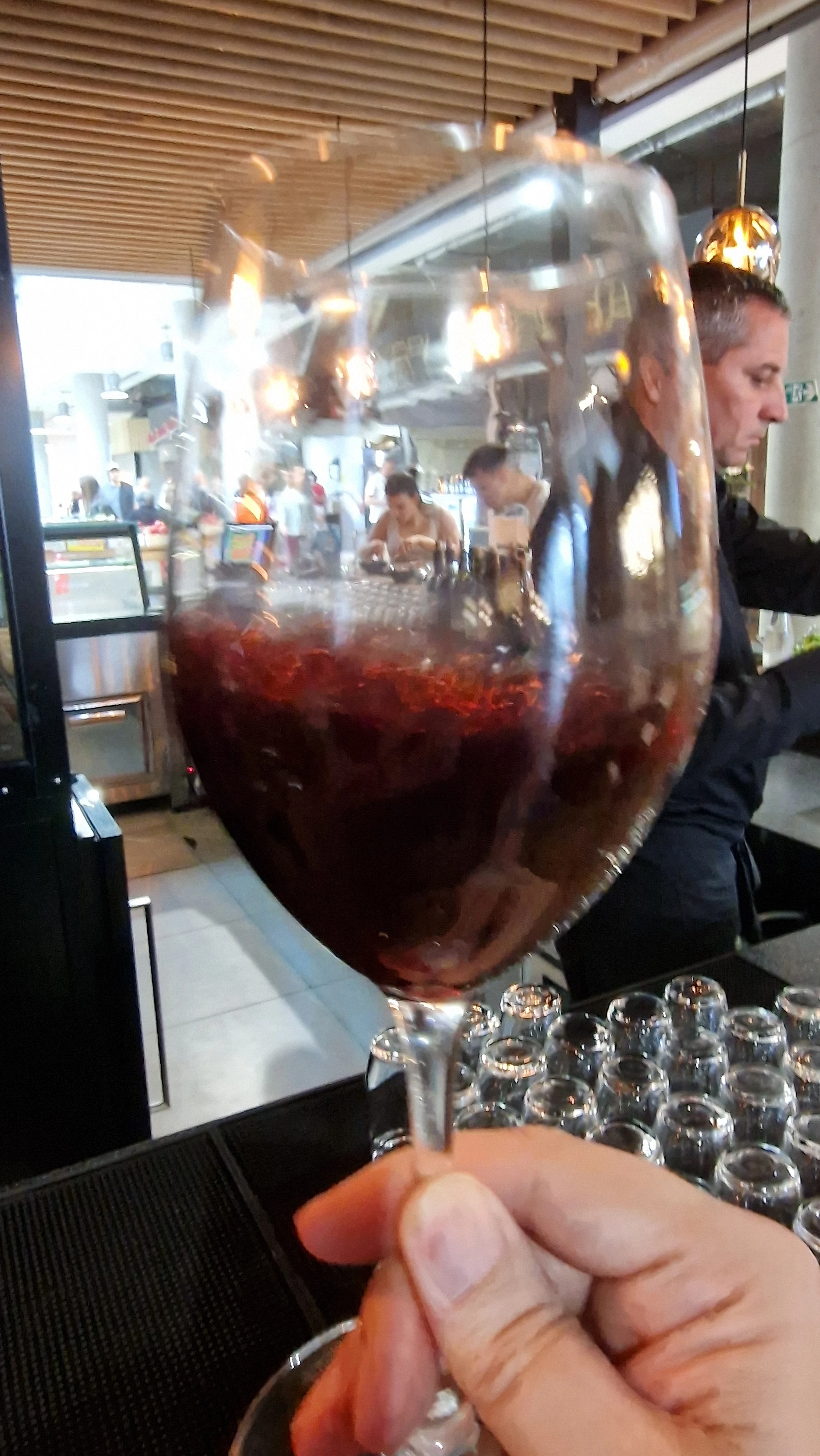
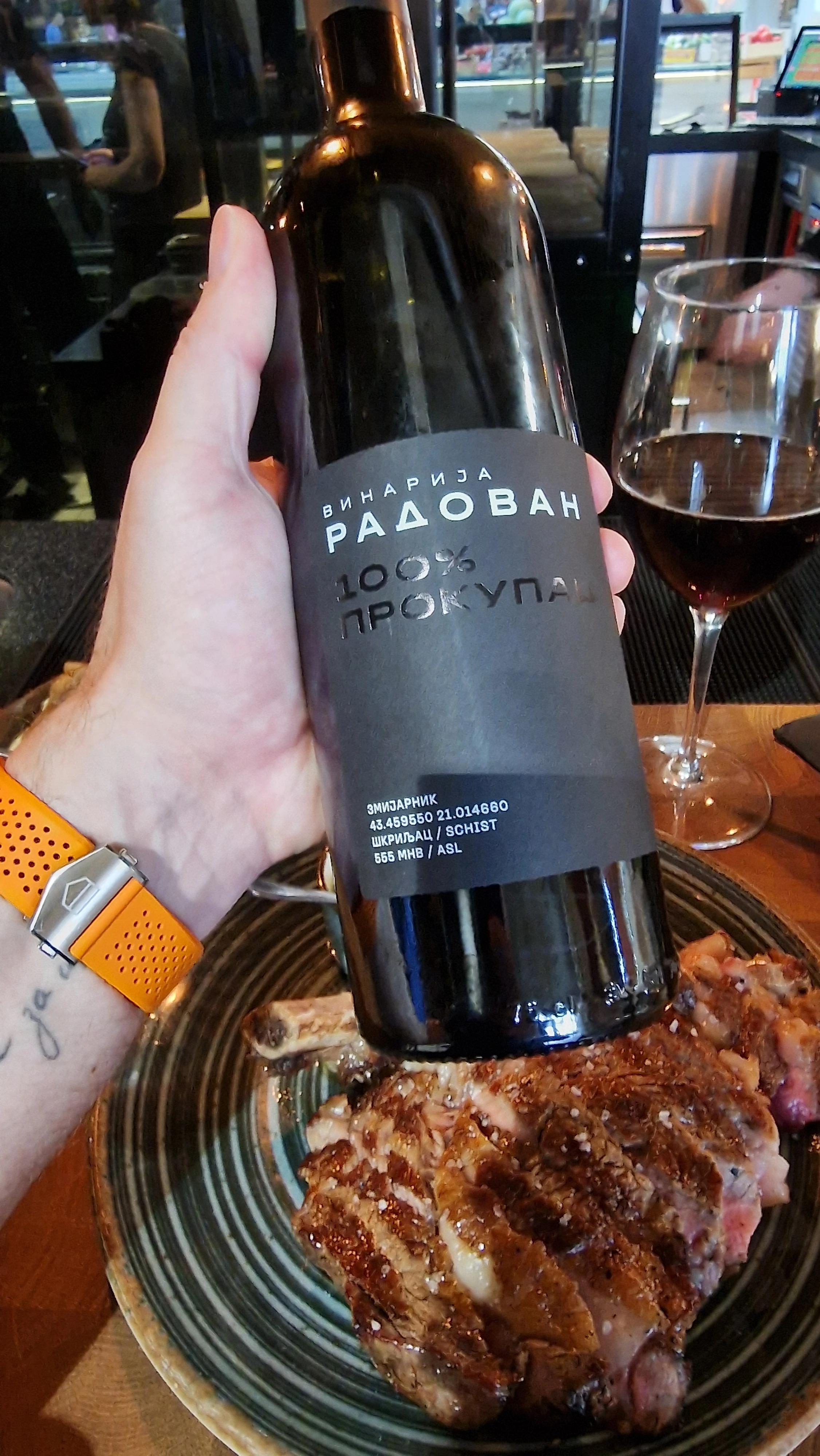
The wine was the waiter's suggestion, and I agreed before he finished the sentence. I like a good Prokupac, but I had never tasted anything from Radovan Đorđević, under either of his names. The names need explaining. Đorđević studied food technology at the Faculty of Agriculture in Zemun, came home to Starci, a village above Aleksandrovac, and in 2011 founded a winery on about a hectare of family vines. He wanted to give it his family name, but two wineries already used it, so he settled on Čokot, the Serbian word for a single vine. His customers ignored the decision. Some eight or nine years ago he found his own wine on the list of a restaurant in Zemun as "Vinarija Radovan 100% Prokupac", and that is how people kept asking for it. In September 2025 he gave in and made it official. The new labels are colour-coded, colour for rare wines, black for the premium range, white for the Experiment line now being phased out, and the front label of the black range prints the parcel name, its GPS coordinates, the altitude and the soil, which is probably a first in Serbia. So at one counter I had a butcher named after a company that no longer exists and a winery named by the people who drink its wine.
Prokupac takes its name from Prokuplje, a town in the Toplica valley in the south, and goes by a string of local synonyms, Crnka and Skopsko crno among them. For centuries it was the most widely planted red grape of central and southern Serbia; when much of the country replanted with international varieties, the growers of Župa were among those who kept it. In the vineyard it is generous to a fault. Left alone it crops heavily, tolerates both heat and frost, and builds sugar fast, and that last quality is what makes it demanding. Sugar runs ahead of the tannins: pick on sugar and the tannins come in green and bitter, wait for the tannins and the alcohol climbs. Đorđević says the harvest in Župa now comes ten to twenty days earlier than it used to, often with unripe tannins. Serbian writers have compared the result variously to Pinot Noir crossed with Cabernet Franc, to Blaufränkisch and to Kadarka, which together describe a red of medium weight, high acidity and more cherry than plum.
The terroir begins with the word. Župa is an old Slavic term for a district, and this one is a basin around Aleksandrovac in the foothills of the Kopaonik range. The label locates the vineyard more precisely than any appellation would: Zmijarnik, from zmija, snake, at 43.459550 N, 21.014660 E, 555 metres above sea level, on schist. Schist is rock that splits into layers, so roots work their way down the cracks, water drains fast and the vine gets little to spare. For a variety that will overcrop if allowed, poor ground is the cheapest form of discipline. Altitude does the rest. At 555 metres this is a high site for Serbian red wine, and cooler nights hold on to the acidity that a warm continental summer would otherwise burn off. Nobody irrigates in Župa, so the vine lives on what the rock lets through.
2023 tested all of it. In Đorđević's own account, given to the Italian observatory OBCT the following year, the season was humid and rainy, downy and powdery mildew, the two fungal diseases that thrive in wet leaves and bunches, reached more than half the vineyards of the region, and the harvest was catastrophic. A free-draining slope sheds rain faster than the valley floor, but a year like that still means fewer bunches and a hard selection. His Prokupac came in during the first week of October, a week before his Župljanka. The label shows 14.0%, half a point below the 14.5% of the 2019, and the producer describes the wine as high in acid. That is what a wet summer tends to do to a grape that otherwise ripens sugar too easily: it slows it down.
The élevage is where the expected turn did not happen. A winemaker with a difficult vintage usually reaches for more extraction and more oak to give the wine weight. Đorđević chose 2023 as the first year of a lighter style and did the opposite. The earlier vintages had eight days on the skins and 18 to 24 months in Serbian oak. The 2023 was fermented on wild yeasts from whole berries, which extracts more gently than crushing, kept on the skins for a shorter time, pressed lightly and sent straight into untoasted French barrels from Radoux, the cooperage at Jonzac in Cognac country, for twelve months. Toasting a barrel over fire is what gives oak its vanilla, coffee and smoke; an untoasted barrel leaves those out and keeps its other job, the slow exchange of oxygen through the staves that softens tannin. The wine was bottled unfined and unfiltered, and the back label says so. The result is less tannin to begin with, and what there is has been polished rather than covered up.
Ribeye is the most marbled of the classic steak cuts, and fat is the first thing a red wine has to deal with. Acidity cuts it, which is why a high-acid Prokupac makes more sense here than a soft, heavy red. Tannin binds to protein, so the meat softens the wine and the wine clears the fat from the palate; fine-grained tannin is enough for beef without turning the second glass dry. The bone slows the cooking near it, which leaves part of the steak rarer than the rest, and the wine had something to do in both places. The chimichurri, parsley, garlic, oil and vinegar, was on the plate too, and it was the one thing there the wine did not get on with. The problem is the vinegar. Its acetic acid is sharper and far more volatile than the tartaric and malic acids that give wine its freshness, so it reaches the nose and the palate first and sets the scale: after a forkful dressed with it, even a high-acid Prokupac tastes thin and flat, its fruit pushed back. Acetic acid is also what a winemaker fights in the cellar, where it counts as a fault, so a sauce built on it brings to the table exactly what the wine was made to keep out. On the steak the sauce does its job; with the wine it is better kept apart. The mash with porcini went to the earthy, tobacco-leaf side of the wine.
A butcher still named after a firm from Svetozarevo, a winery renamed by its customers, a steak picked out at the counter like any other groceries. At Palilula the customer names everything, lunch included.
Pairs well with