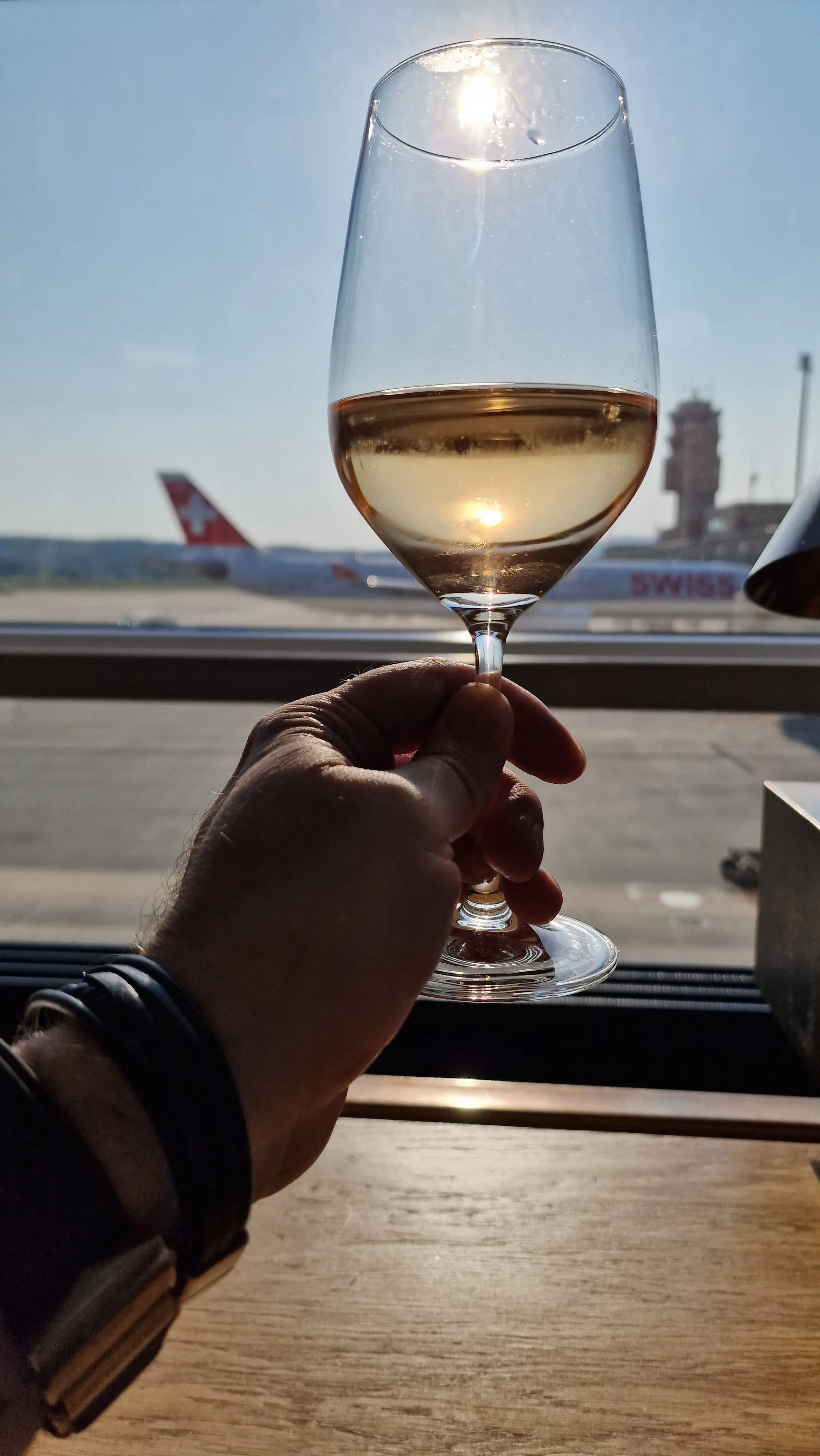
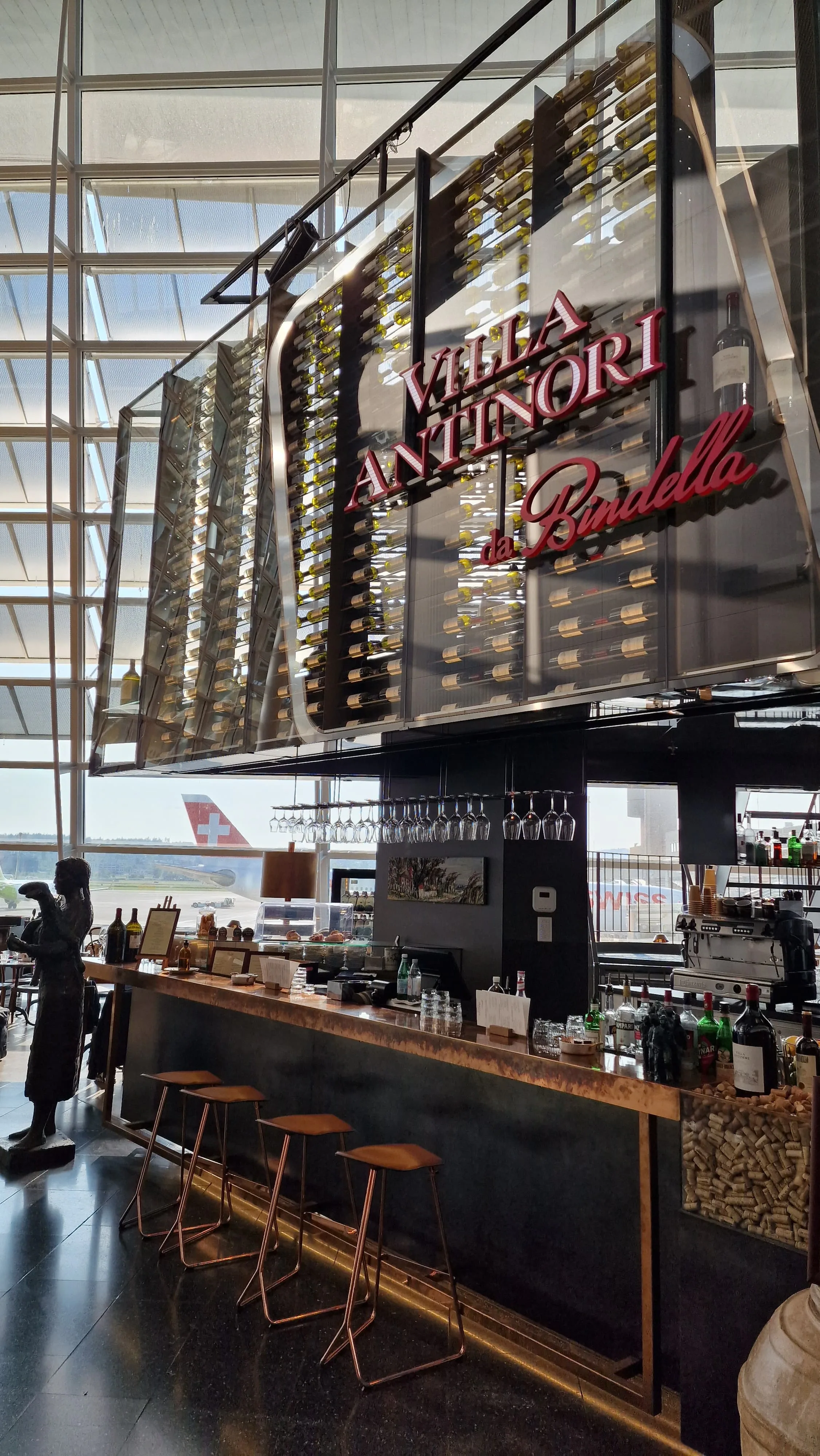

I had passed the Villa Antinori da Bindella bar at Zurich Airport on several previous connections, usually outside of operating hours. The name is heavy with Tuscan wine history, and seeing it floating above a concourse with SWISS tails lined up on the tarmac outside always felt slightly surreal. On this particular trip, a long daytime layover finally aligned with their opening hours. I sat down, decided what I was going to eat, and looked at what was available by the glass. Given the name on the establishment, the producer had to be Antinori. I was sitting at a bar branded by one of Italy's greatest red wine dynasties, but the wine I selected to match the food was a 2022 Villa Antinori Pinot Bianco.
Producing Pinot Bianco in central Italy requires a bit of regulatory maneuvering — specifically, the Toscana IGT classification, the flexible geographical designation that originally gave Tuscan winemakers the legal cover to step outside rigid historical rules and experiment with non-indigenous varieties. The grape itself — Pinot Blanc in France, Weissburgunder in the German-speaking world — is a point genetic mutation of Pinot Noir that simply lost the ability to synthesize anthocyanins, the compounds responsible for red pigment. For centuries, growers routinely confused it with Chardonnay in the field, though agronomically, it is far more demanding. Plant it somewhere too warm, and it quickly drops its acidity, yielding a broad, flabby, and forgettable white wine. When grown under the right constraints, however, it delivers a precise structural profile: bone-dry, with medium-plus acidity, a rounded mid-palate, and a savory mineral finish rather than explosive fruit.
The Antinori family has been making wine in Tuscany since 1385 — a lineage built almost entirely on red: Sangiovese, the Super Tuscan blends, Tignanello. White wine was a peripheral concern for most of that history. The pivot to Monteloro was deliberate and research-driven: in 2002, following years of pedoclimatic studies to assess the area's potential, Antinori committed the estate specifically to two non-Tuscan white varieties — Riesling and Pinot Bianco. The site had history long before Antinori arrived — the hills behind Fiesole once housed the summer residences of Florentine aristocratic families, including Beatrice Portinari and Dante Alighieri, whose manor houses remain on the property today. That the same land, seven centuries later, would be the place where one of Tuscany's great red wine dynasties quietly built its case for cool-climate whites is, at minimum, an interesting footnote. Monteloro was part of Piero Antinori's broader fifteen-year acquisition programme that ran from 1985 onward — a systematic expansion across Tuscany, driven by the conviction that specific terroirs, properly matched to the right varieties, could produce wines the classic appellations simply couldn't accommodate. The pedoclimatic studies that justified this specific acquisition focused entirely on soil and elevation. The vineyards at Monteloro sit at roughly 500 meters above sea level on the southern foothills of the Apennines, rooted in mineral-rich calcareous clay mixed with fine gravel. That elevation provides the necessary structural constraints for white grapes in a Mediterranean climate. In a vintage like 2022 — a growing season shaped by relentless heatwaves and severe drought across much of Italy — the altitude of the Fiesole hills and the resulting cool nights were the only mechanisms preventing the grapes from baking on the vine, allowing them to retain their natural acidity and aromatic precision.
In the cellar, the winemaking is strictly reductive — a method that rigorously shields the juice and wine from any exposure to oxygen. The parcels are vinified separately, and the wine sees only stainless steel during its élevage. There is no oak involved, no deliberate oxidation, and no malolactic conversion to soften the edges. The entire maturation regime is designed to protect the grape's fragile floral notes — orange blossom and lime — and to emphasize sapidity and tension over textural weight.
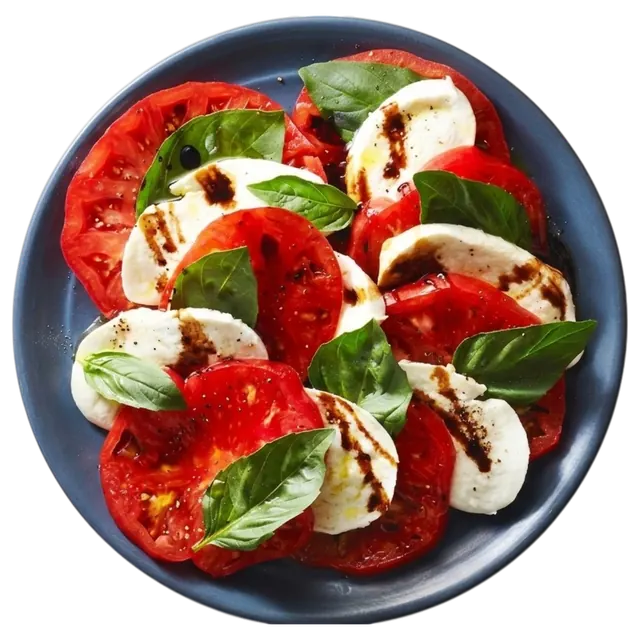
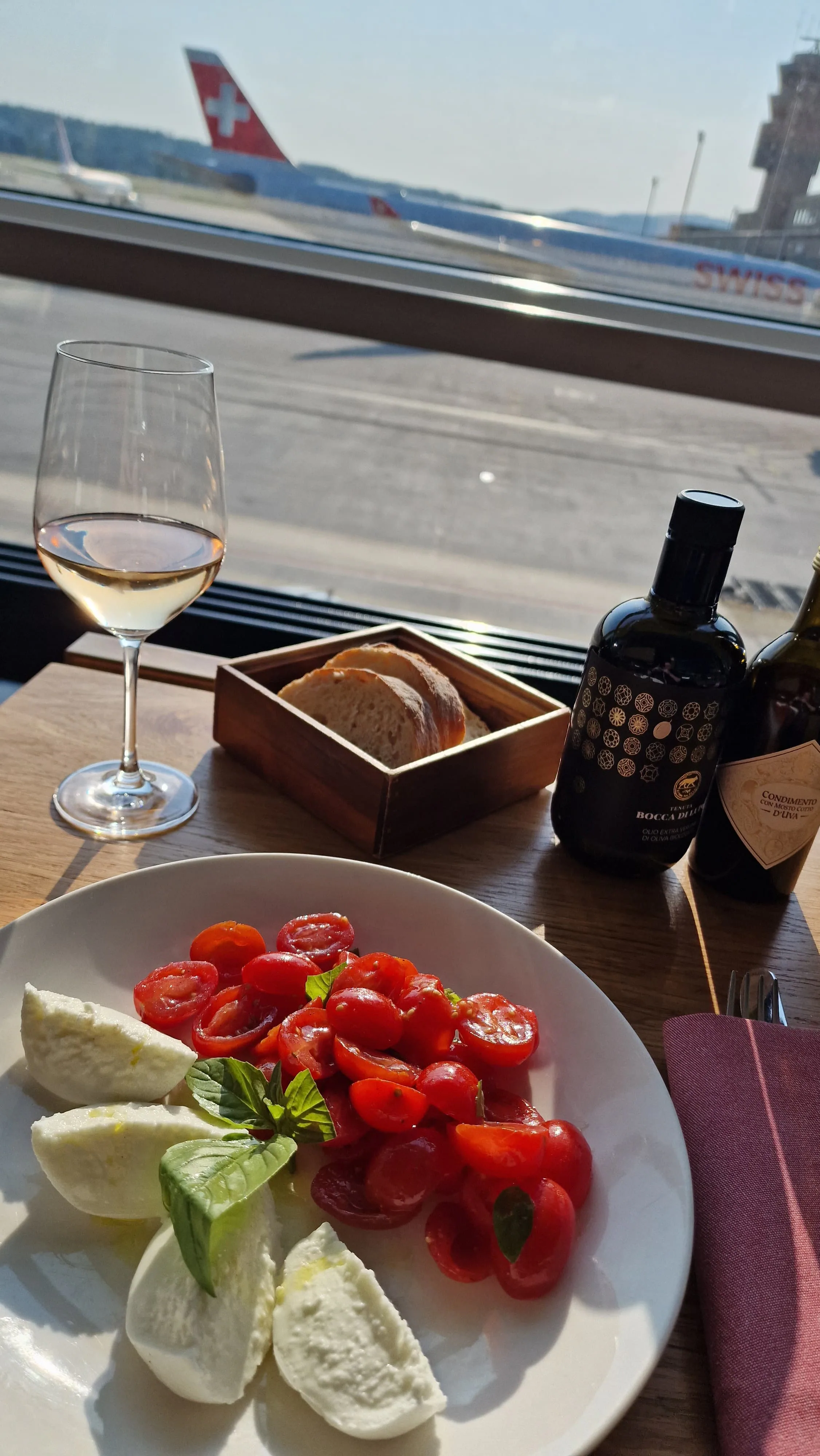
I paired it with the most straightforward thing on the menu: a simple Caprese salad. Tomatoes are notoriously hostile to wine; their high natural acidity and subtle umami will strip the fruit out of a soft wine and make a tannic red taste violently metallic. But the pairing locked in very well. The sharp acidity of the Pinot Bianco matched the tomatoes, while its dry, mineral finish cut cleanly through the rich, lactic fat of the mozzarella. It was an improvised airport lunch, elevated by simple chemistry. You do not expect to find terroir-driven precision in an airport transit lounge, a place engineered for volume, distraction, and moving people along. Yet, sitting there watching the tarmac, this Tuscan white did exactly what a good wine should do. It forced me to pay attention to the glass.
Pairs well with