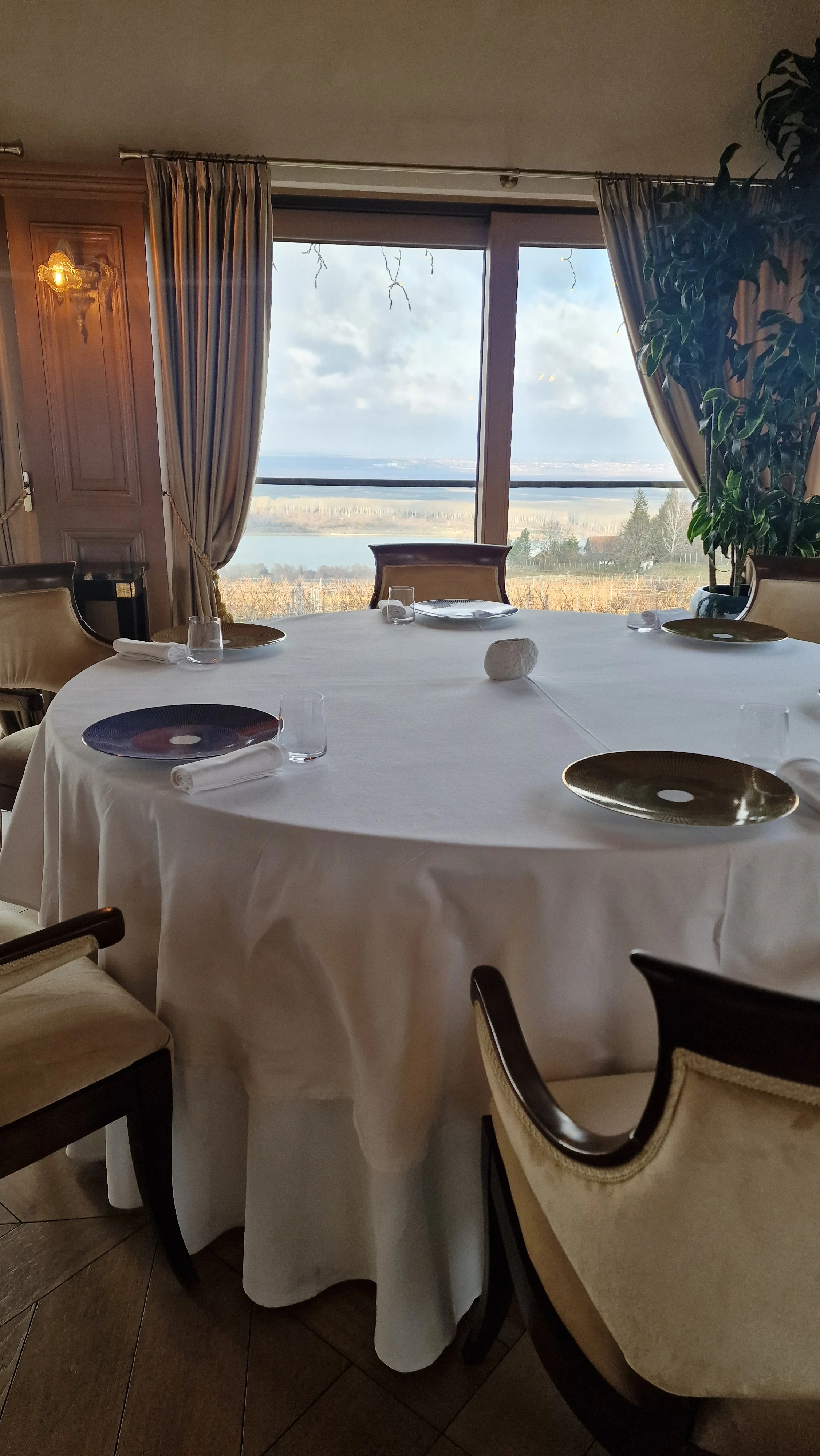
The drive out of Belgrade is barely an hour — sixty-odd kilometres northwest, the city thinning into the flat Srem plain until the road climbs the last shoulder of the Fruška Gora ridge and the Danube opens up below. We had come in winter, four of us, for a long lunch that ran into the afternoon at a corner table with the river filling the window and the estate's bare vines running down toward the water. The village underneath is Slankamen, and the name is the first thing worth knowing about the place: slan kamen — "salt stone," for the salty mineral springs that gave it its name, beside what the Romans had garrisoned as the river-fort of Acumincum. The ridge has been fought over accordingly. In 1691 the Habsburg commander Ludwig of Baden broke an Ottoman army on these slopes in the Battle of Slankamen, one of the bloodiest engagements of the Great Turkish War. There is a quiet joke in the fact that the fine-dining room now perched above is called Fleur de Sel — "flower of salt" — the rare, costly sea salt hand-raked from the surface of French coastal pans, perched on a hill that takes its own name from salt.
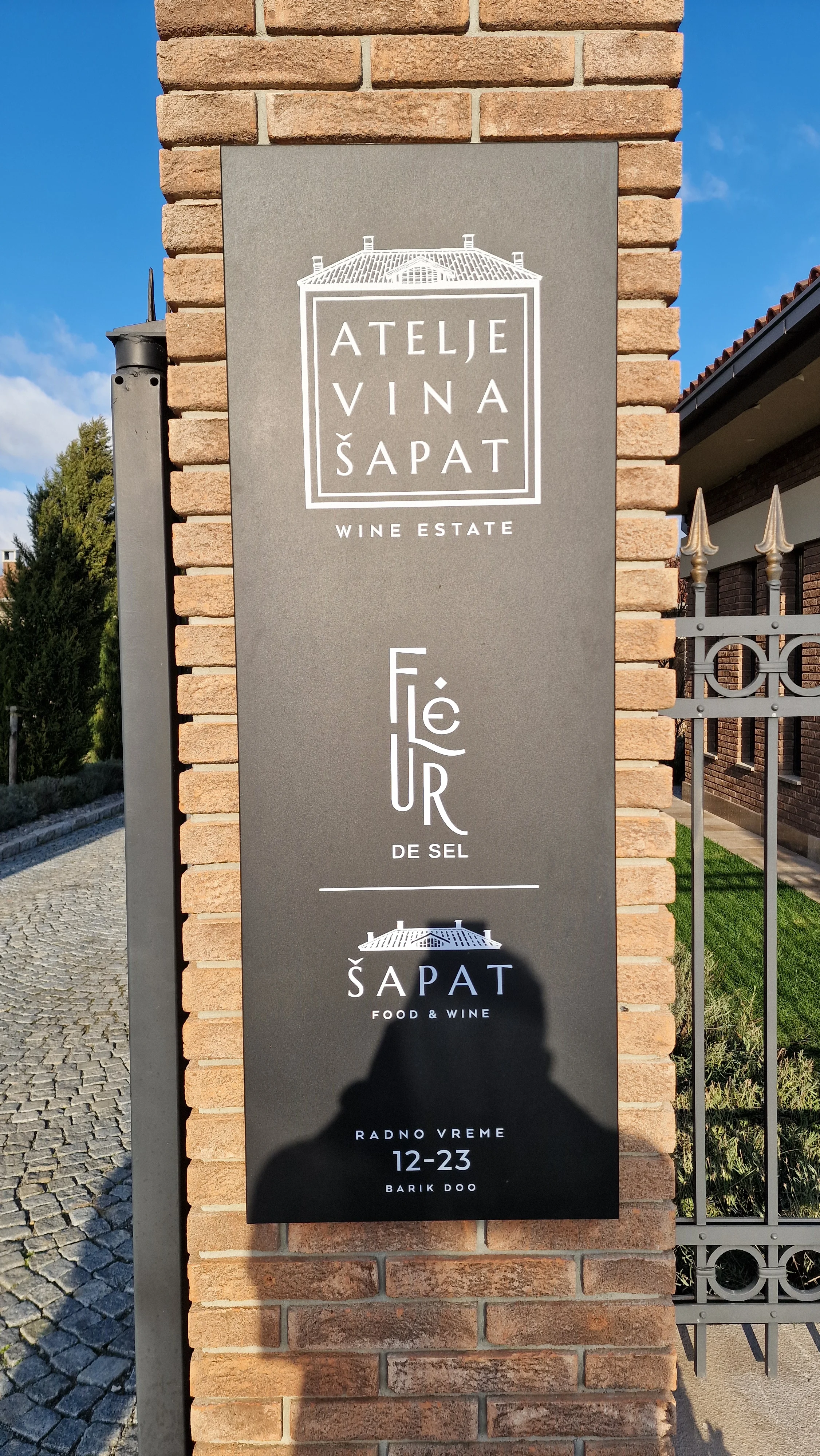
That room is the reason for the trip. Fleur de Sel, the restaurant inside the Šapat estate, took a Michelin star in the guide's first-ever Serbia selection — the country had no starred kitchens at all until that list landed. The cooking is run by Nikola Stojaković, a Serb who trained in serious Paris kitchens — Le Cinq at the George V, Le Pré Catelan — and then carried that grammar back to a hilltop in Vojvodina, a stranger career move than it sounds for a chef with that pedigree. The four of us each took a different six-course tasting menu, which set up the afternoon's only real problem. Two of us were behind the wheel for the trip home — and Serbia's drink-drive limit is 0.2‰, which is to say basically nothing. A wine pairing for each of us, a separate glass with every course, was out of the question. So instead of four sets of glasses we made a deliberately modest choice: one bottle, shared carefully across four very different menus, picked to be a generalist. We took the estate's own rosé.
It is 100% Blaufränkisch, the grape the locals call Frankovka. The name carries a medieval value judgment: "blau" is simply blue, but "fränkisch" — Frankish — was the bracket into which the old Austro-Hungarian world sorted its noble grape varieties, as against the lowly "Heunisch," or Hunnic, bulk vines. Blaufränkisch is an old Central European black variety, long established across the belt that runs through Srem, late-ripening and naturally very high in acidity, with bright sour-cherry aromatics. Those traits make it a firm, tannic proposition as a red but an ideal candidate for an early-picked, barely-coloured rosé, where the acidity becomes an asset and the tannin never gets the chance to develop.
The fruit comes from Slankamenački Vinogradi, the estate's own block at the eastern terminus of the Fruška Gora hills, on a southern slope at roughly 210–235 metres. The soil is the local signature: a thin cap of black chernozem over a deep bed of lime-rich loess — lean, free-draining ground that gives the vine no excuse to coast. That, together with the constant ventilation coming off the Danube and the cold nights of a continental Pannonian climate, is the machinery that keeps the acidity sharp in a grape that depends on it.
2023 was a warm year across the Pannonian basin, the kind of season that pushes sugar — and therefore alcohol — up quickly. For a fresh rosé the winemaker's main lever against that is the pick date, and here the grapes were harvested early, before ripeness ran away, which is why the finished wine sits at a restrained 12%. The élevage here is deliberately inert: minimal skin contact, fermentation and ageing in cold stainless steel, no oak anywhere. That regime is what keeps the wine pale and salmon-toned and pushes the red fruit and acidity forward rather than burying them under structure.
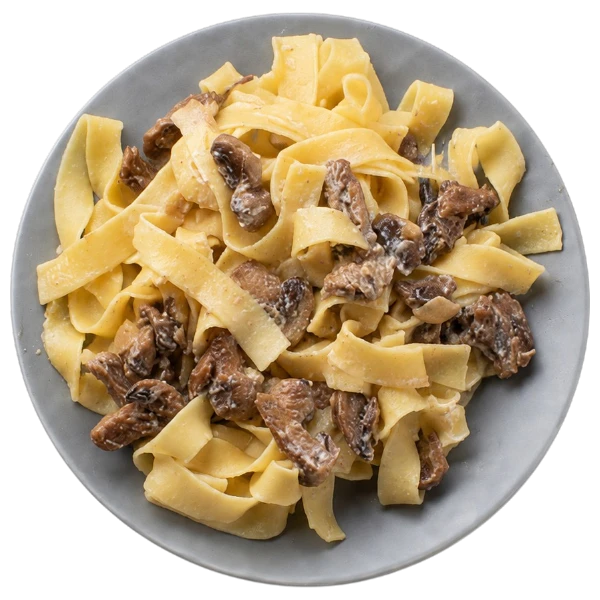
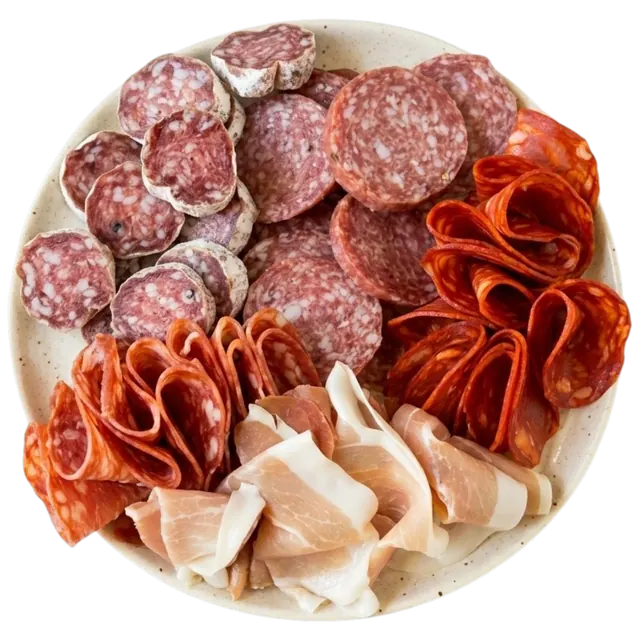
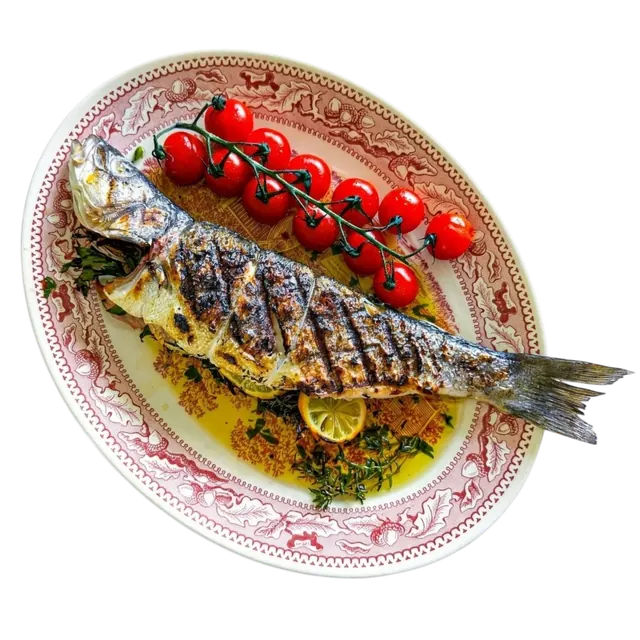
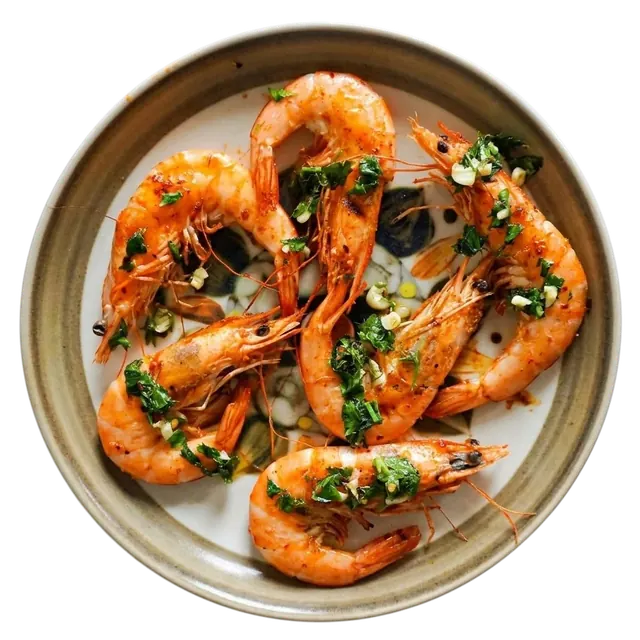
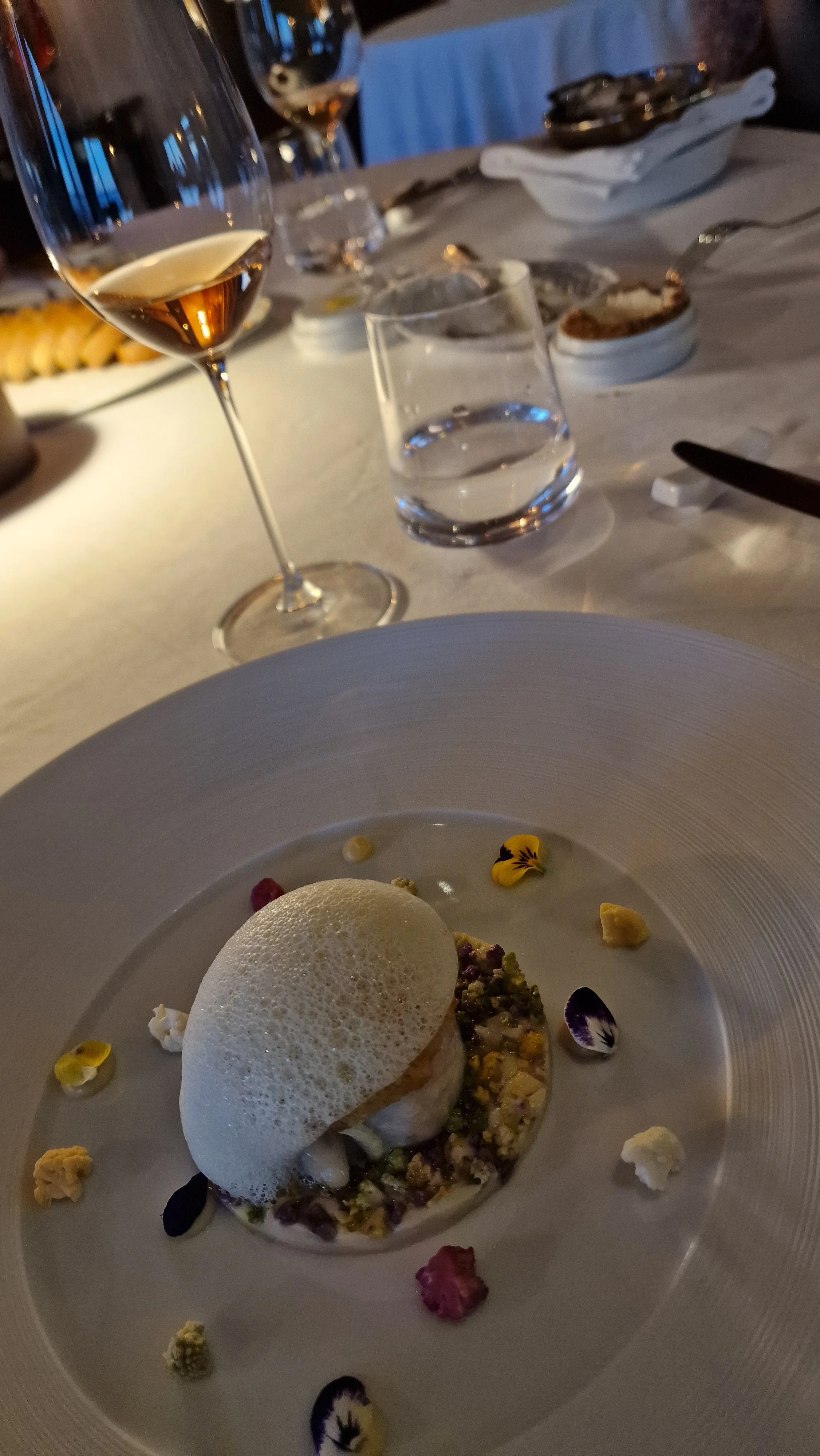
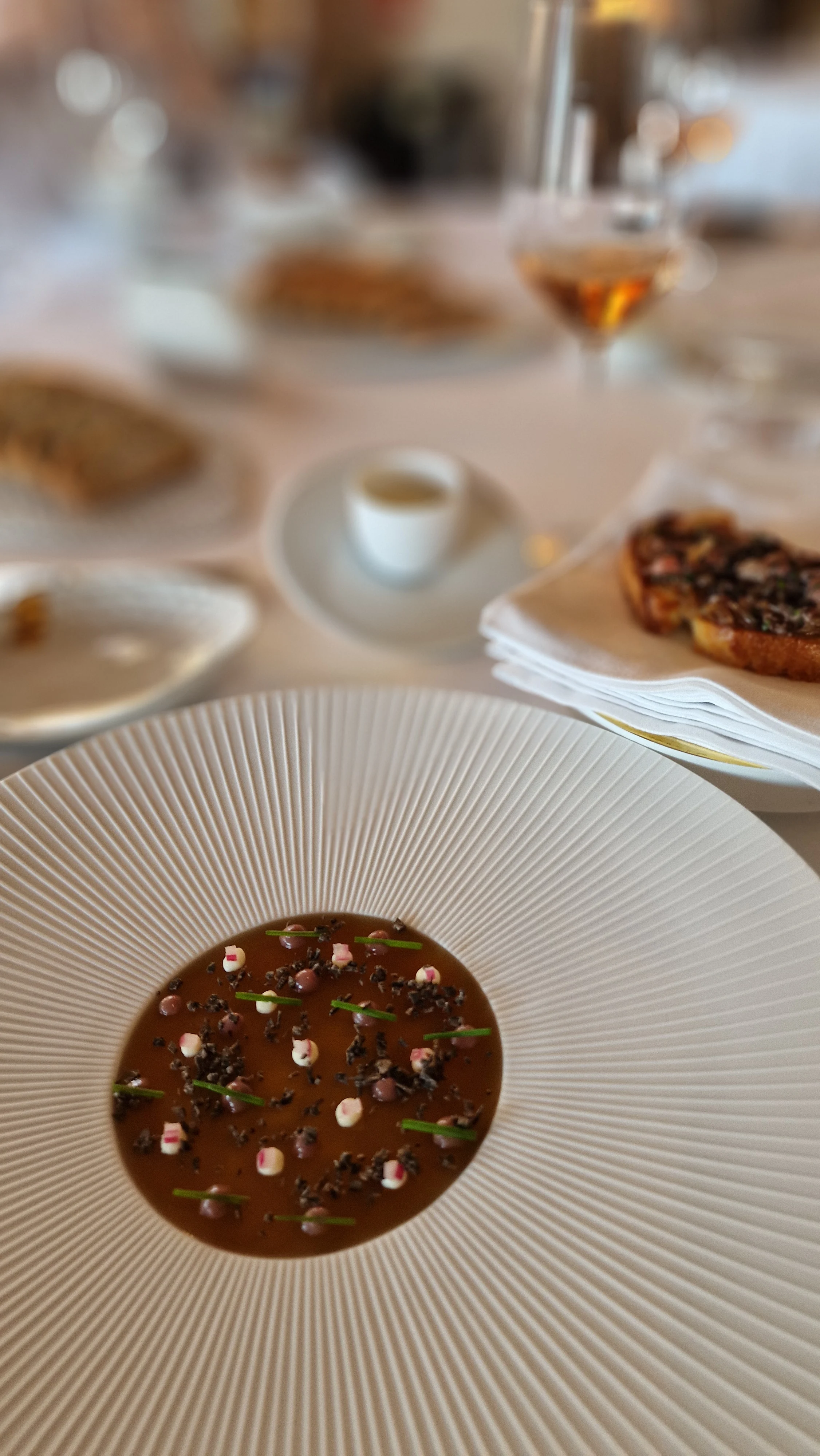
As a single wine asked to cover four different menus, a generalist was exactly the brief — and the menus were all rooted in local Vojvodina and Serbian produce, the estate's home advantage. One traced Serbian culinary heritage, another the estate's own farm and garden; mine was Od Dunava do Jadrana — “From the Danube to the Adriatic” — six courses walking from freshwater Danube fish out toward the seafood of the coast. The plates on it ran delicate and technical — a fillet of white fish capped with an airy savoury foam and scattered with edible pansies; a clear amber consommé strewn with chive batons, dots of purée and a grating of black truffle, with a truffle-laden toast alongside. A heavier or oaked wine would have flattened the foam and fought the truffle. The rosé's medium-plus acidity and red-fruit lift did the opposite — cutting through the fat, resetting the palate between very different courses, and staying light enough never to talk over them.
Pairs well with