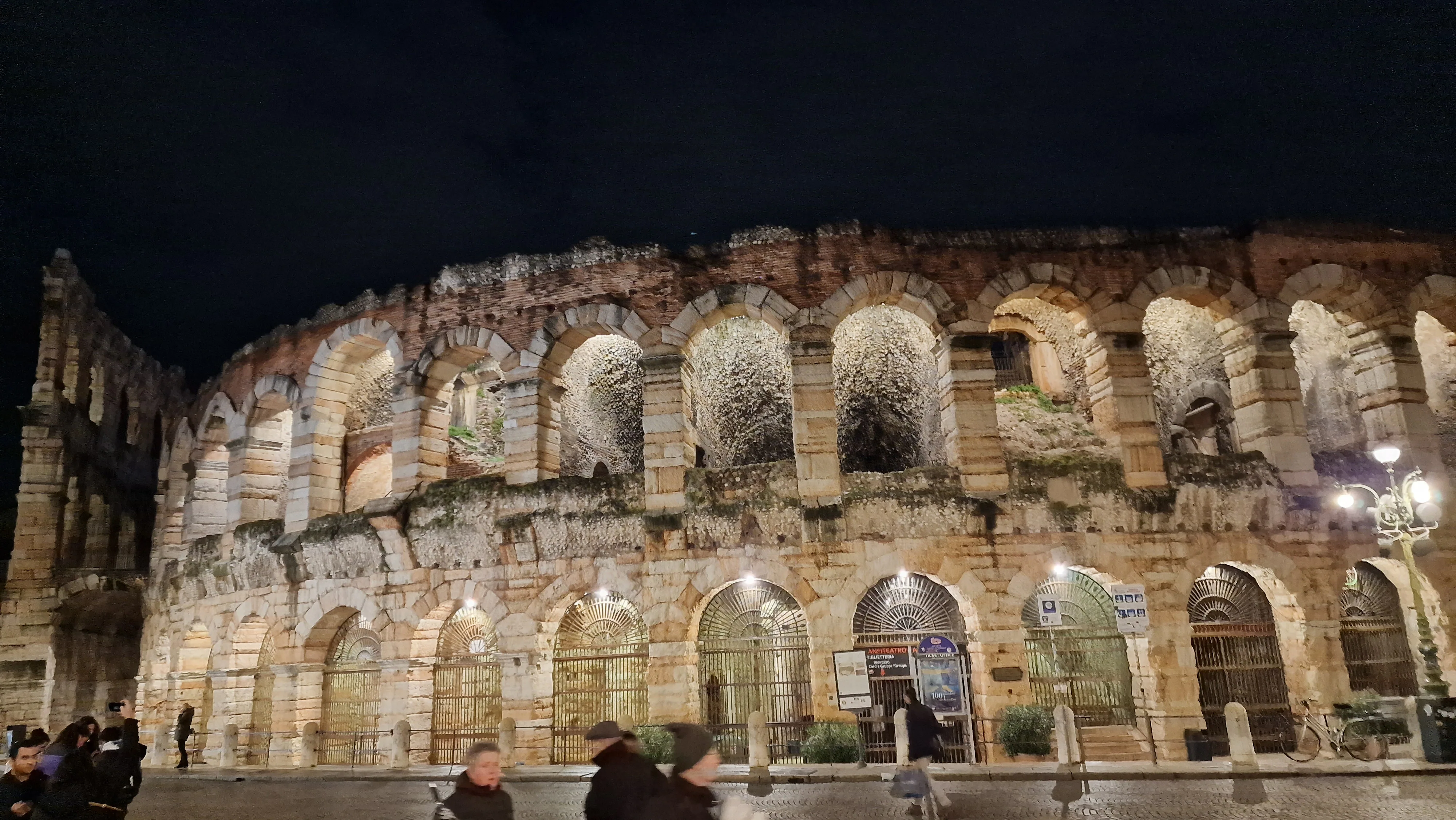
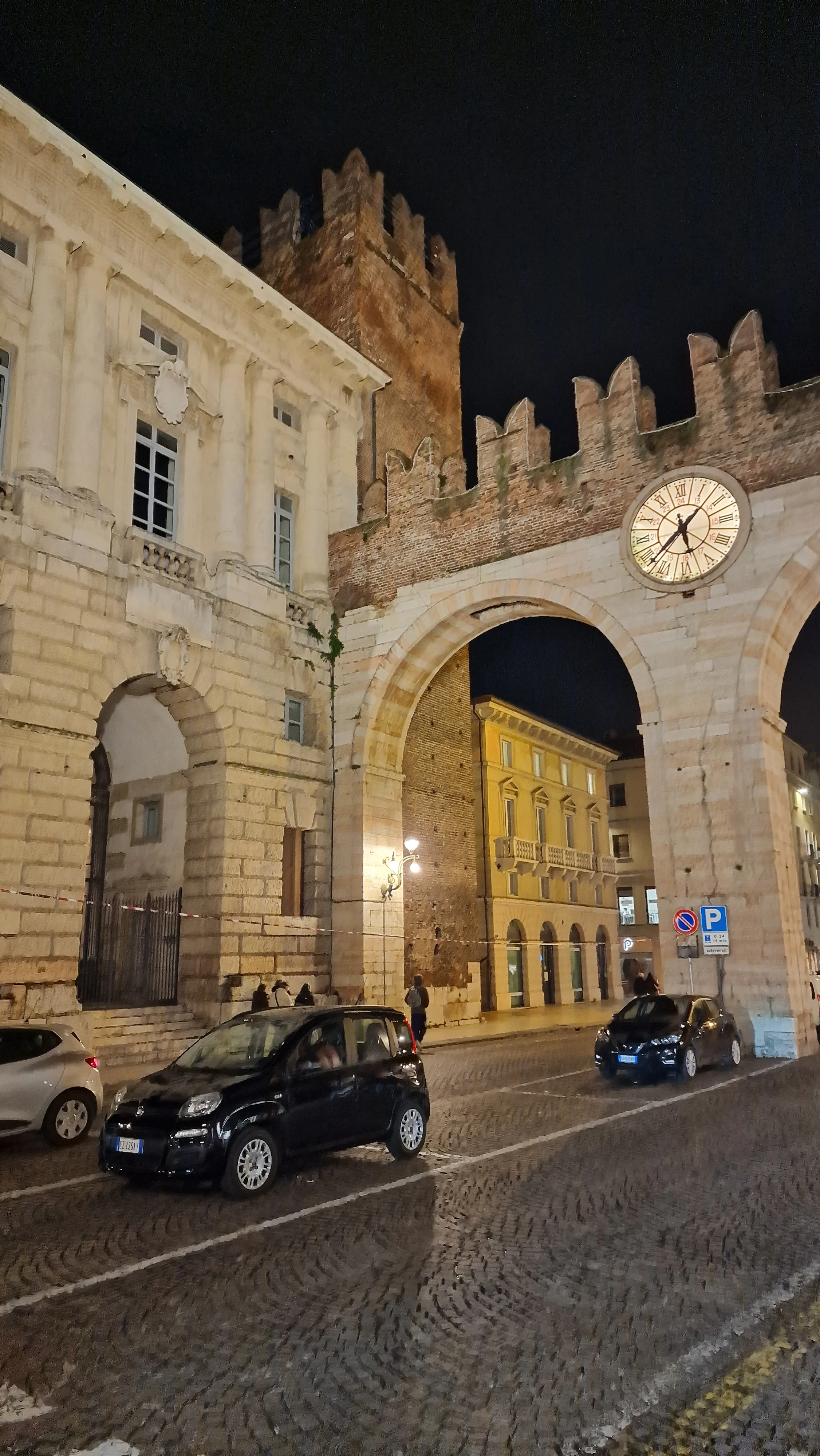
Verona in December carries a damp, penetrating chill that the summer tourist crowds never experience. I had arrived in the city for a conference, a day ahead of my colleagues, and took an apartment just steps from the Arena—a massive Roman amphitheatre built in 30 AD. Originally a stage for the brutal spectacle of gladiator games and animal hunts, it has survived nearly two thousand years of urban evolution to become one of the world's premier open-air opera venues, dictating the city's geography and gravity through sheer historical weight. The priority for the evening was straightforward: a table near the monument, dinner for one, and a local bottle to mark the arrival. The restaurant was exactly what you expect on Piazza Bra—a high-traffic venue built for tourists where the safest tactical move is to order something that is impossible to ruin.
The historic Valpolicella Classico zone lies directly to the northwest of Verona, a series of valleys defined by clay-calcareous soils and moderate elevations between 170 and 250 meters. This specific terroir is where the local trio of grapes—Corvina, Corvinone, and Rondinella—naturally produce a lifted, cherry-toned, medium-weight wine. But the region's defining signature is the appassimento technique—drying harvested grapes to concentrate their sugars—and its derivative, the ripasso ("re-passed") method. By taking the newly fermented Valpolicella and passing it over the unpressed, sugar-rich pomace of Amarone, the wine undergoes a second fermentation that fundamentally alters its architecture. It gains glycerol, alcohol, and a darker, more savoury phenolic extraction. It shifts from a simple table wine into something structurally serious.
Sartori di Verona is one of the historic houses of the region, founded in 1898 by Pietro Sartori to supply his local hotel with consistent wine, and rooted in the Classico communes of Negrar and San Pietro in Cariano—the traditional heartland before the appellation boundaries were massively expanded eastward. Their Regolo bottling—a Valpolicella Ripasso DOC Classico Superiore—operates as a structured interpretation of the style, relying on the mandatory Corvina Veronese as the dominant grape at 60 percent. The label itself serves as a map and a quality grade: in addition to DOC, Classico restricts the fruit to the historic hillside vineyards rather than the broader, less prestigious valley floor, and Superiore mandates a minimum of one year in wood and higher alcohol than the entry-level bottling. To manage the added weight and phenolic grip of the refermentation, the house employs an extended elevage of roughly two years in medium and large barrels, followed by further rest in the bottle. This period in wood polishes the tannins and subdues the primary fruit, pushing the profile toward dried cherries and sweet baking spice. It is built for the winter table.
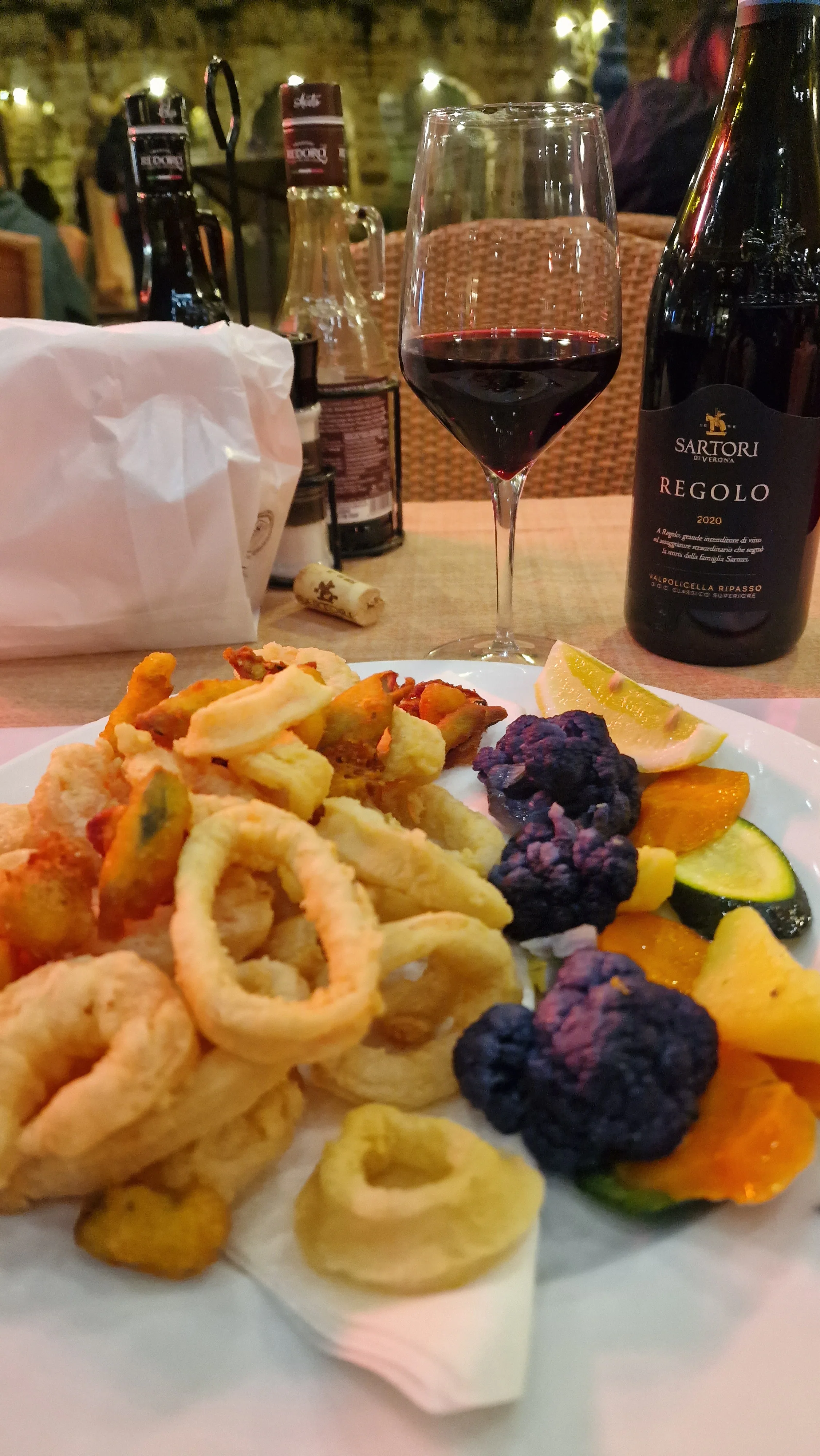
The table I found on the square offered the right view, but the menu dictated a defensive strategy. Eating solo at a tourist-facing establishment directly opposite a Roman monument usually means avoiding complex kitchen preparations, so I ordered a simple fritto misto of seafood and roasted vegetables—a safe, functional choice to anchor the evening. Structurally, deep-fried squid and cauliflower demand a sharp, high-acid white to cut through the batter and oil, making a structured, 14 percent alcohol red an objectively terrible pairing on paper. But the wine was the point of the dinner, not the food. I wanted a local red, and the Regolo was exactly the kind of weighty, winter-appropriate bottle the December chill required. The food was just there to keep me at the table.
What the 2020 Sartori di Verona Regolo delivered was exactly the dark, velvety concentration you expect from a well-made Classico Ripasso. It dominated the fried seafood entirely, but it provided the warmth and textural depth needed for an hour spent sitting outside on a cold Veronese square. Sometimes the right bottle is about the geography of the moment rather than the geometry of the pairing.
And no, I never made it to Juliet's balcony.
Pairs well with