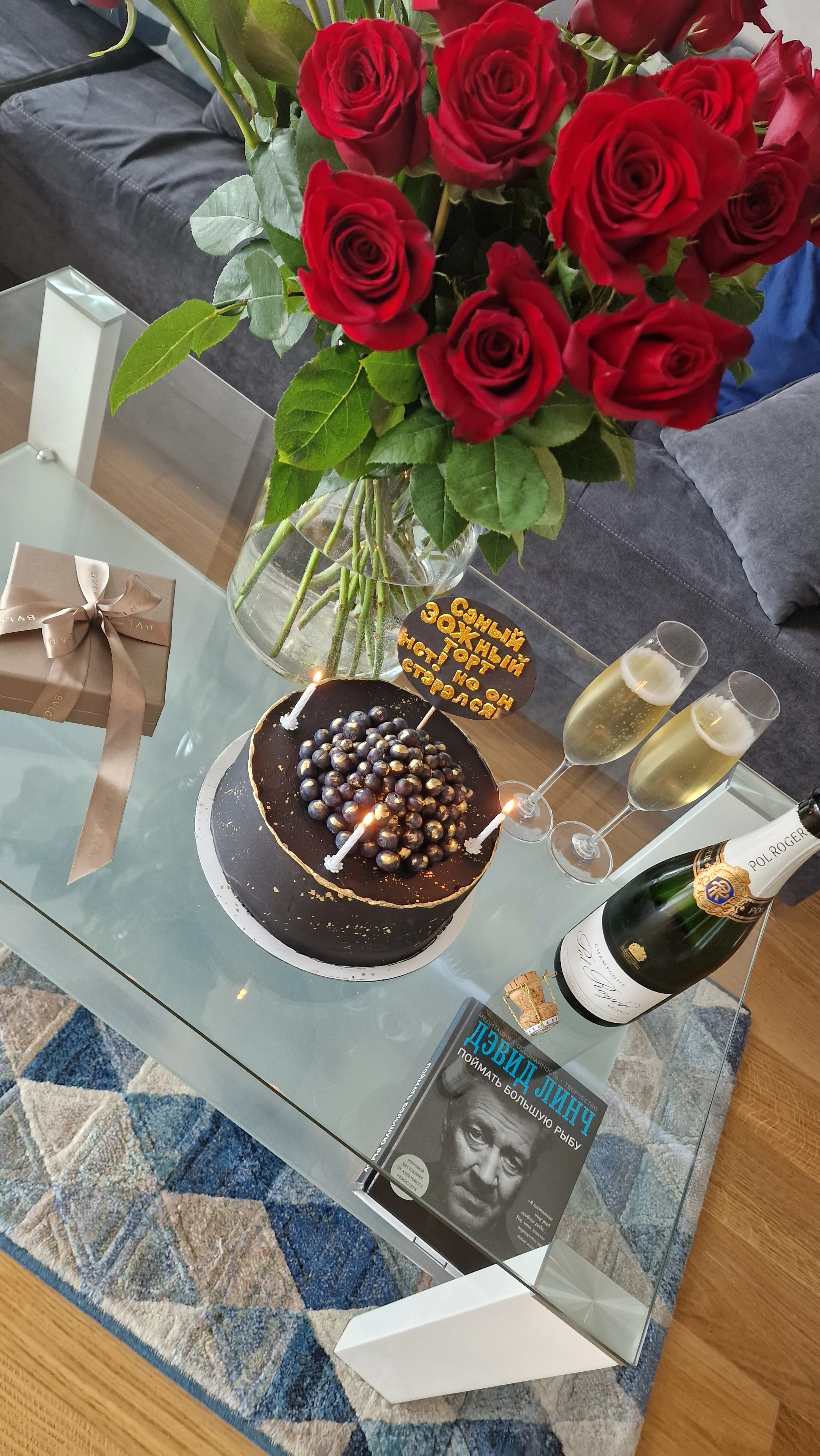
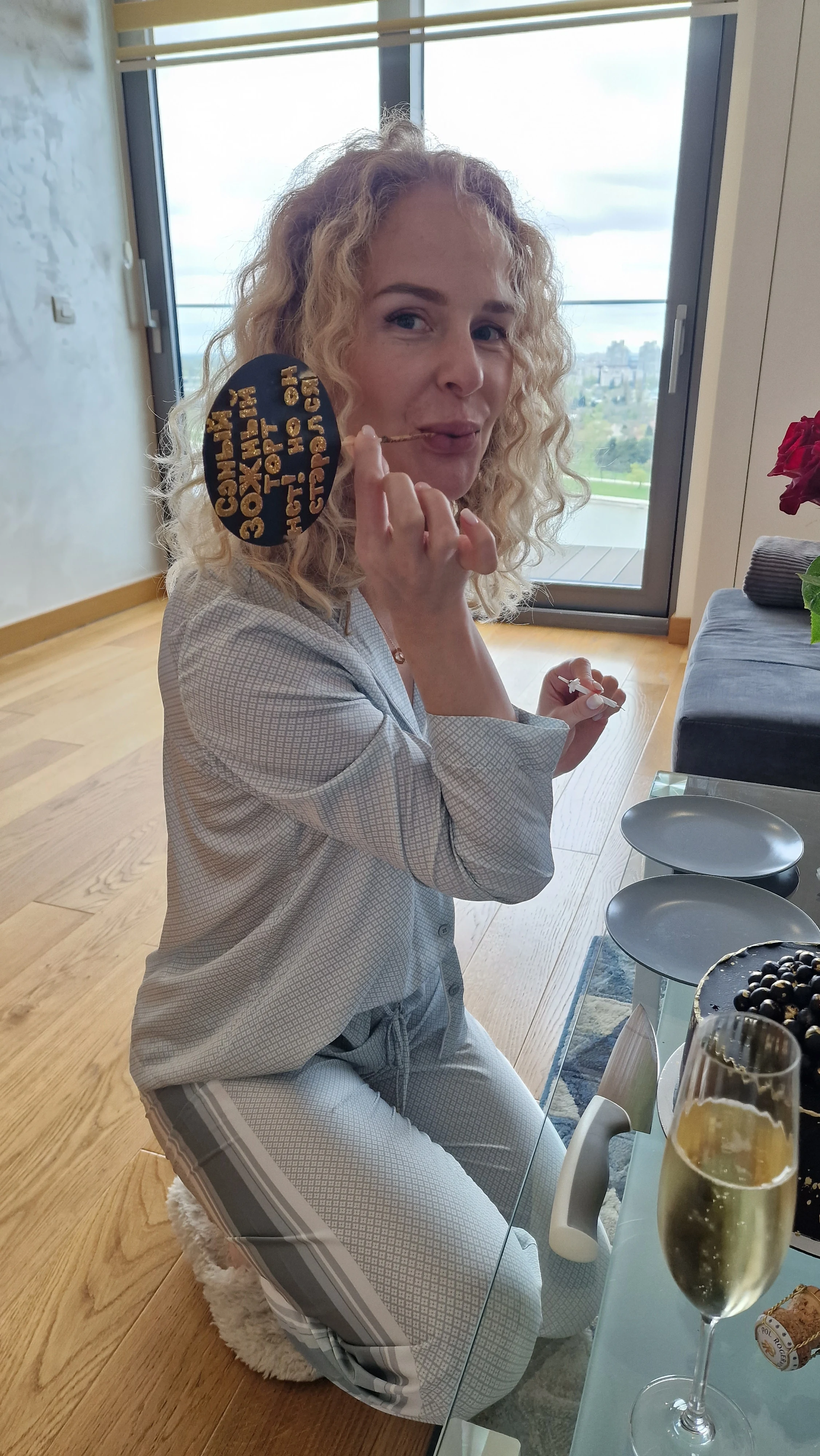
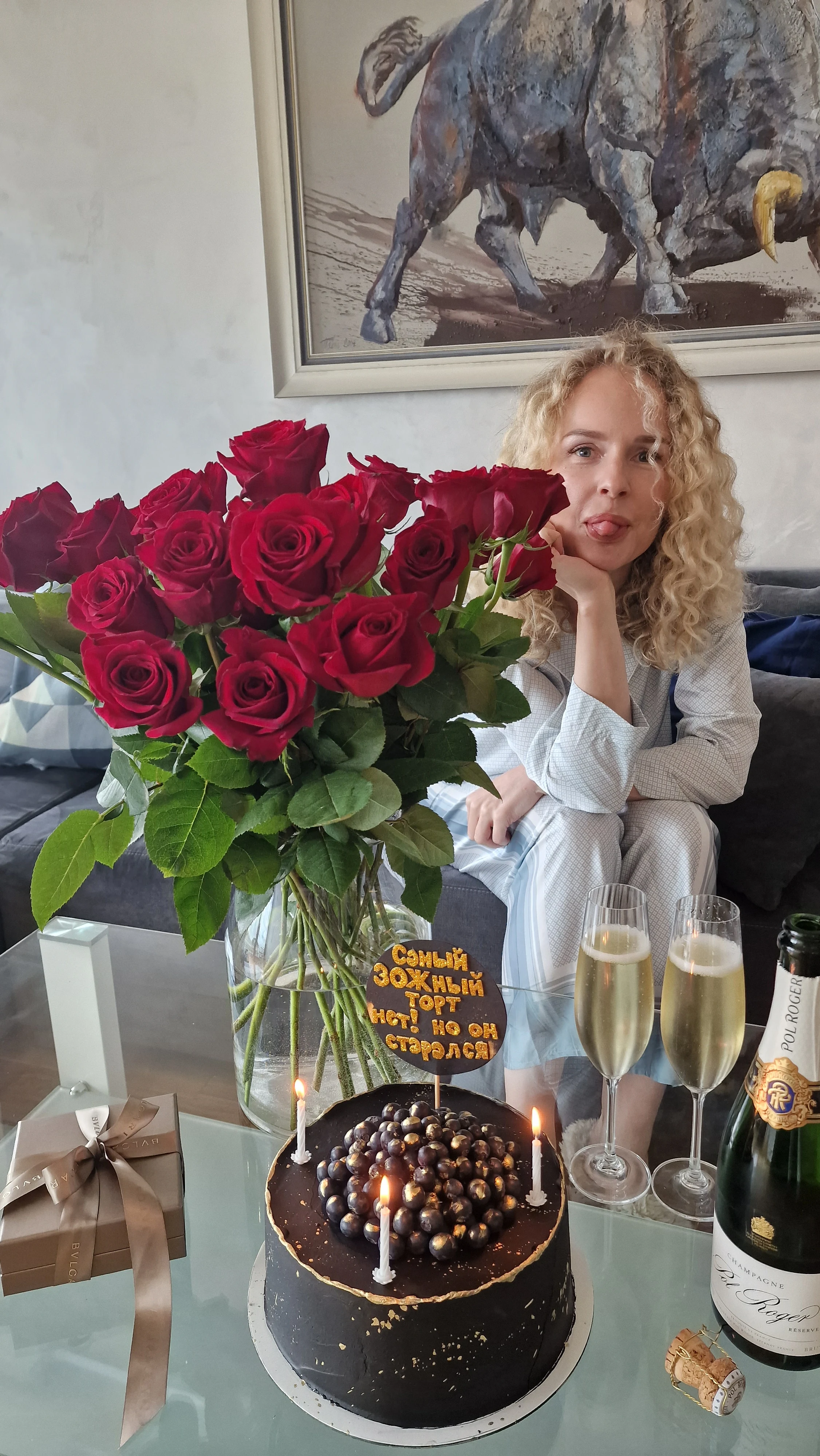
Commissioning a birthday cake for my fiancée — a biochemist and nutrition expert — is a diplomatic exercise. My opening position was a genuinely healthy cake: almond flour, no refined sugar, some defensible sweetener. The pastry chef refused. Substitute the flour and the sugar, she said, and the chemistry changes; it might not rise, might not set, and she would not gamble a birthday on an experiment. Without knowing it, she was making the argument every honest winemaker makes: the ingredients are the structure, and you cannot remove them and keep the building. So the health moved from the recipe to the inscription on top — “The healthiest cake? No! But it tried” — and the cake itself stayed defiantly chocolate.
On the morning of the third of April the wine fridge held several bottles of Champagne, and I took the one in white foil. Pol Roger Brut Réserve is known in the trade simply as the White Foil, and I chose it because it matched the cake: this is a wine engineered to spring no surprises — the same bottle, rebuilt from scratch, every year.
Pol Roger sold his first wine on the second of January 1849, at eighteen, because his father — a notary in Aÿ — had fallen incurably ill and the family practice had closed. His first customer was a wine dealer from his own village, and the wine he sold was not of his own making. A teenager could enter this trade because Champagne had organised itself as a manufacture long before the rest of the wine world: growers farmed the vines and sold grapes or young wine, while the houses were trading firms — négociants — that bought across dozens of villages, blended, aged and sold under their own name. The cellar work belonged to hired specialists: the chef de caves who ran the wines, the remueurs, whose entire profession was turning bottles on their racks, tens of thousands a day, and the dégorgeurs, who did nothing but disgorge. What the founder of such a house supplied was the palate — blending in Champagne was always the négociant's craft, not the winemaker's secret — and the connections: in a wine village the notary's office handled every vineyard sale, inheritance and harvest loan, so young Roger started with his father's client book, which contained effectively everyone.
For the first two years the firm was pure trade. Production came with the move in 1851 to Épernay — the small town on the Marne that serves as Champagne's commercial capital, in essence one long street of producers' mansions, the Avenue de Champagne, over a hundred kilometres of chalk tunnels — where the house eventually dug down thirty-three metres, among the deepest and coldest cellars in the region. History cooperated: the firm was born a year after the 1848 revolution, but the Second Empire that followed turned champagne into the drink of the boom, and from 1855 the young merchant aimed his dry wines at the English, who have been buying them ever since. His descendants still own the house outright, a rarity among famous names long since folded into luxury conglomerates.
The white foil itself is the house's quietest legend. Most houses dress their non-vintage in gold; Pol Roger wrapped its flagship in plain white, and the blankness once carried weight. Winston Churchill drank the house's champagne in quantities his doctors preferred not to record and named a racehorse after Odette Pol-Roger, the family matriarch who kept him supplied. When he died in 1965, she put a black mourning band across the white foil of every bottle shipped to Britain, and it stayed there for a quarter of a century.
Brut Réserve is a blend in equal thirds of Pinot Noir, Pinot Meunier and Chardonnay, drawn from around thirty crus across the region's three defining zones. The Pinot Noir comes mainly from the Montagne de Reims and supplies the spine and the body; the Chardonnay, from Épernay and the Côte des Blancs, brings the lift and the aromatic finesse. The third partner, Pinot Meunier — “miller” in French, for the flour-white dusting on the underside of its leaves — rarely gets a word, though it is Champagne's workhorse: it buds late enough to dodge the spring frosts of the Vallée de la Marne, where it dominates, and ripens early, delivering round, immediate fruit when its grander siblings struggle. The terroir underneath all three is the region's real signature: deep beds of belemnite and micraster chalk — compressed fossil seabed — that drains freely, force the roots down, and hold back just enough moisture in a dry summer, while a cold continental climate at the northern edge of viable viticulture keeps the acidity fierce.
There is no vintage on the label because the wine is built not to need one. Champagne's weather is too marginal to trust any single year; the house's answer is a quarter of reserve wines from older harvests and a stated ambition of consistency — the same full, precise, brioche-inflected wine, reassembled every year from moving parts. For a birthday, itself an annual reconstruction of the same event from whatever the year supplied, the logic felt appropriate.
The cellar work runs on classical lines. The juice settles twice — a double débourbage — before slow fermentations at eighteen degrees in steel, each village and variety kept separate until blending. Everything goes through full malolactic fermentation — the house signature that rounds Champagne's sharp edge into something creamier without losing freshness. The élevage then runs some four years in those cold chalk cellars, more than three times the legal minimum for non-vintage Champagne, with the bottles still riddled by hand. That long rest on the lees builds the wine's bread-crust depth — which turned out to matter that morning.
It mattered because brut Champagne with chocolate cake is, by the book, a forbidden pairing. A dessert sweeter than the wine strips its fruit and leaves only the acid, which is why sommeliers steer chocolate toward port and its fortified cousins. What saved us was the cake itself. The pastry chef's uncompromised recipe meant dark, bitter chocolate rather than a sugary sponge — and bitterness is a fight this wine can win. The bubbles and the acidity kept clearing the richness away, the wine's bready depth got along with the chocolate the way coffee does, and the blueberries on top added the tartness the plate was otherwise missing. It should not have worked; it mostly did.
The cake told the truth about what it was, the pastry chef refused to pretend, and the Champagne has been refusing to pretend since 1849. Not the healthiest breakfast ever. But it tried.
Pairs well with