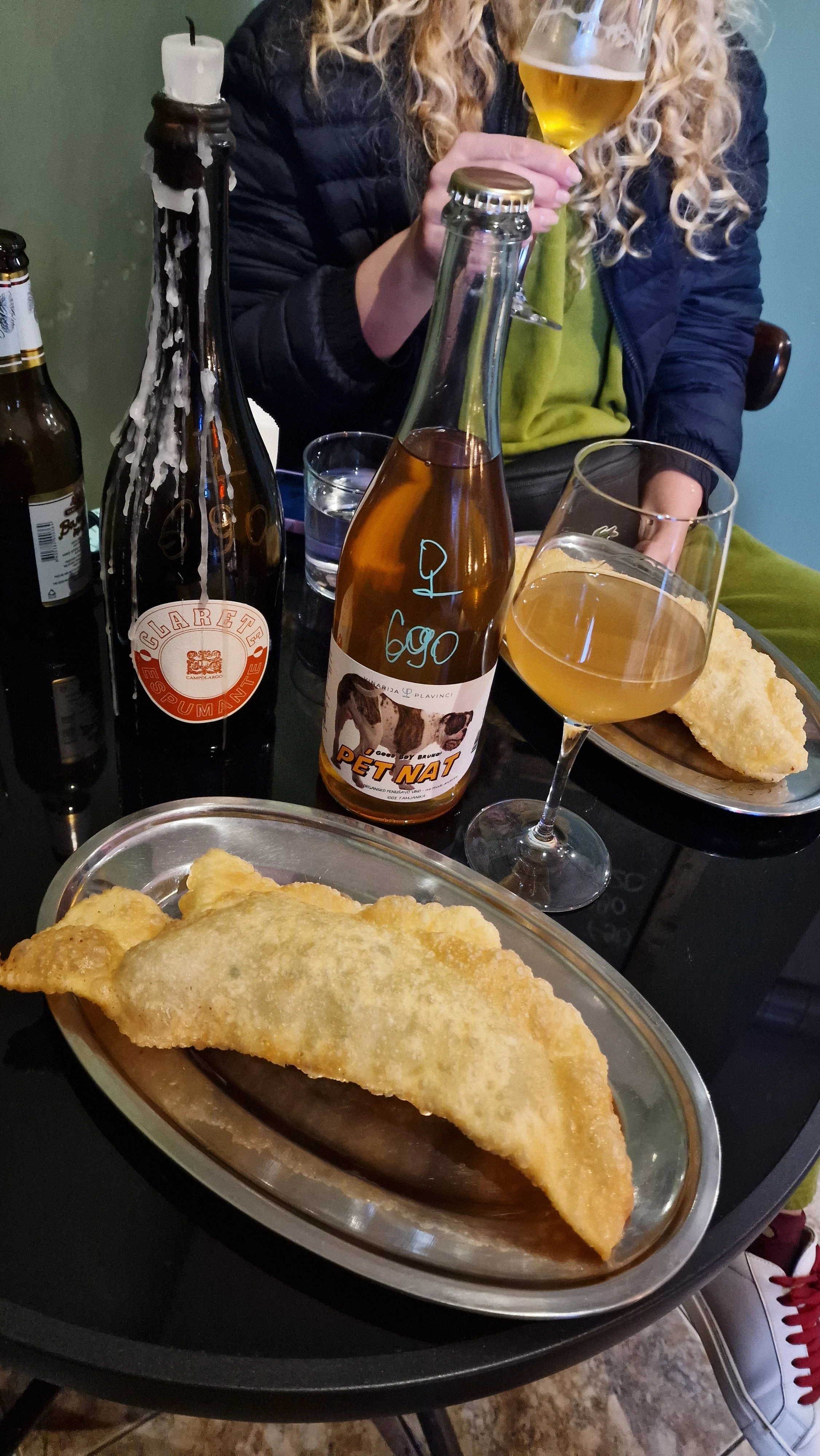
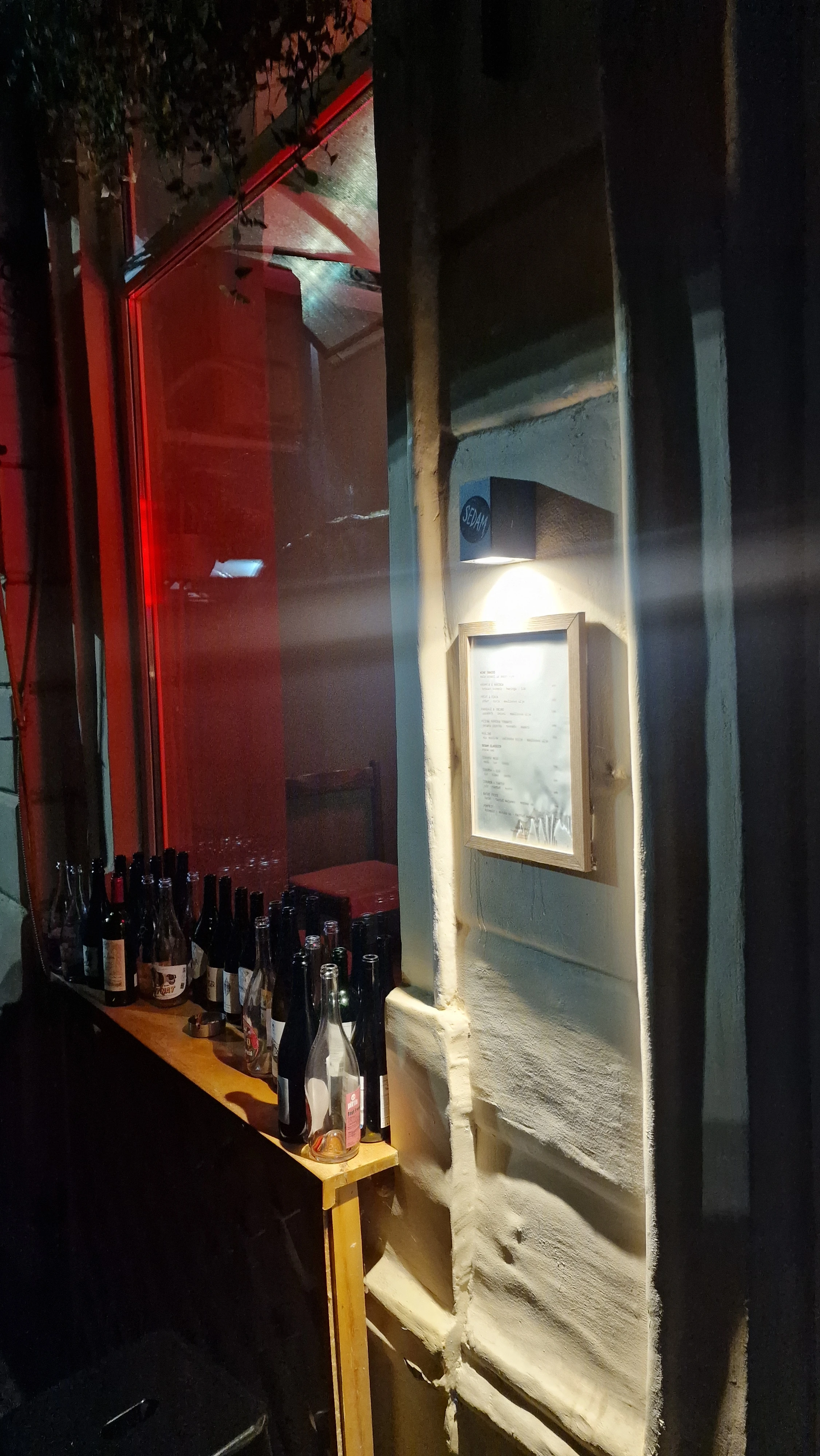
Most wine bars in Belgrade build a list once and then defend it for years. Sedam Zemun rotates several sets of wines through a single month, which makes the list less a menu than a bulletin, and the only way to read a bulletin is to turn up. On a Sunday afternoon in October my fiancée and I did exactly that, with no plan beyond finding out what was on the list after almost a year away.
There are a few small plates on the menu, but the format really rests on two things: chebureks and wines you are unlikely to meet anywhere else in the city. That means pét-nats (pétillant naturel, "naturally sparkling", wine bottled before its first fermentation has finished) and orange wines, which are white grapes left to ferment on their skins the way red wine is made. That week, Serbian growers sat next to Austrian and Czech ones, and France was present but outnumbered. The selection leans deliberately towards local producers and towards countries whose wine still surprises most drinkers, on the reasonable assumption that nobody needs a bar to discover Bordeaux.
The name carries its own history lesson. Zemun is the old town across the Sava from Belgrade, and for most of the eighteenth and nineteenth centuries the two faced each other across an imperial border. Zemun was the Habsburg side, a garrison and customs town on the Military Frontier, the militarised belt Vienna kept along the Ottoman border. Belgrade was the Ottoman side, changing hands between the two empires several times, and the last Ottoman garrison handed over the keys of its fortress only in 1867. Alexander Kinglake, an English barrister who later wrote an eight-volume history of the Crimean War, opened Eothen, his 1844 account of travels through the Ottoman East and one of the most popular travel books of its day, with the crossing from Semlin, as the Austrians called Zemun, to Belgrade, and described the river as the line between two worlds, enforced by plague quarantine. Zemun stayed Austro-Hungarian until 1918. Seen from that angle, the bar's offer reads like a map of the old frontier: Austrian and Czech wine from one bank, Serbian from the other, and in between a pastry from the Crimean Khanate, which spent three centuries as an Ottoman vassal.
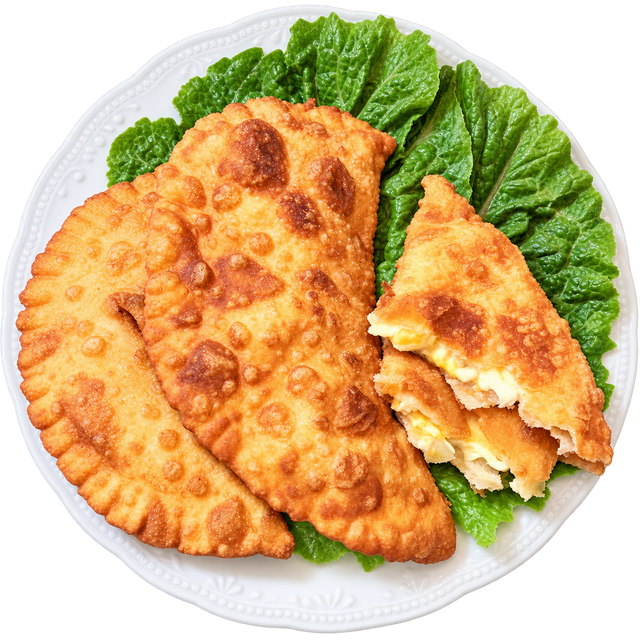
A cheburek needs explaining to anyone who did not grow up in the former Soviet Union, and the nearest reference most of the world will know is a deep-fried empanada. The comparison gets the shape right and the texture wrong. Both are half-moons of wheat dough crimped around a filling. Empanada dough is usually enriched with lard or butter and rolled fairly thick, so that frying turns it into something close to shortcrust: bready, crumbly, a pastry case. Cheburek dough is lean (flour, water, salt and a little oil) and rolled so thin that the filling almost shows through before it goes into the oil. In the fryer the surface blisters into small bubbles, and the result shatters rather than crumbles. A cheburek is also wider and flatter than an empanada, built for a plate rather than a pocket.
The dish belongs to the Crimean Tatars, for whom it comes close to a national dish, and their own names for it, çibörek among them, keep the word börek inside. That is the relative that matters in Belgrade. Burek, the Balkan descendant of the Ottoman börek, is sheets of very thin dough layered in a round tray and baked, and it is what Serbia eats for breakfast. Same family name, two branches: the Balkan one baked in layers, the Crimean one folded once and fried. In Bosnia a burek is strictly the meat version, and with cheese it becomes sirnica, a distinction people defend with some heat. In Serbia, burek sa sirom (with cheese) is simply ordinary. The cheburek, meanwhile, travelled farther than its makers ever chose to. Crimean Tatars who left the peninsula after the Russian annexation of 1783 carried it to Anatolia, and the çiğ börek of Eskişehir is now that city's signature dish. On 18 May 1944 Stalin deported the entire Crimean Tatar people to Central Asia, most of them to Uzbekistan. By then the cheburek had already entered Soviet street food, and it outlasted the empire that deported its makers in every cheburechnaya, the cheburek canteen, from Riga to Tashkent. The classic filling is raw minced lamb with onion, sealed in so the meat cooks in its own juice. Ours were filled with cheese.
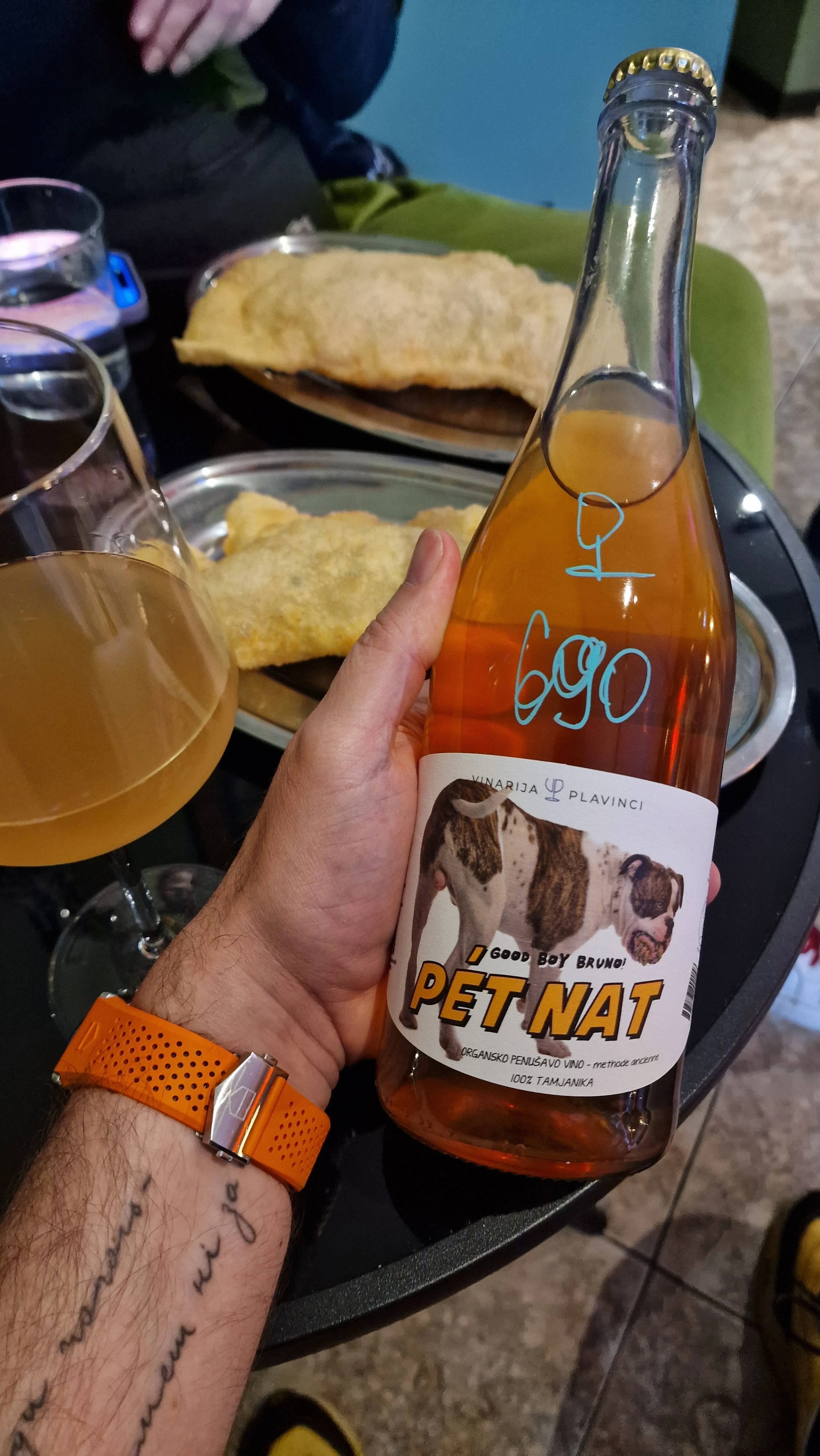
We started with a pét-nat from Grocka, the hilly municipality on the right bank of the Danube downstream of Belgrade. Vinarija Plavinci was founded in 2008 by Branislav Anđelić, by some accounts together with his sister Nina. Anđelić is an economist with no farming background, and he chose a hillside at Zaklopača that had been abandoned for more than a century. He replanted a small plot that year and put in the first organic vines in 2010. The estate calls itself the first Serbian winery with an organic certificate for its wine, its wines are certified vegan (no animal-derived fining agents), and total production runs to about 5,000 bottles a year. The name comes from a local story. Danube boatmen used to see the vineyards on this hill shining blue, plavo, from copper sulphate spray. There is a quiet irony in it. Bordeaux mixture, copper sulphate with slaked lime, was developed in the Médoc in 1885 against downy mildew, a fungus that had arrived from America a few years earlier, and it remains the main weapon an organic grower is allowed. The hill was named for the chemistry the estate now depends on.
The terroir is low Danubian hill country. Vineyards in the Belgrade district sit mostly between 150 and 250 metres on gentle to moderately steep slopes, on cambisol (a young brown soil) with loess and chernozem, the black earth of the Pannonian plain, in places. The river does the real work. Its broad surface throws diffuse light back onto the slopes and speeds ripening, while damping the winter swings and lowering the risk of frost. Grocka is better known for orchard fruit than for wine, and the grape is not a local tradition either. Tamjanika takes its name from tamjan, frankincense, for the perfume of the ripe berries. It is a Muscat, most likely descended from Muscat Blanc à Petits Grains, the small-berried Muscat, and it turns up as Temjanika in North Macedonia and Tamyanka in Bulgaria. The big Serbian plantings are in the Three Moravas and in Srem, not on the Danube below Belgrade, so this is one grower's decision rather than an appellation habit. It is a demanding decision. The grape's aroma peaks in a narrow window before harvest, its thin skins invite mildew and rot in humid weather, and a river valley is humid by definition. For an organic grower, that means copper and sulphur and very little else.
2023 tested exactly that. It was the warmest year Serbia has recorded since measurements began in 1951, and the warmest in Belgrade since the city's observatory opened in 1888. The trouble came early. At the end of May, with vines in flower, heavy rain moved across northern Serbia, up to 70 millimetres in 24 hours in parts of Vojvodina, and agronomists warned of ideal conditions for both downy and powdery mildew, at the stage when a crop is most easily lost. July brought storms on the 19th and 21st, with Novi Sad hit hardest and Belgrade caught as well. The autumn that followed was the warmest on record. The label carries the only structural number available for this vintage: 12% alcohol, one point lower than the 2022, in the hottest year the city has measured. I cannot say why, and the producer has not published 2023 data. In a pét-nat the figure depends on how much sugar remains when the yeast give up inside the bottle as much as on how ripe the grapes were, so the thermometer and the label are allowed to disagree.
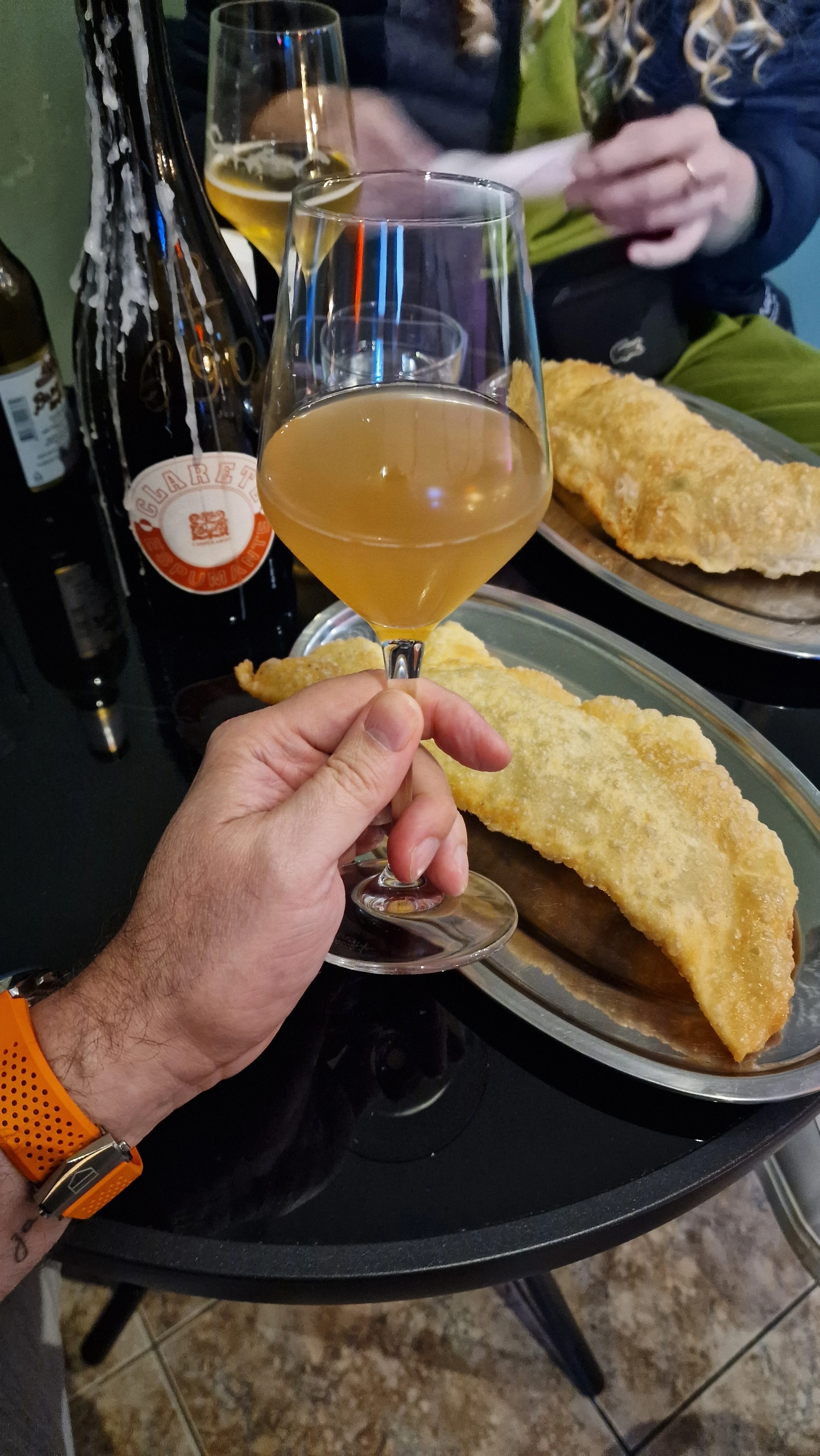
Bruno is built on Selena, the estate's orange Tamjanika, and the producer's notes for the 2022 release describe the method: skin maceration, a 12-day fermentation on wild yeasts in open tanks, and bottling before that fermentation finished, so the last of the sugar ferments under a crown cap and becomes the mousse. This is the méthode ancienne, the ancestral method, older than Champagne's. Whether 2023 followed the same timings has not been published. The élevage then happens in the bottle itself: for 2022, six months on the lees, the spent yeast that settles after fermentation, with no fining, no filtration and no additives. The label states it plainly, "Nefiltrirano – sadrži talog" (unfiltered, contains sediment). The lees add weight, and the skin contact adds a faint phenolic grip, the light astringency of skins, that a conventional white sparkling wine does not have. The producer calls Bruno "slightly sweet but with ample acidity to cover it". The 2022 carried 18 grams of sugar per litre, which in Champagne would be labelled Sec, a word that, confusingly, means not dry.
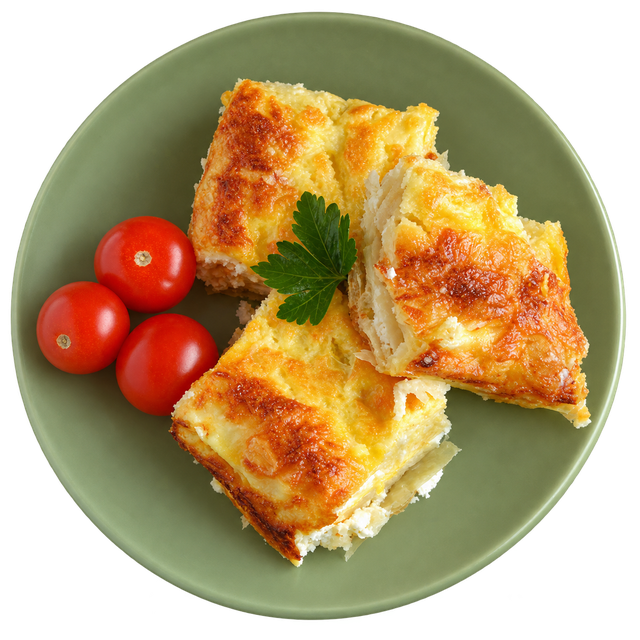
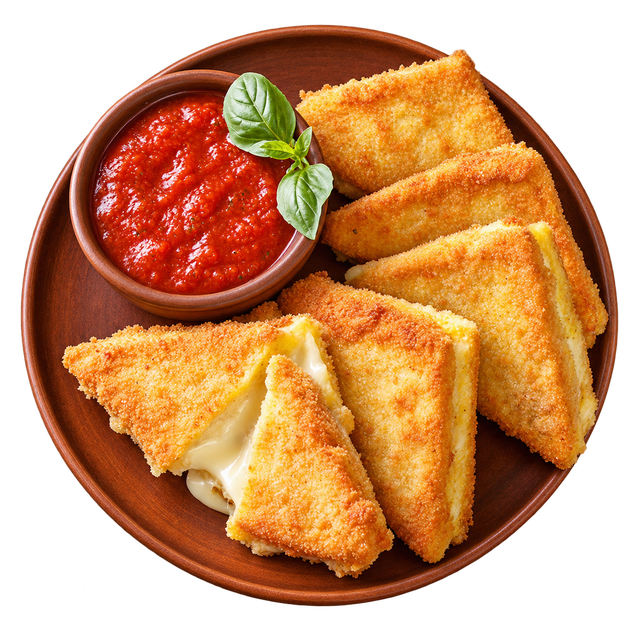
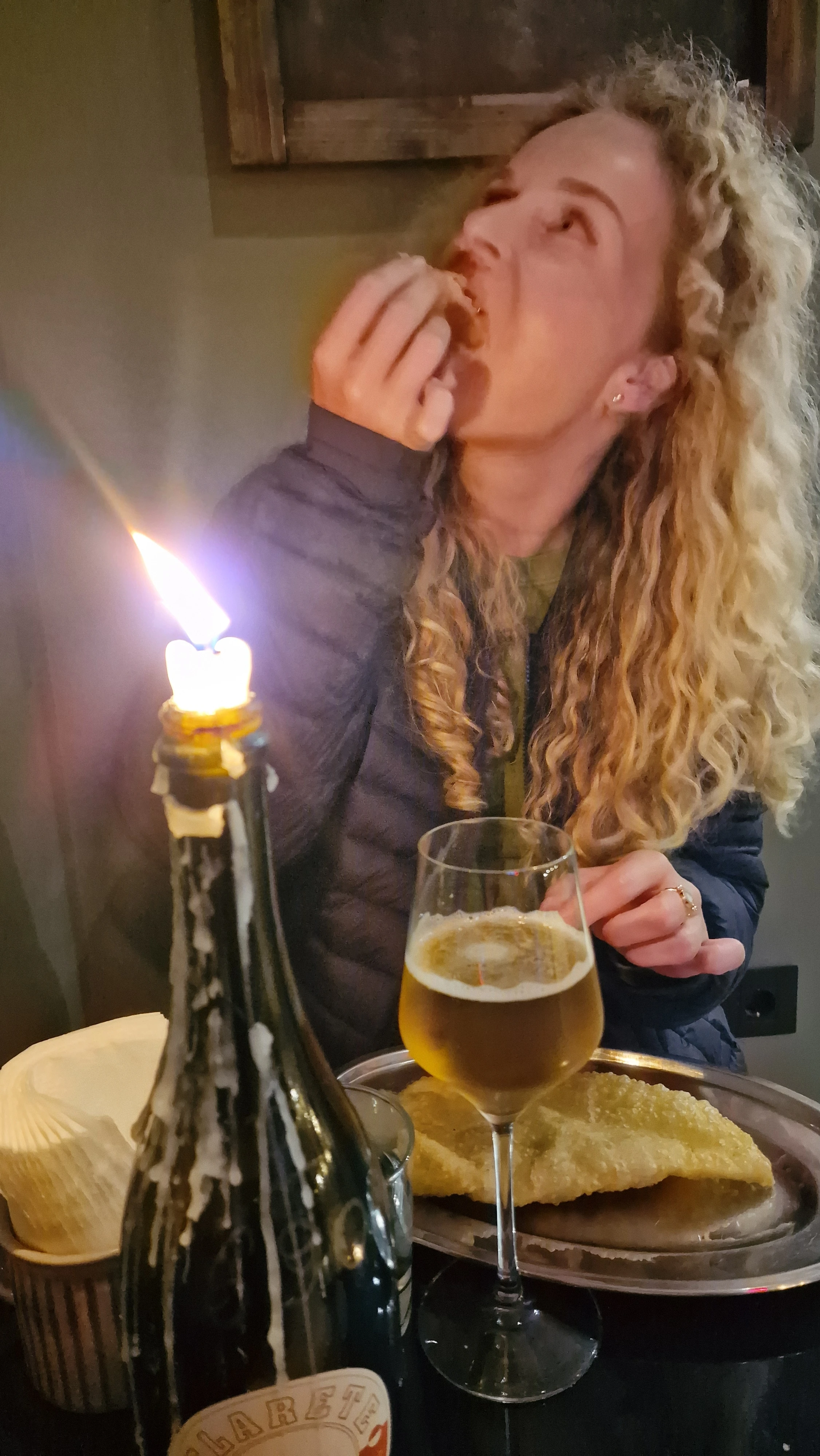
Look up what to eat with this wine, and the first two suggestions are both Serbian and both built on cheese: gibanica, the layered pie of thin pastry sheets, eggs and white cheese, and pohovani kačkavalj, slices of kashkaval, the Balkan yellow cheese, breaded and fried. We had neither. We had the chebureks, which sit between the two: closer to the kačkavalj in the way they are cooked, in deep oil, and closer to the gibanica in the way they are built, thin dough wrapped around cheese. All three come down to the same components (dough, cheese and fat), and the logic transferred intact. Fried dough is fat and salt; the cheese adds more of both. The acidity and the bubbles strip the fat from the palate between bites, so the next one tastes like the first. The touch of sweetness meets the salt the way fig jam meets a hard cheese. The skin-contact grip gives the wine enough structure not to be flattened by a plate of fried pastry, and at 12% it adds no weight to a dish that already has plenty. The Muscat perfume, meanwhile, has nothing in neutral dough to compete with.
Next month the list will have moved on. The cheburek will not.
Pairs well with