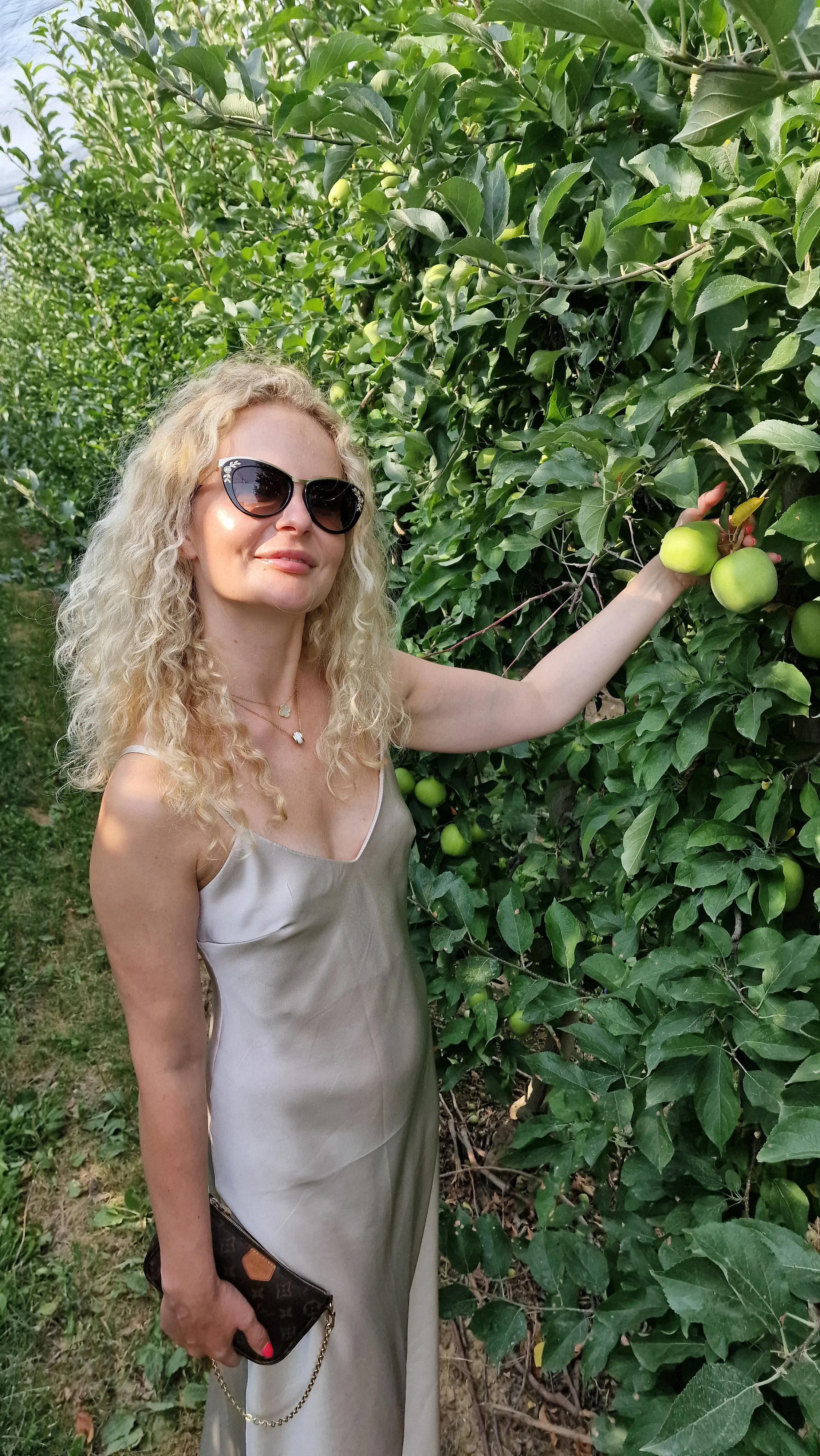
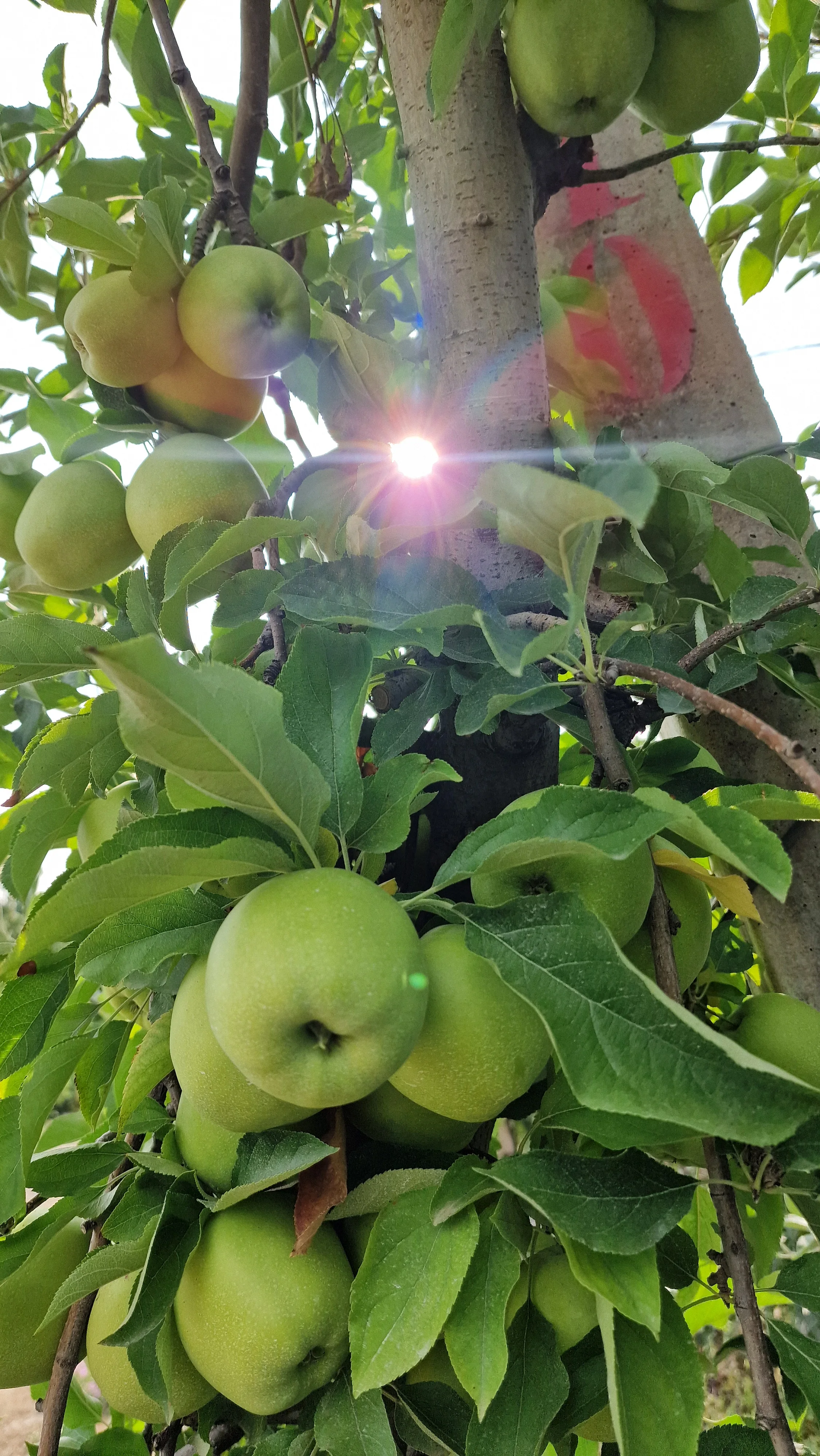
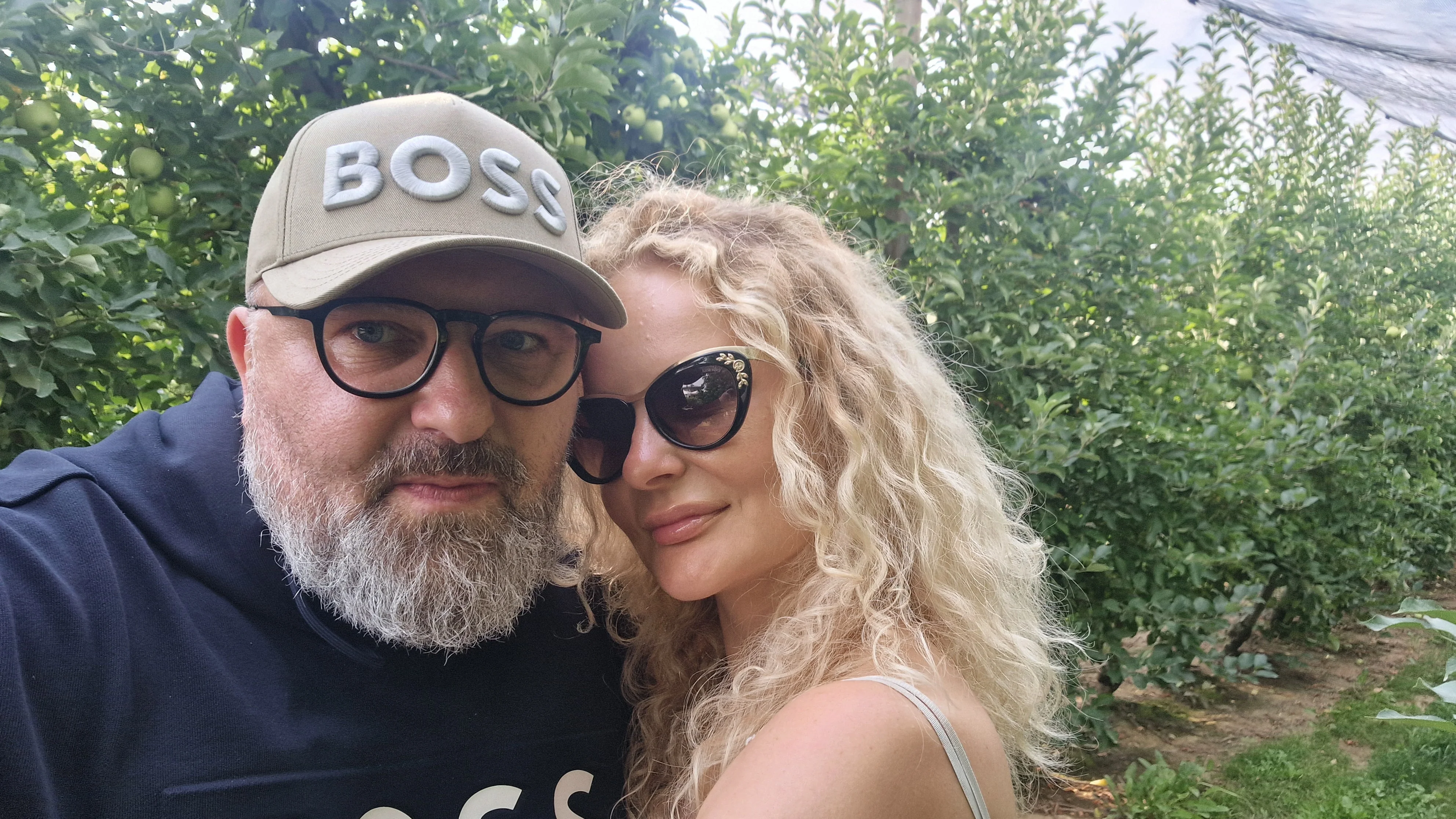
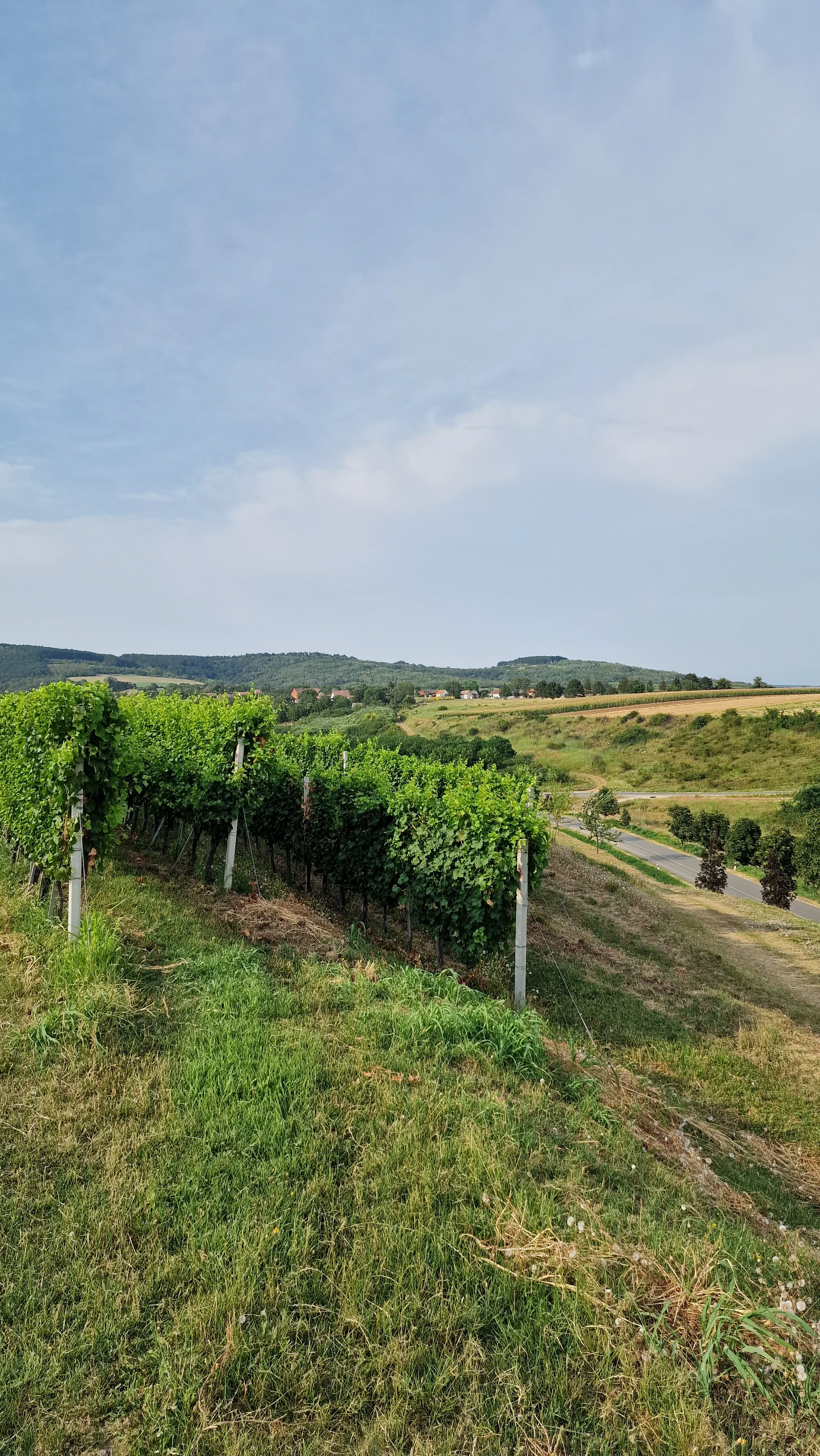
We had been to Deurić before, and that is the highest compliment my fiancée and I pay any place: we went back. There was no occasion this time — an ordinary Serbian weekend, the kind that asks nothing of you. We took a table on the open terrace, where the vineyard runs into the winery's own apple orchard, the branches low and loaded, and ordered a board of charcuterie and cheese while the afternoon did its slow Pannonian thing.
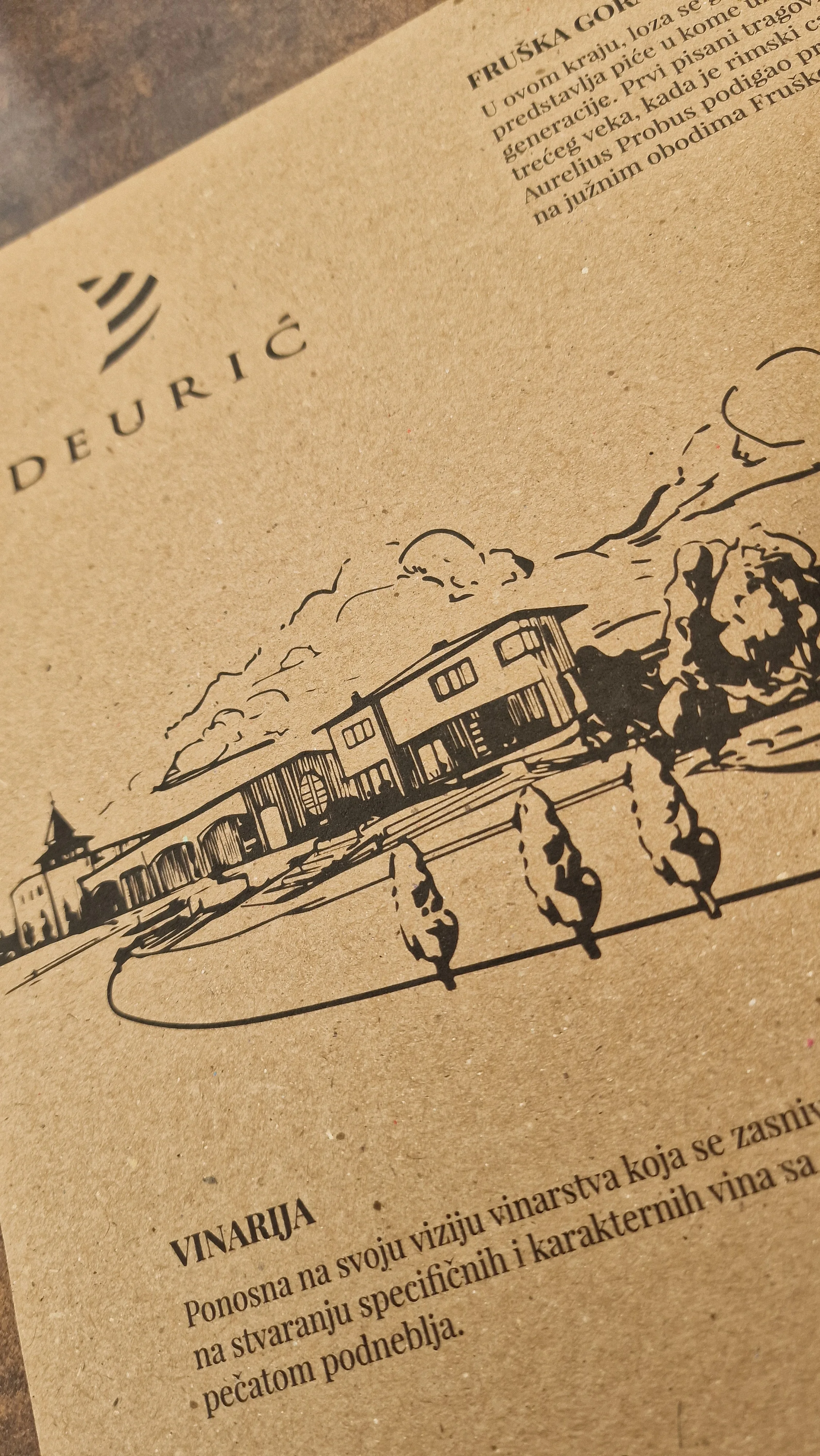
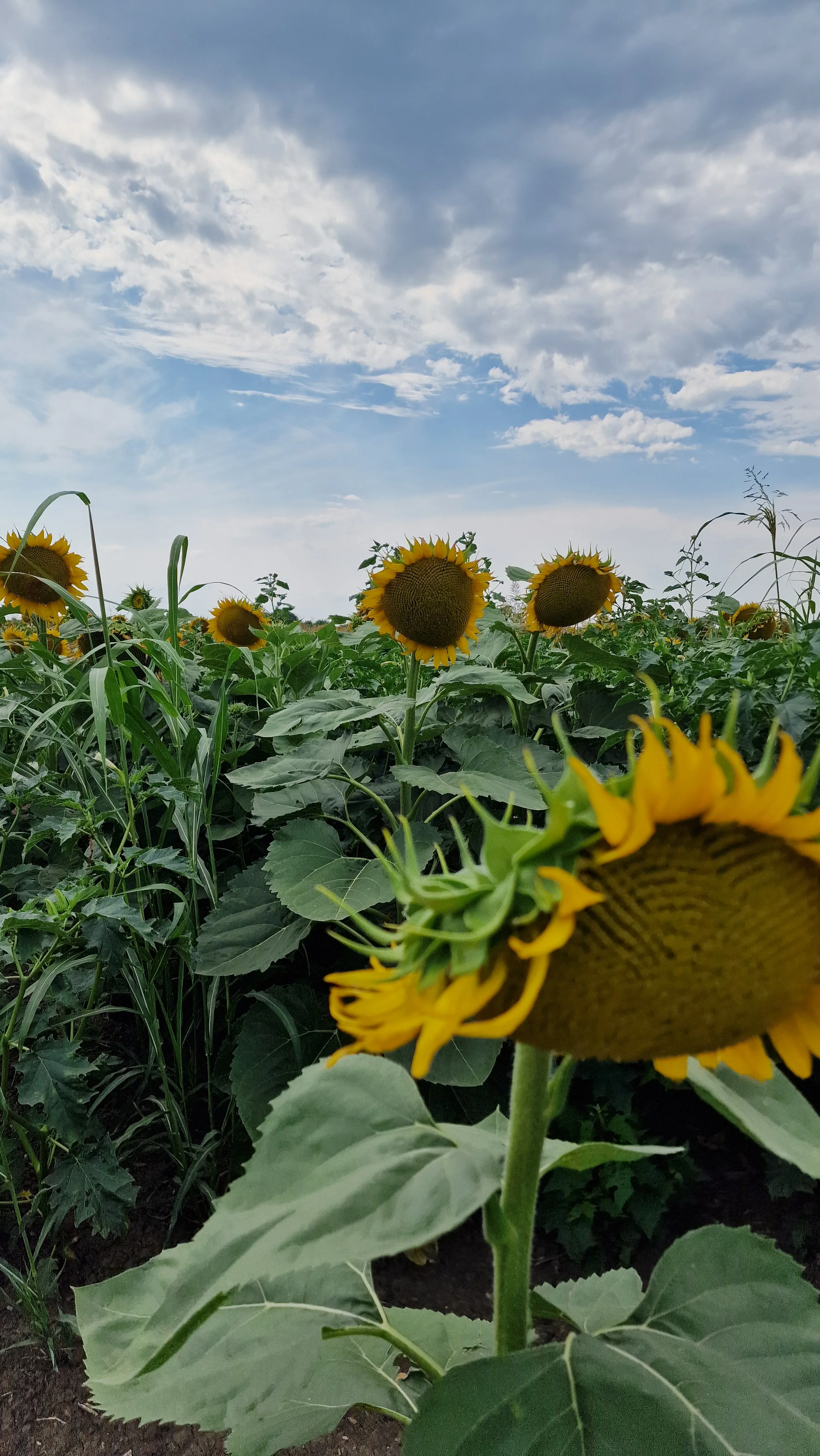
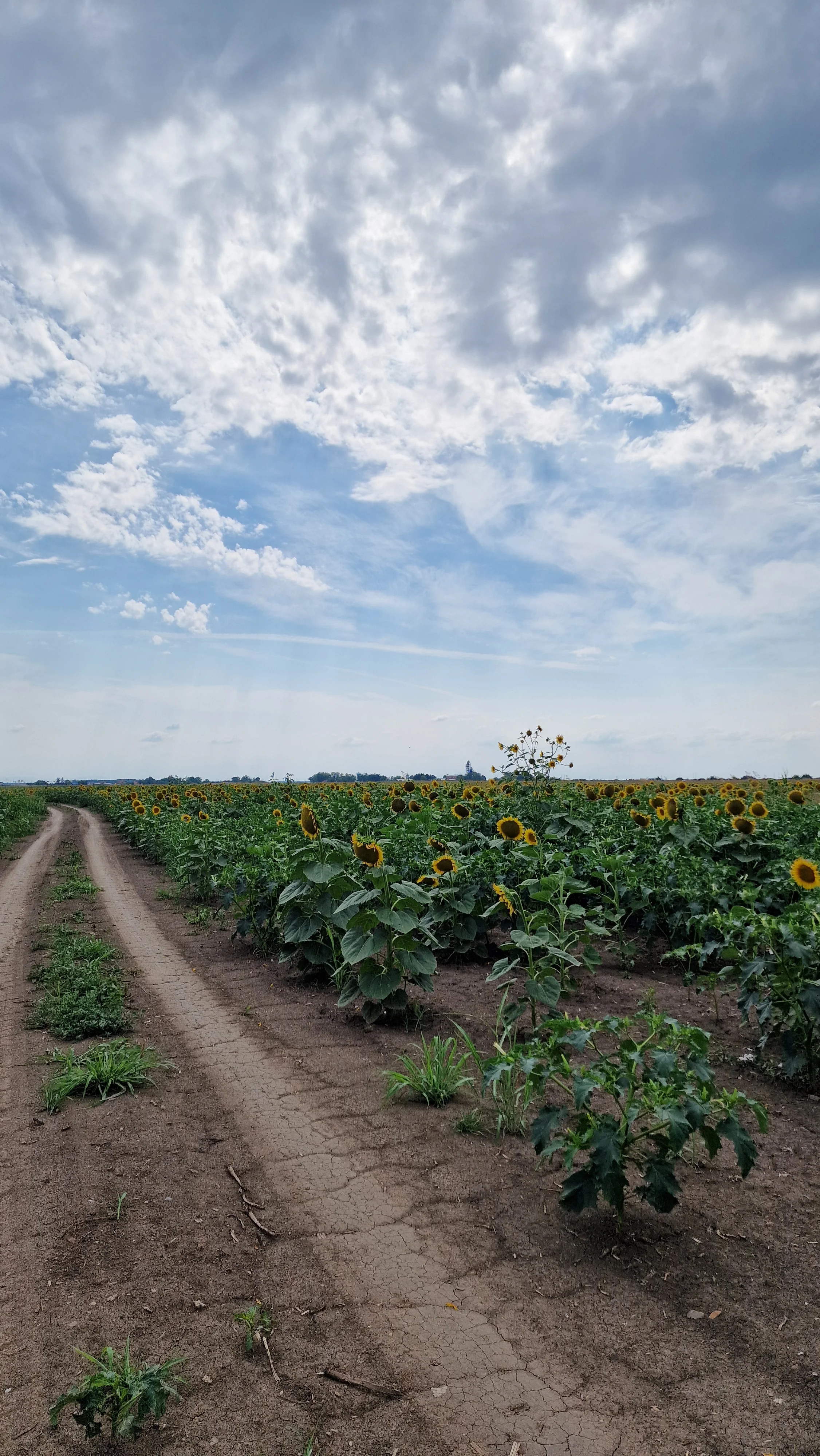
Fruška Gora is a long, low whaleback of a mountain rising straight out of the flat Pannonian plain in Vojvodina, in the Srem district — Syrmia, the name a worn-down inheritance from Sirmium, the Roman city that stood at the foot of these hills from the first century BC until the Avars destroyed it around 582 AD. Sirmium was no provincial outpost: in 293 Diocletian made it one of the four capitals of the empire, and ten Roman emperors were born in or around it. Drive in today and you pass sunflower fields, and Orthodox monasteries older than most of the wine regions people fly across continents to visit. The vines sit on the lower slopes in loess — wind-blown silt — laid down over limestone, and the broad river throws light and a little warmth back up the southern face. One of those Sirmian emperors, Probus, is the reason any of them are here at all: he is the man credited with lifting Rome's ban on provincial vineyards and setting his soldiers to plant these very slopes, which makes the duckling, in the longest possible view, the descendant of a hillside an emperor planted at his own birthplace.
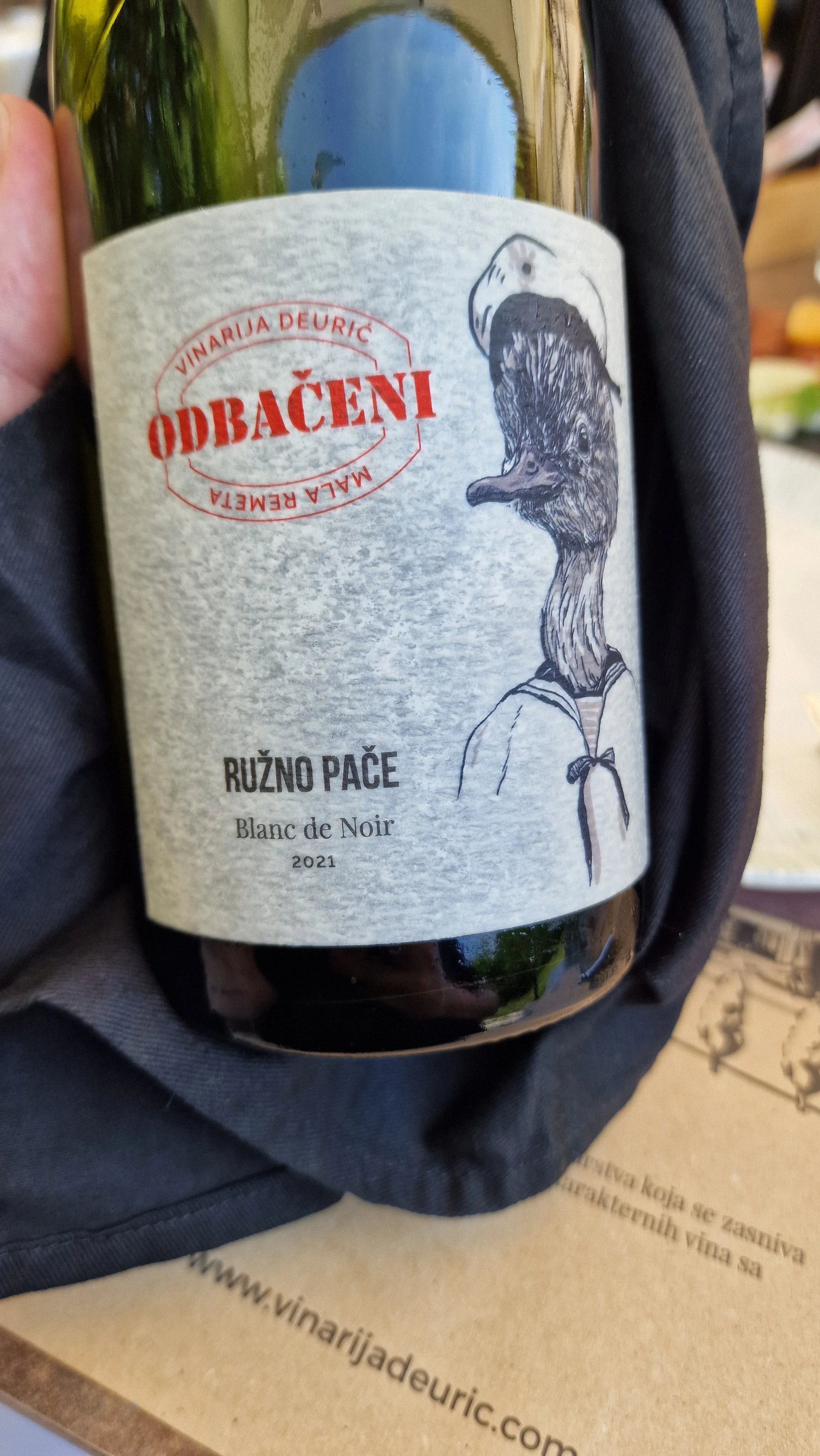
What pulled the bottle off the list was its name. Deurić keeps a small, winery-only experimental line called Odbačeni — “The Rejected” — built around the idea of outsider wines: oddballs that don't fit the house's main range and get bottled precisely because they don't. Each one is named after a misfit creature — an ugly duckling here, a black sheep and thirteen pigs elsewhere in the line. And here is where I quietly made a fool of myself. I grew up in a Russian-speaking environment, where Hugo's Les Misérables is known under a title that means, more or less, “The Outcasts or The Rejects.” So the moment I read Odbačeni I leapt to the conclusion that the whole series was a sly literary homage — the wines cast as Hugo's wretched and downtrodden. Only later did I bother to check, and found that in Serbian the novel is Jadnici — “the wretched or the dispossessed” — not that close to “the rejected”. The clever connection I'd been so pleased with existed entirely because it had never once occurred to me that Les Misérables doesn't translate the same way into every language. The duckling was never one of Hugo's characters. I'd ordered it on a misreading, and enjoyed it anyway.
The label earns the name. The estate is family-owned, run on the technical side by the agronomist Mirko Niškanović, who describes this as the house's first still white taken through malolactic fermentation. The duck in the sailor suit on the front is the work of Aleksandar Bunčić, who teaches at the Academy of Fine Arts in Novi Sad. The same family farms apples here on a serious scale and distils them into a brandy they are not allowed to call Calvados — Normandy owns that word — so they named it CalvaDOG instead, which tells you most of what you need to know about the spirit of the place.
The duckling is a Blanc de Noir — a white wine pressed from a black grape, here Pinot Noir, with the juice run off the skins fast enough that no colour and almost no tannin come across. The fruit grows around Mala Remeta on those warm southern slopes at roughly 250 metres. The terroir is the point: loess over limestone gives a wine with real body, while the cool nights and the chalky subsoil that the older roots reach down into hold the acidity in place. This is Pinot doing something it is rarely asked to do anywhere — going into the press as a red grape and coming out a gold-toned white.
The 2021 season helped. Across this corner of Europe 2021 ran cool and late after the heat of 2020, a slow and even ripening that the Fruška Gora growers remember for density without weight — fruit picked with its freshness intact rather than cooked off in a hot August. That matters more here than in most wines: with no tannin to carry the structure, the acidity has to do the load-bearing, and a warmer year would have left the wine flat.
Then the contrarian move. The house normally keeps malolactic fermentation — the conversion of sharp malic acid into softer lactic — well clear of its whites, precisely to guard their cut. For the duckling they did the opposite on purpose, taking it fully through malo, and the élevage that followed built a rounder, creamier, faintly nutty weight onto the wine in place of the lean line you would expect from the grape and the latitude. The result is broad and a little oily in the good sense, carrying a dried-flower-and-orchard-fruit length that keeps unfolding after you have swallowed.
It was made for the board in front of us. The cured meats and the firmer cheeses had enough salt and fat to lean on the wine's texture, and the freshness it had kept cut straight back through them. The rejected one, predictably, turned out to be the most interesting thing on the table.
Which is the whole joke Deurić is telling. Name a wine after the outcasts, and make it quietly better than the wines that belong.
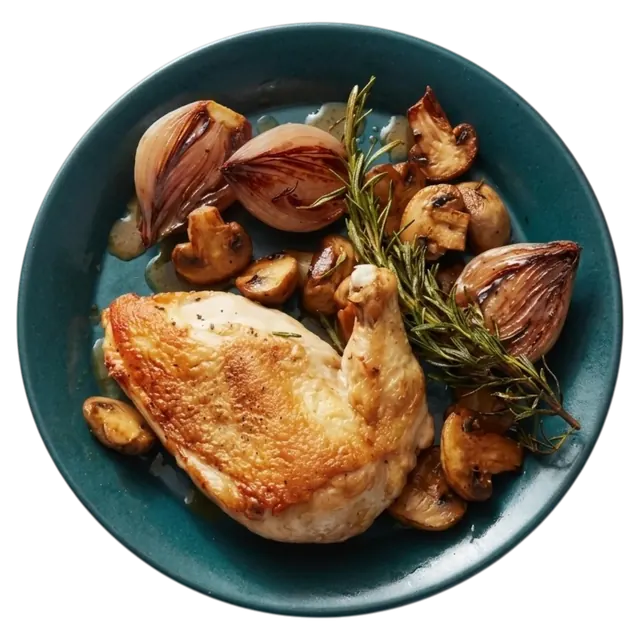
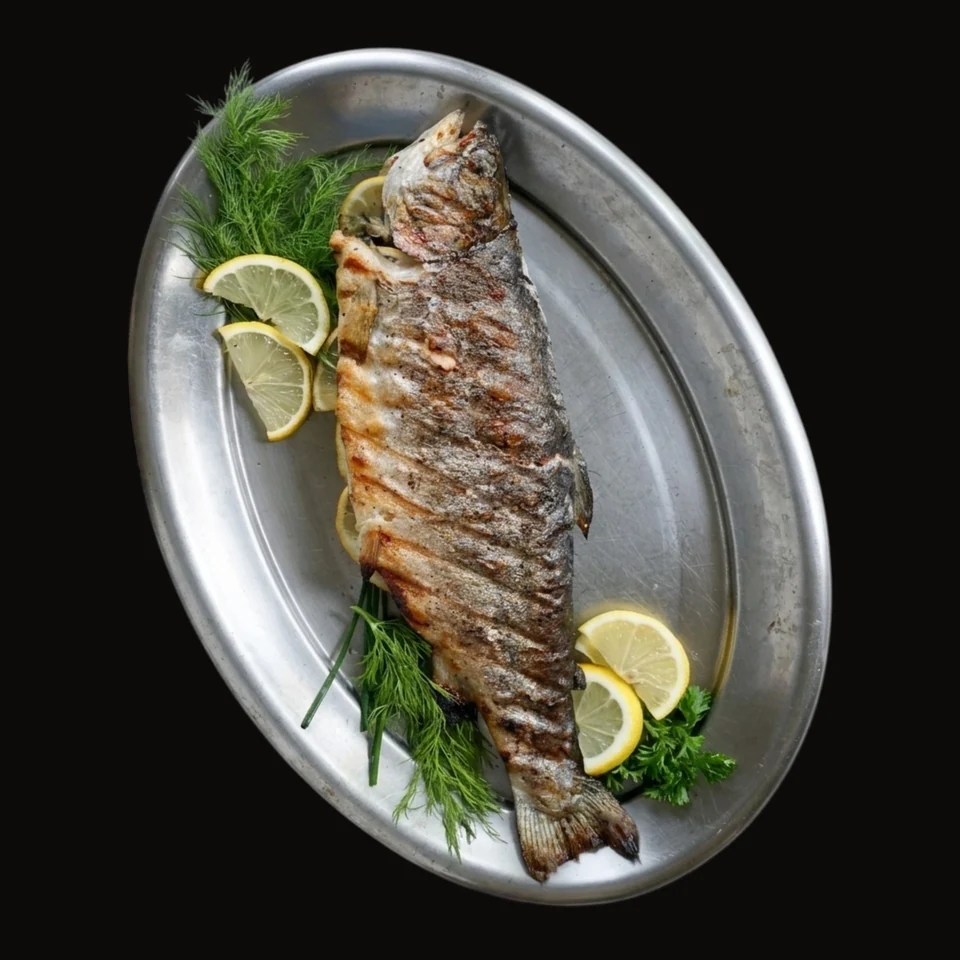
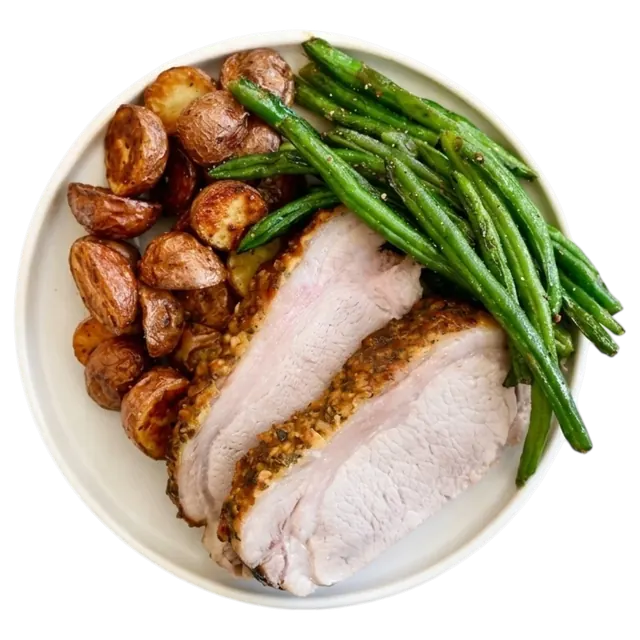
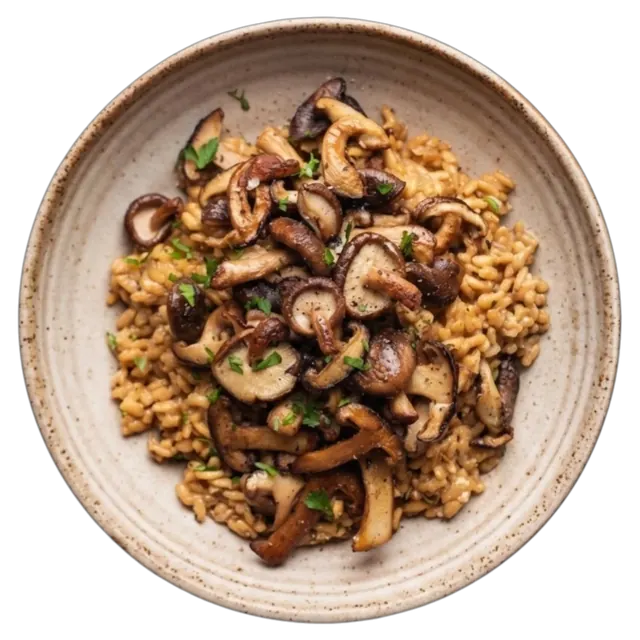
Pairs well with