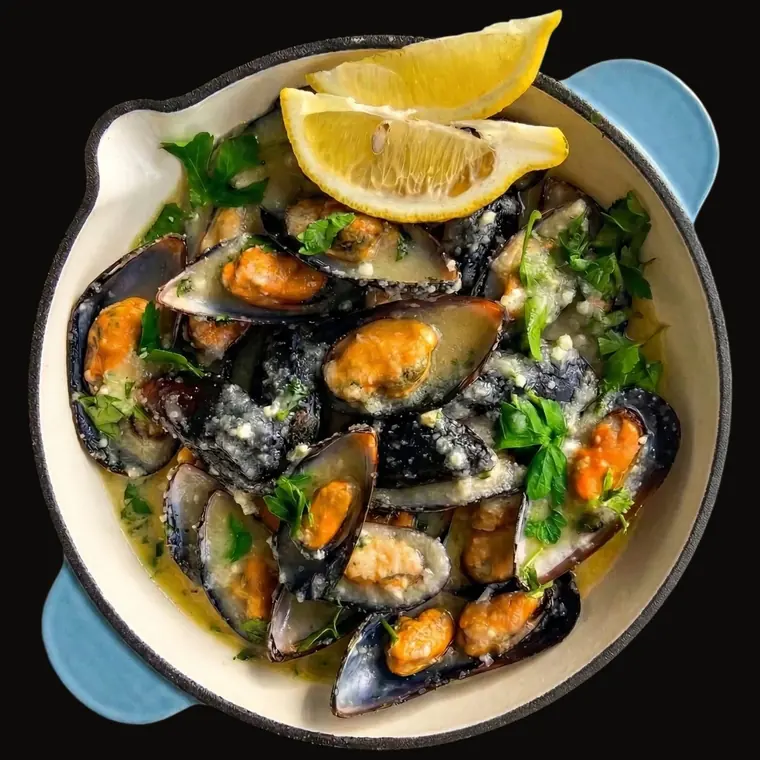
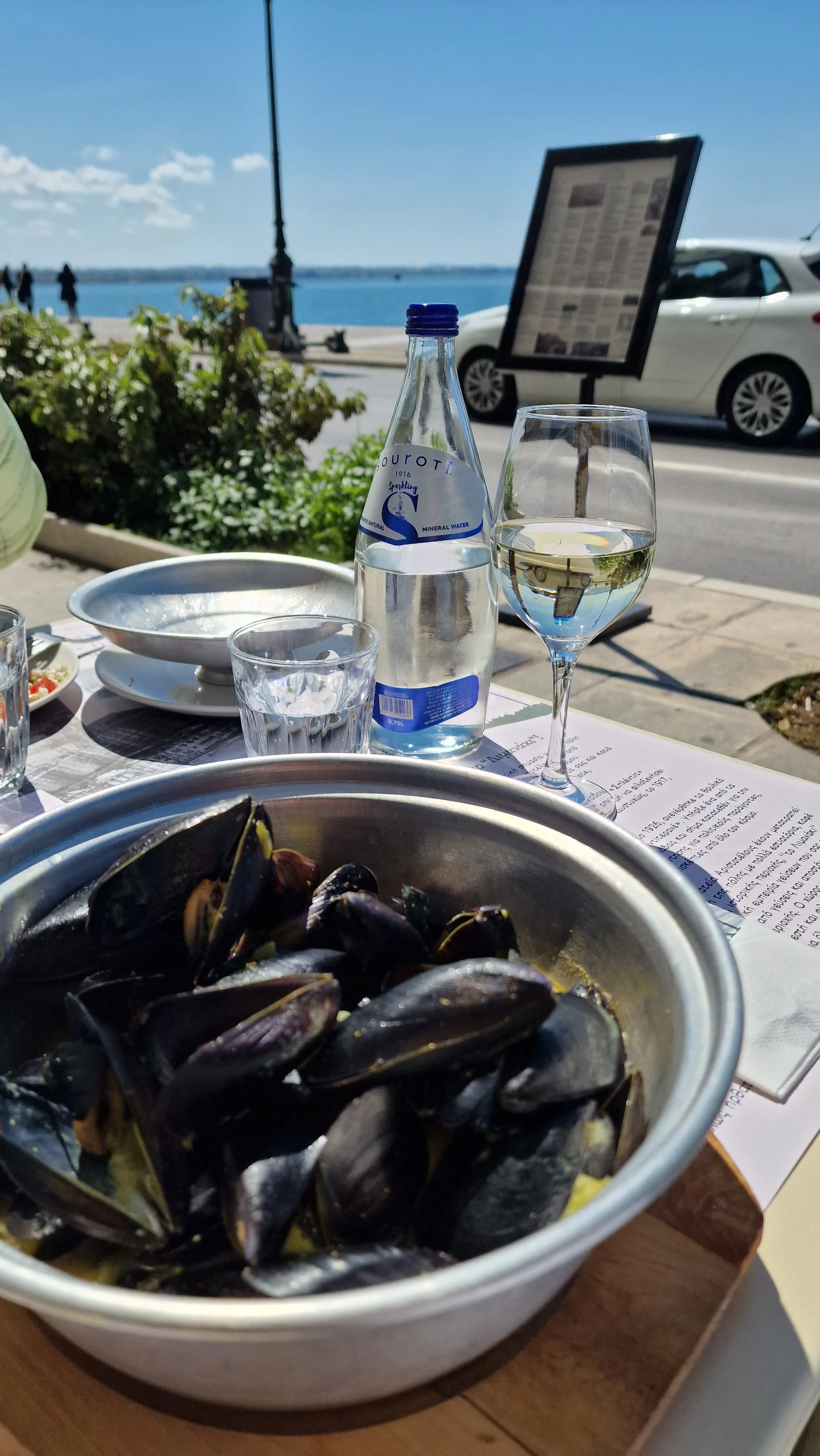
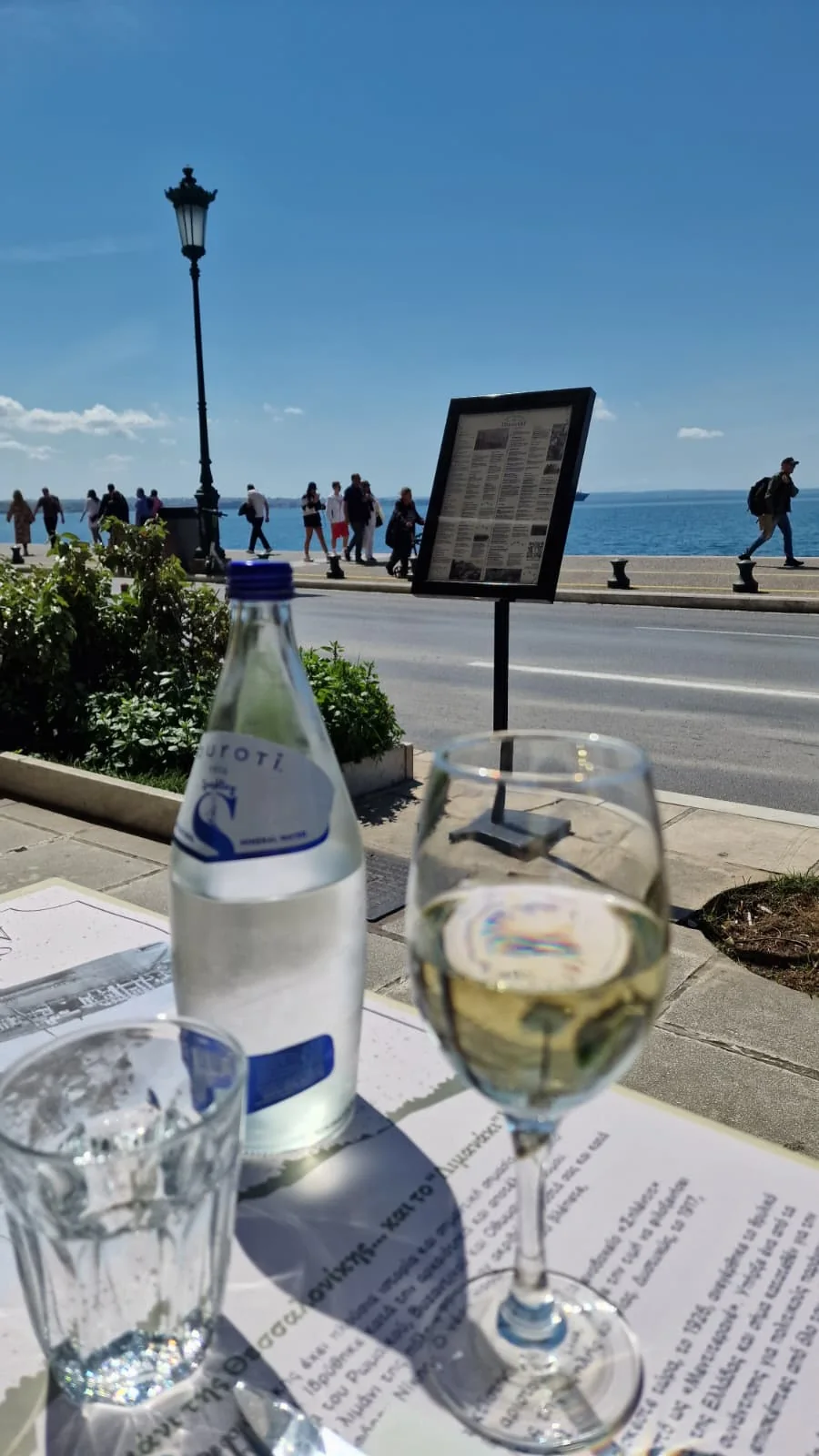
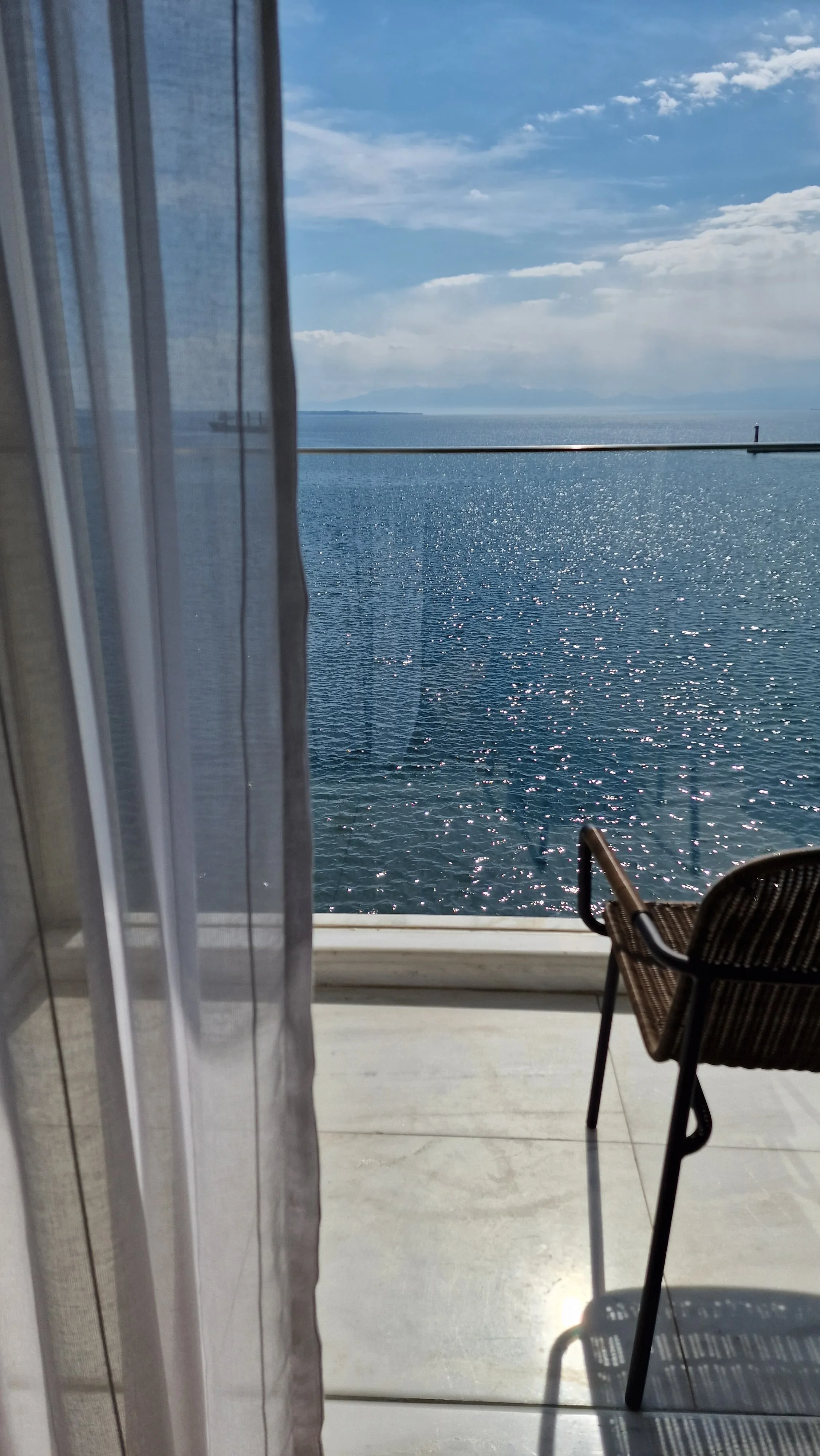
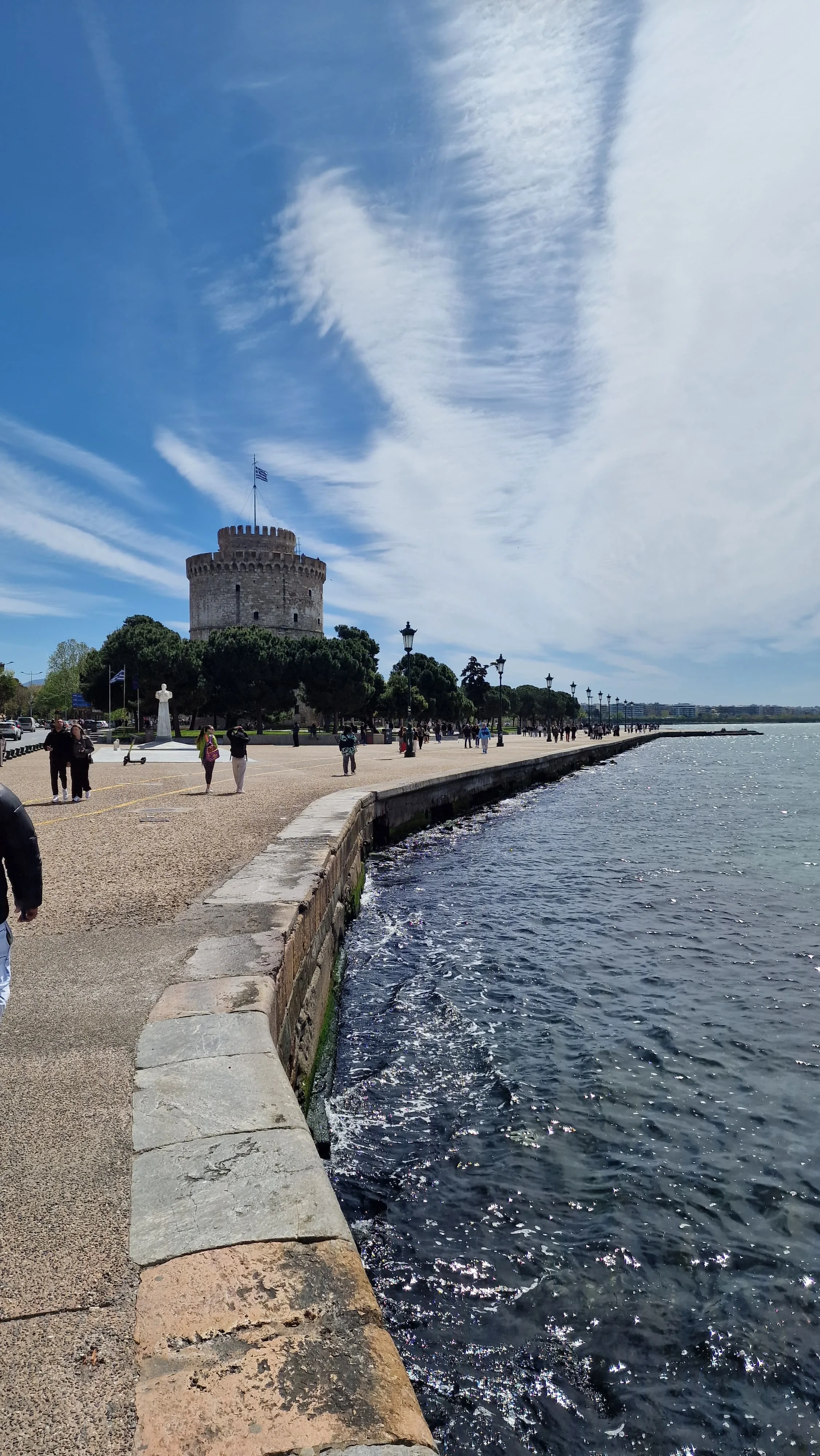
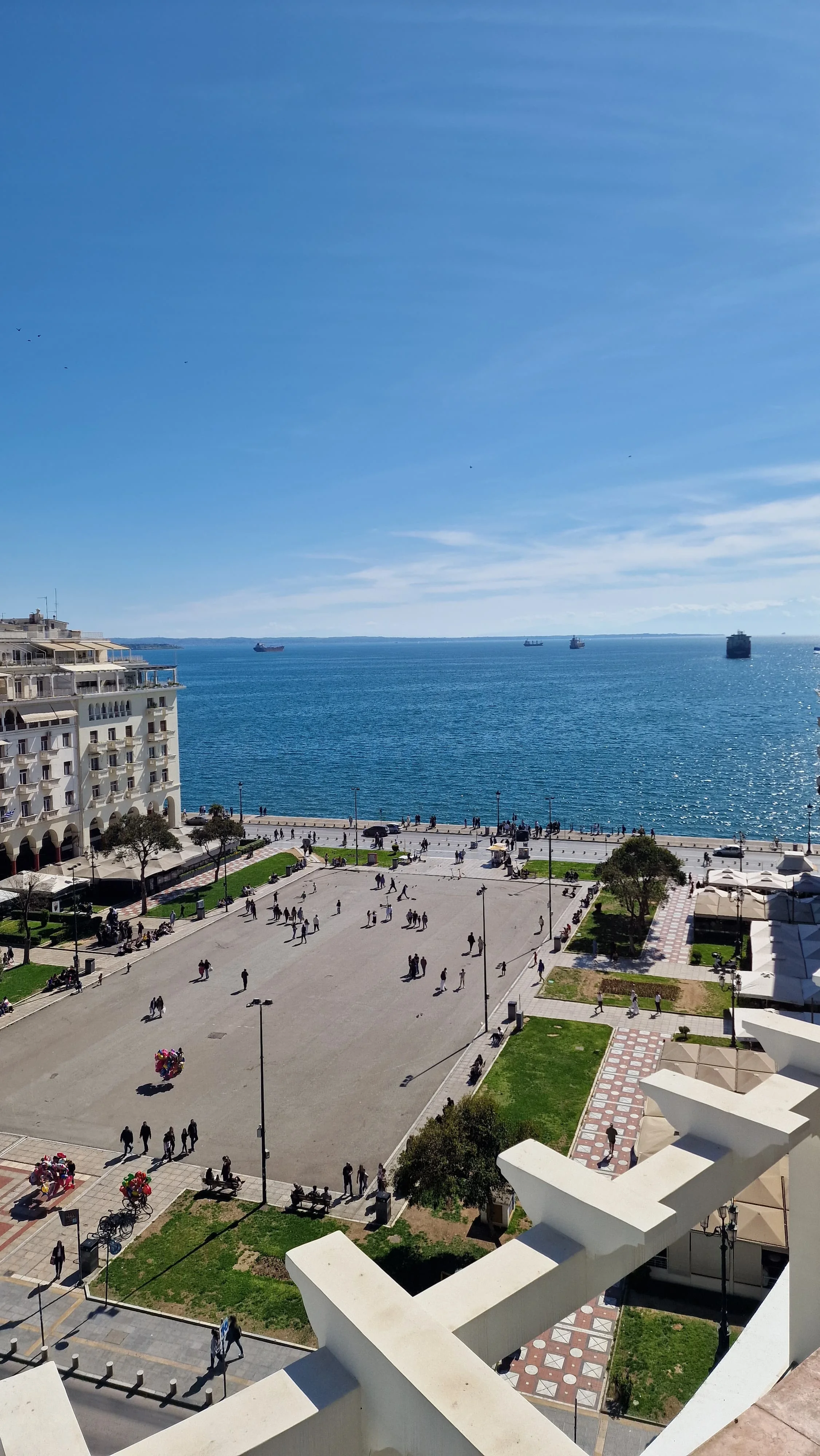
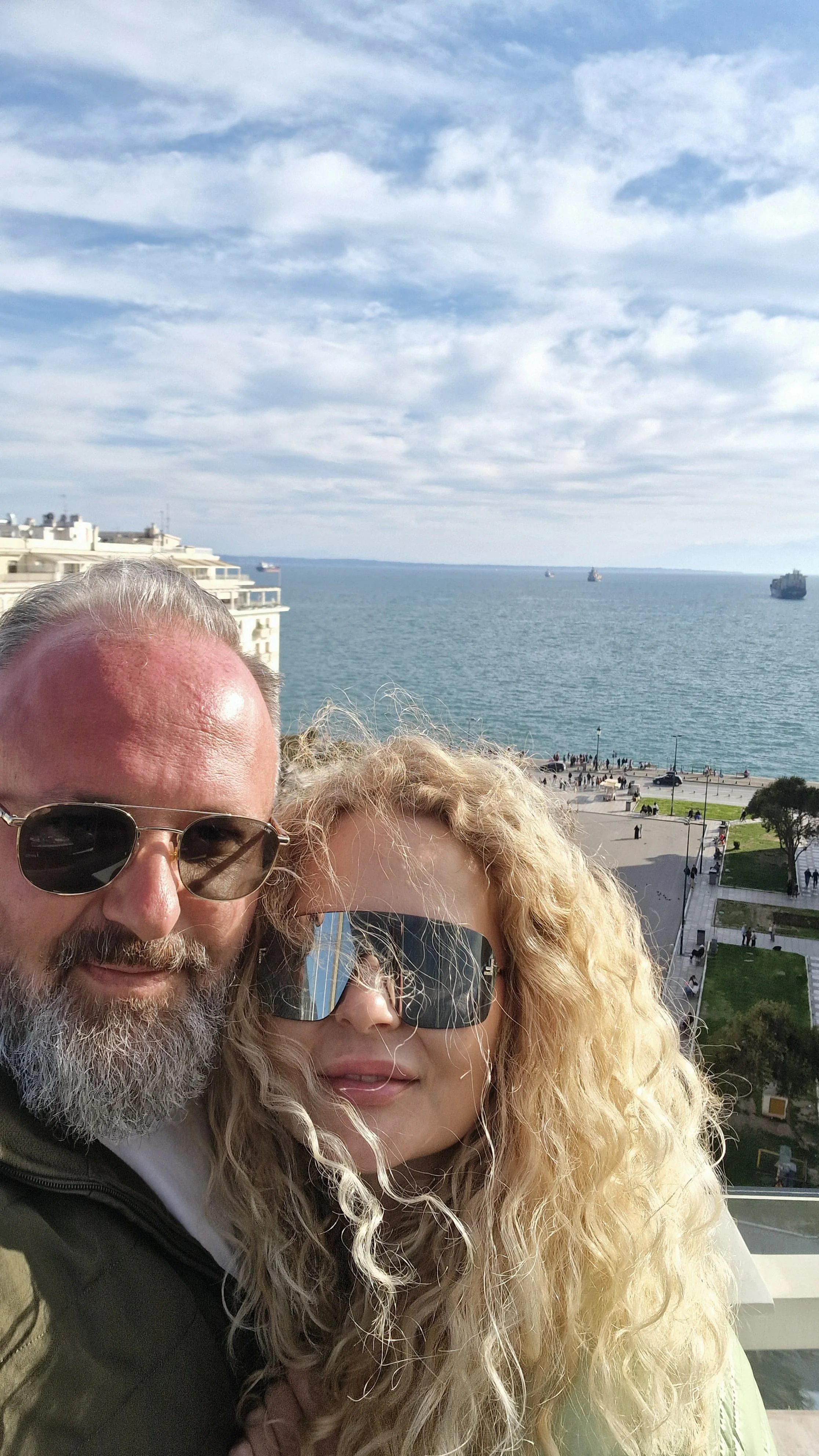
The table sat on Leoforos Nikis — the Avenue of Victory — with the Thermaic Gulf right across the road. It was a brilliant, sunny April morning in Thessaloniki. My fiancée and I had just walked out of our hotel facing the Thermaic Gulf, strolling along the waterfront, when we saw the place: To Limanaki Ouzadikon. The name translates roughly to "The Little Harbour Ouzeri," with ouzadikon being a deliberately old-fashioned form of ouzeri, giving the venue a slightly retro, old-Thessaloniki feel. It is a classic mezedopoleio — a Greek shared-table spot built around small plates, seafood, and meze, exactly the kind of food that demands a cold glass of white wine. We decided on impulse that this was where we would have brunch, ordered a bowl of mussels and a bottle of white wine, and sat looking out over the water.
What you don't immediately realise when you sit at a café table on Leoforos Nikis is the sheer density of what used to be on that exact piece of ground. Before this stretch became a promenade of sea-facing restaurants, the old sea wall was demolished in 1869, and the quay was built in 1876. On this site stood Balik Bazaar, the city's old covered fish market, built in 1895. That market eventually gave way to the Splendid Palace Hotel, built around 1907–1908, a venue that hosted figures like Eleftherios Venizelos — the great Greek statesman and moderniser — and King Constantine I, the monarch whose conflict with Venizelos helped split Greece during the First World War. Then came the Great Fire of 1917, which burned for 32 hours, destroyed roughly a square kilometre of central Thessaloniki, and left over 70,000 people homeless. The Splendid was lost to the flames. In 1922, the site was reborn as the Mediterrane, a grand waterfront hotel with a summer roof garden and a status that made it a key social address. It survived until the 1978 earthquake damaged it so badly that it had to be demolished. That sunny spot with the mussels was a seat where a fish market, a port, grand hotels, fire, earthquake, and Thessaloniki's public life had all passed through the same few square metres.
The wine on the table was Kir-Yianni Paranga White 2023, a PGI Macedonia bottling. Ktima Kir-Yianni is a major estate founded in 1997 by Yiannis Boutaris — after he left the historic Boutari Wine Group established by his grandfather — and is now run by his son, Stellios Boutaris. The estate operates across two distinct zones: the Mediterranean-influenced slopes of Naoussa in Central Macedonia, and the cool-continental Amyndeon highlands in Western Macedonia. Paranga White is a multi-parcel composite drawn from contracted growers in the broader region, leaning heavily on the high-altitude Amyndeon plateau — the coldest officially classified wine zone in Greece, where vineyards sit at 600 to 750 metres, moderated by four glacial lakes.
The blend is roughly 80 percent Roditis and 20 percent Malagousia. Roditis, a pink-skinned, late-ripening native variety historically associated with Retsina, is entirely different when grown at altitude on poor, sandy soils — it provides a crisp, mineral-edged backbone. Malagousia, an aromatic native grape rescued from near-extinction in the late 20th century, does the perfumed work, bringing notes of jasmine, white peach, and a soft, muscat-like lift. The 2023 vintage saw the varieties vinified separately in stainless steel, with the Malagousia given a short cold soak to extract aromatic precursors, before blending and ageing for several months on fine lees with gentle bâtonnage — the process of stirring the lees back into the wine to build mid-palate texture without using oak.
The result is a completely dry wine that works more on texture than flavour. It has a sharp, crisp edge, but the time it spent resting on those lees gives it just enough smoothness to stop it from feeling harsh or thin. The pairing was effortless, almost automatic. Mussels have a briny, sweet-iodine character that needs high acidity to cut through, but they also have a soft texture that requires a wine with enough mid-palate weight not to feel thin in contrast. The Roditis provided the cut; the lees-rounded Malagousia provided the weight. It was functional, perfectly pitched, and entirely uncomplicated.
The wine suited the moment perfectly. Paranga White is not a wine built for contemplation or cellaring; it is built for a sunny morning on the Thermaic Gulf, a bowl of fresh seafood, and the understanding that sometimes the best bottle is the one that simply works. We finished the wine, paid the bill, and walked on to explore the city on foot, leaving the ghosts of the Splendid and the Mediterrane behind us on the pavement.
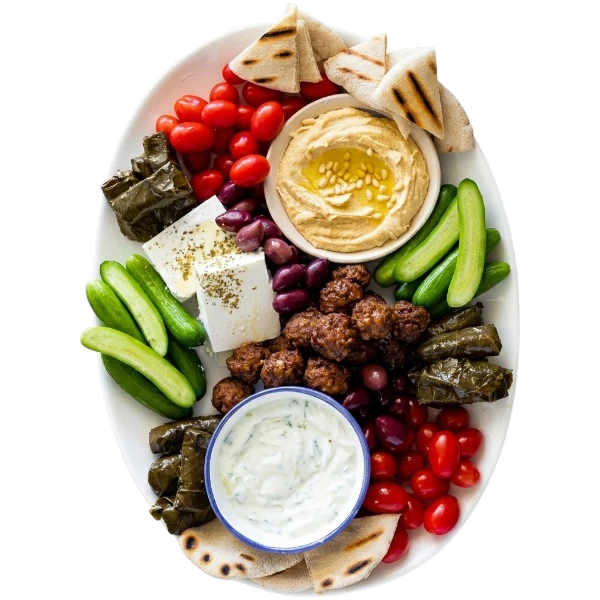
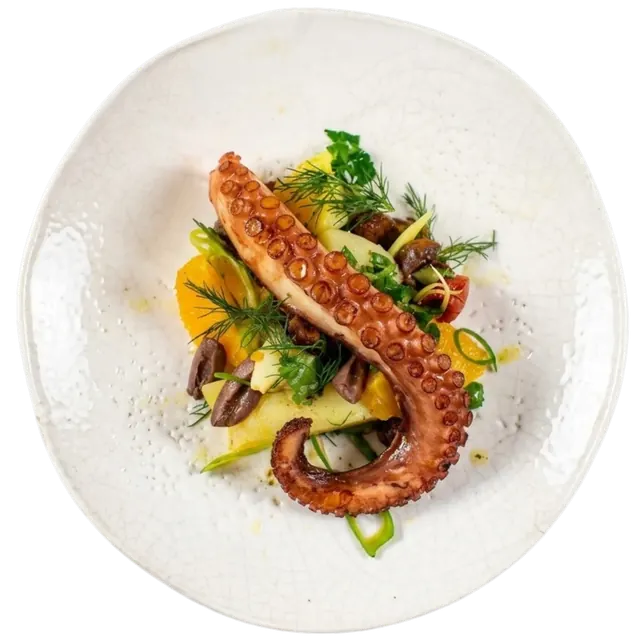
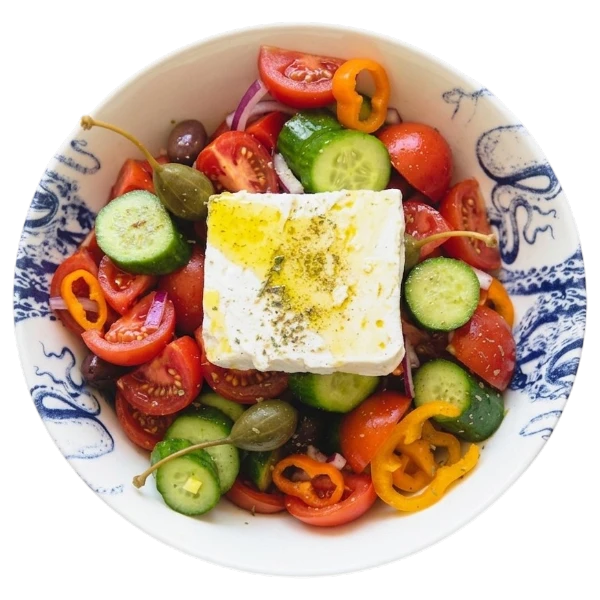
Pairs well with