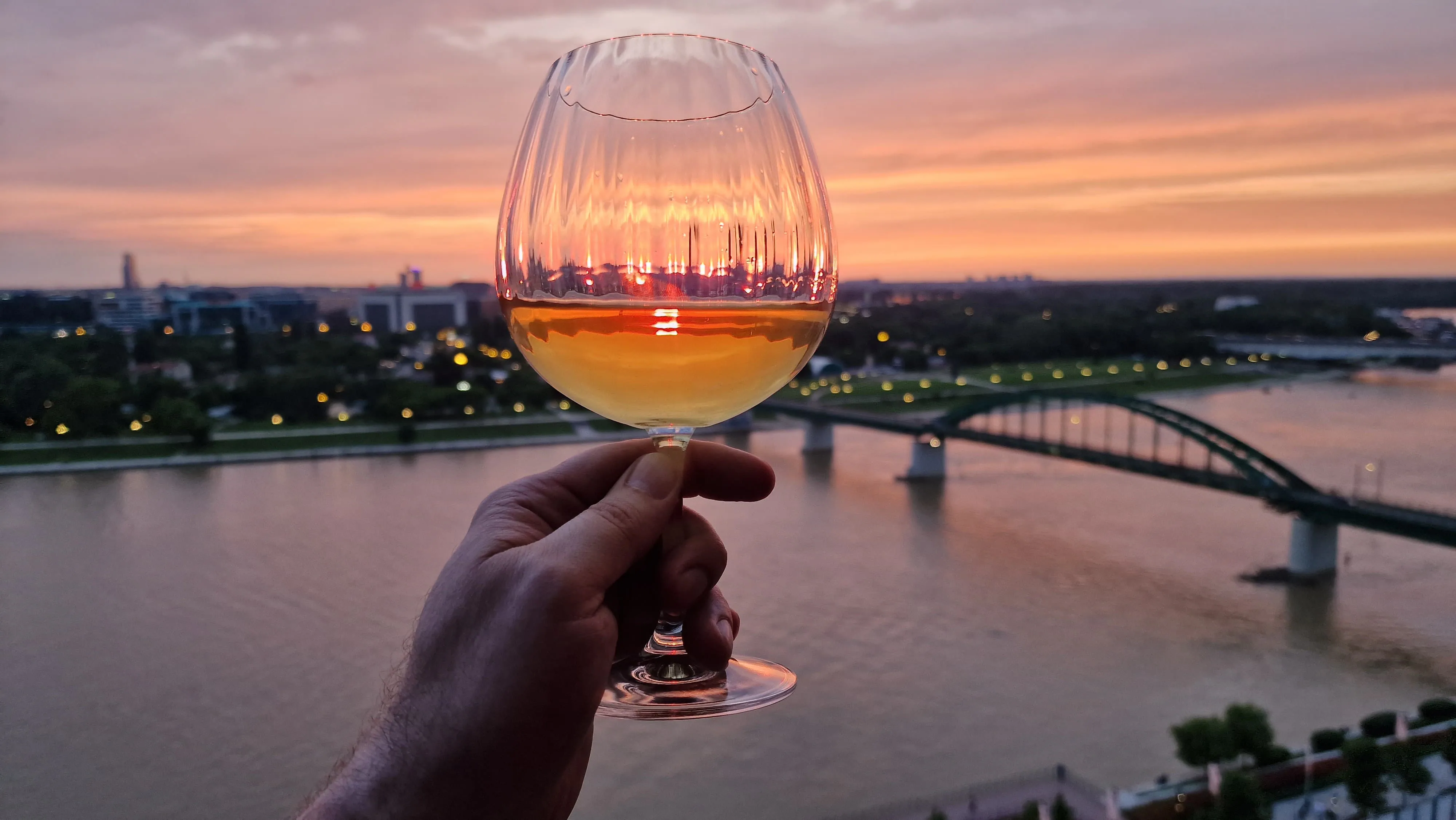
There comes a moment in the Belgrade summer when heavy red wines lose all meaning, and the usual whites feel far too predictable. It was on one such Saturday evening, when going out held no appeal, that I opened the website of Organski Podrum — a place dedicated to natural wines whose uncompromising curation earned them a spot in the Gault & Millau guide. The plan was to order a set of unfamiliar, extended-maceration bottles — simply as an experiment, untethered to any specific dish or occasion. I picked a few random options, and tucked among them was an aged Slovenian blend with a rather unobvious composition. I had no particular expectations.
In the popular imagination, Slovenian winemaking — and particularly its global reputation for skin-contact whites — usually begins and ends in Primorska, right at the border with the Italian Collio. That western region, defined by Mediterranean warmth and a deep historical exchange with its Italian neighbours, is just one pillar of the country's three-part official classification. To the northeast lies Podravje — the largest macro-region, historically driven by rolling hills and crisp aromatic whites. This bottle, however, originates from the third and smallest of the triad — the cool, strictly continental Posavje region and its official Bizeljsko-Sremič sub-district, tucked into the opposite end of the country. These are the eastern hills looking toward the Pannonian plain, where vineyards are planted at an altitude of 350-360 meters above sea level. The local soils consist of hard, layered bedrock on the north- and east-facing slopes — dominated by schist, clay, and sandstone. The terroir here dictates structure over lightness.
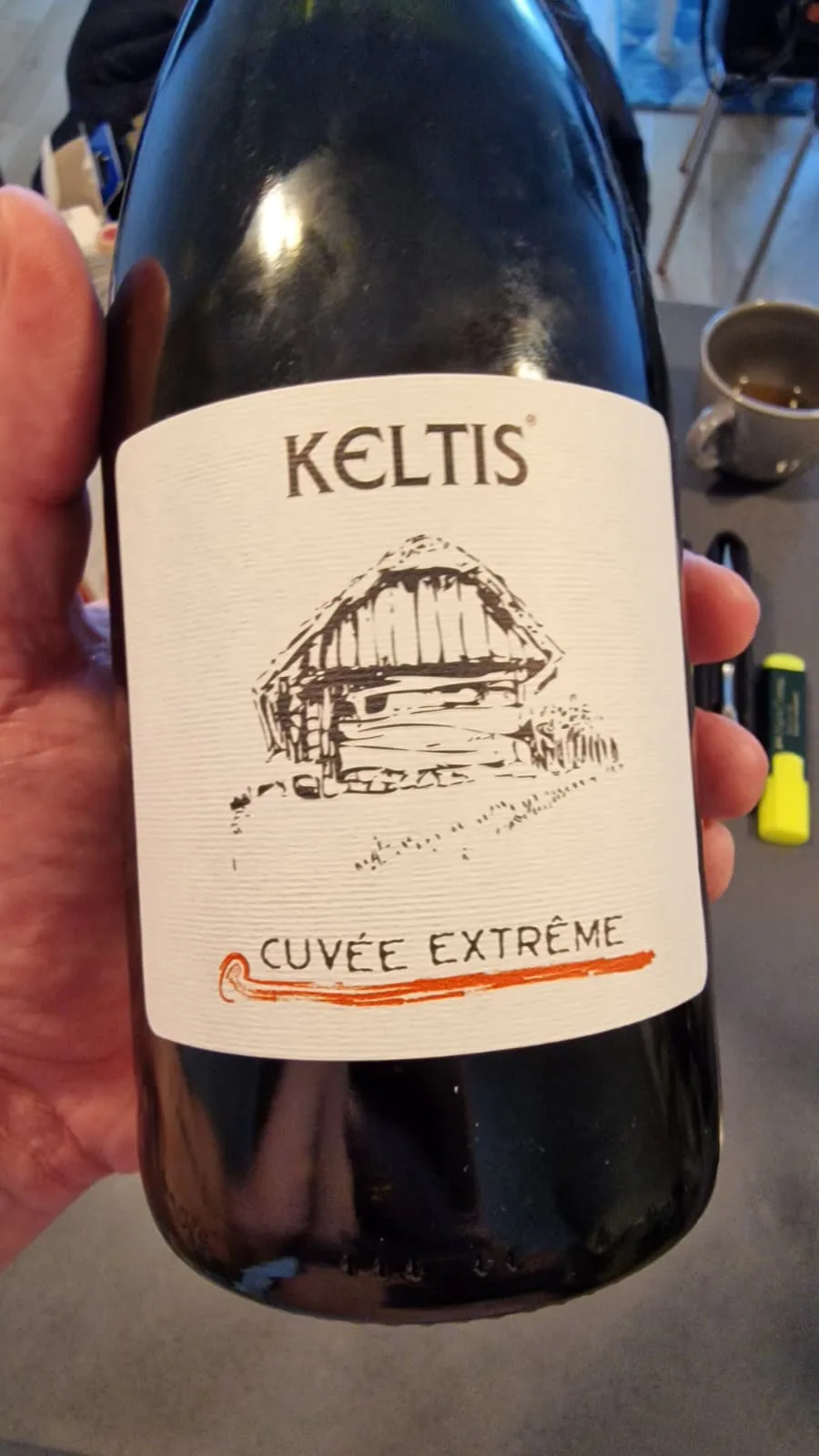
The estate — Keltis kmetija Kelhar — is run by two generations, representing a clear shift in philosophy. The founder — Marijan Kelhar — tends the vines, while his son — Miha Kelhar — takes full control of the cellar. The decision to make orange wine here is not a nod to modern trends, but a functional return to pre-industrial methods. Before temperature-controlled steel tanks made fresh, transparent whites the global standard, local farmers relied on grape skins for natural preservation. To build the 2012 vintage, Miha took a radical step by co-harvesting five different varieties — Chardonnay, Pinot Gris, Gewürztraminer, Rhine Riesling, and Muscat Ottonel, an early-ripening, cold-hardy grape historically established across Central and Eastern Europe to add aromatic lift. Rather than vinifying them separately, this entire mass went into a joint maceration lasting about two months. The skins provided the tannins needed to protect the wine during its subsequent years in older oak barrels, allowing the winery to refuse filtration and work with practically no added sulfur. It is a calculated return to tradition.
Opening a ten-year-old orange wine means there’s a chance of a flat, oxidized decline. This bottle survived the decade — a heavy, bone-dry pour that proved age was exactly what it needed.
Pairs well with