Sometimes wine stories are not about wine. Or are they all the time? Anyway, this one definitely isn't. Although the wine was there, as it is oftentimes, which is why this story deserves a page on my blog and I'll give the wine here the respect any wine deserves. But first, the story of the place and snail farming in Serbia.
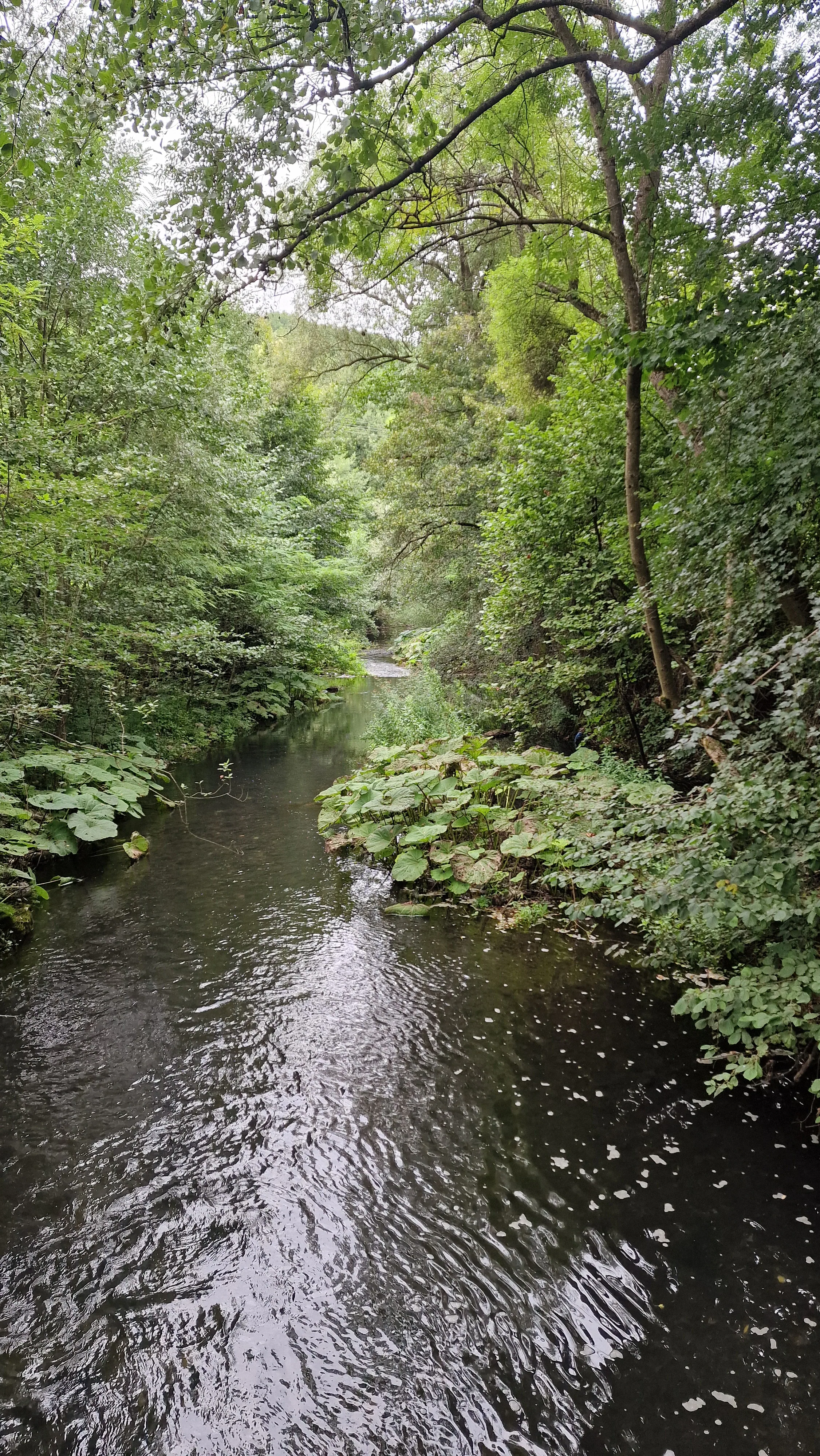
Ten kilometres out of Valjevo — a mid-sized town in western Serbia — on the road toward Tara Mountain, there is a place called Predah — Serbian for rest. You find it because someone who knows tells someone who knows, and eventually the information reaches you. It is entirely outdoors: wooden canopies built over the Jablanica — a river that, this far up, is barely more than a shallow stream — old trees overhead, checked red and white tablecloths, a wicker bread basket. And on the menu, something you do not expect to find in a forest restaurant in western Serbia — escargots. The licence plates of cars parked around tell the story — Valjevo locals, yes, but also Belgrade, Novi Sad, plates from all over Serbia. Bikers know it too: on any given afternoon you'll find heavy touring motorcycles parked outside, their riders stretched out under the canopies.
Helix pomatia — the Roman snail, the Burgundy snail — is not exotic in Serbia. It is native. The Valjevo region, with its limestone geology and humid river valleys, is textbook snail habitat. Which makes the story of Serbia's snail industry particularly strange: by 2005, the country had over 400 registered snail farms, riding a wave of post-Yugoslav rural entrepreneurship and Western European demand. The farms collapsed almost immediately, undercut by uncontrolled wild harvesting — why invest in breeding infrastructure when the forest floor was full of free product? Today a handful of farms survive. The rest of Serbia's exports are wild-caught, which is legally awkward, since Helix pomatia is a protected species in Serbia. The punchline: in 2023, Serbia ranked 5th in the world for snail exports — 858,000 kilograms, $5.25 million. A protected species, illegal to harvest, fifth globally.
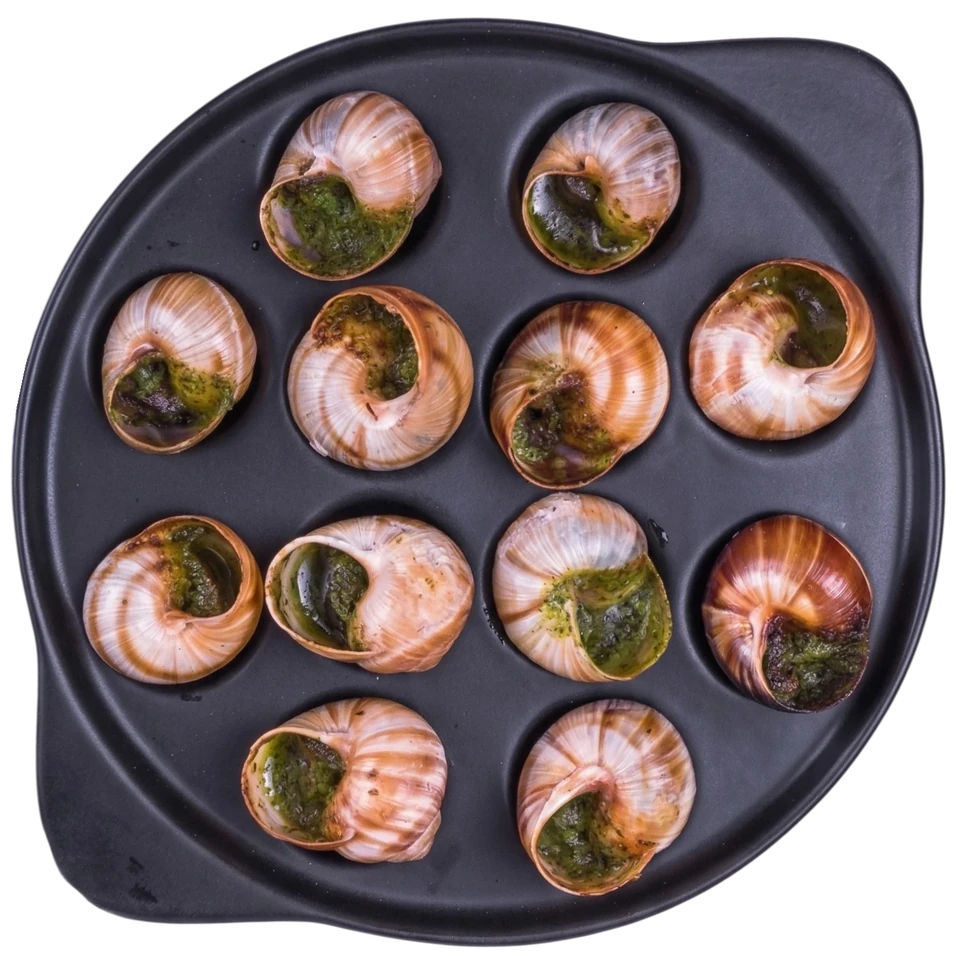
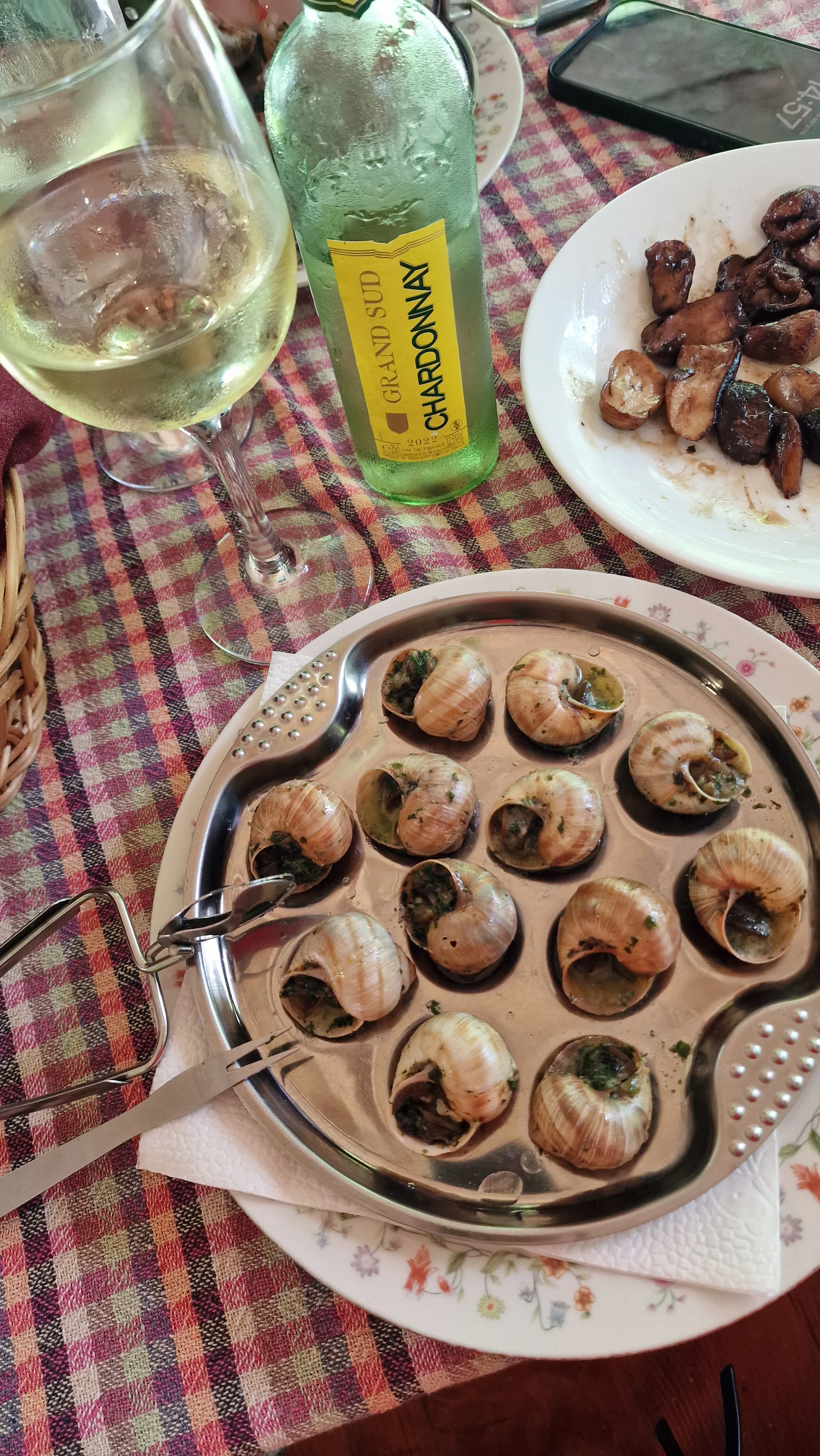
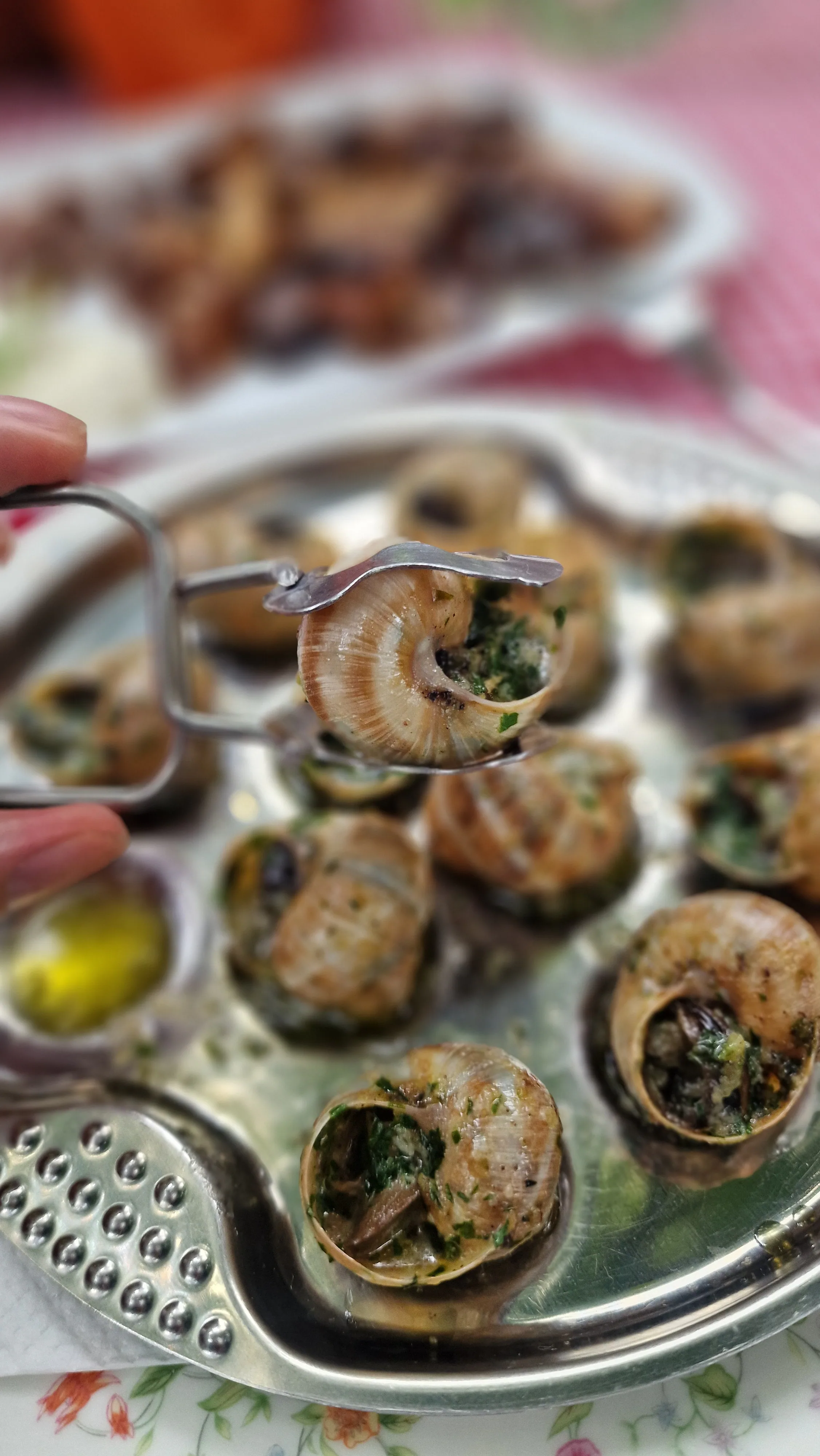
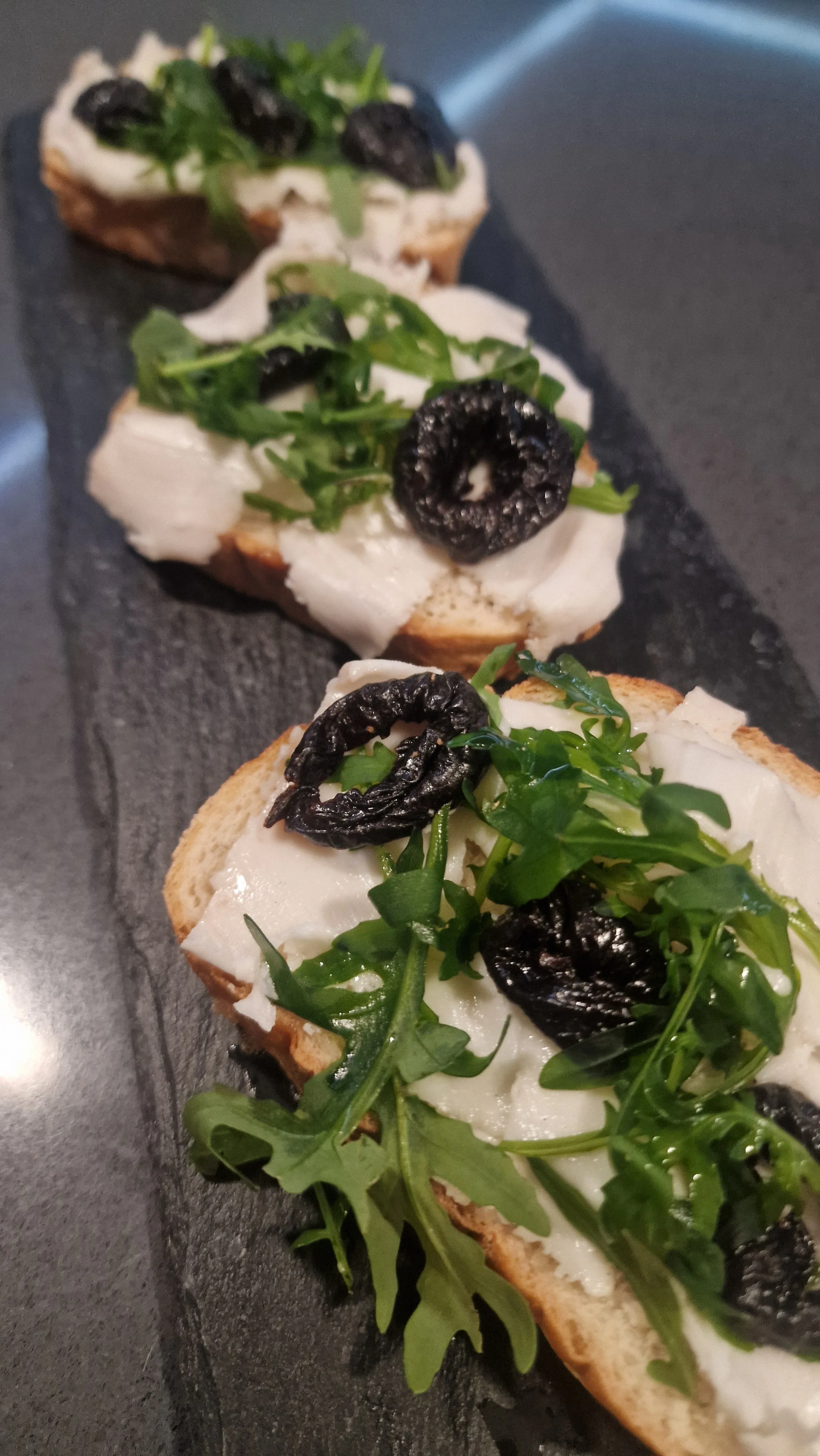
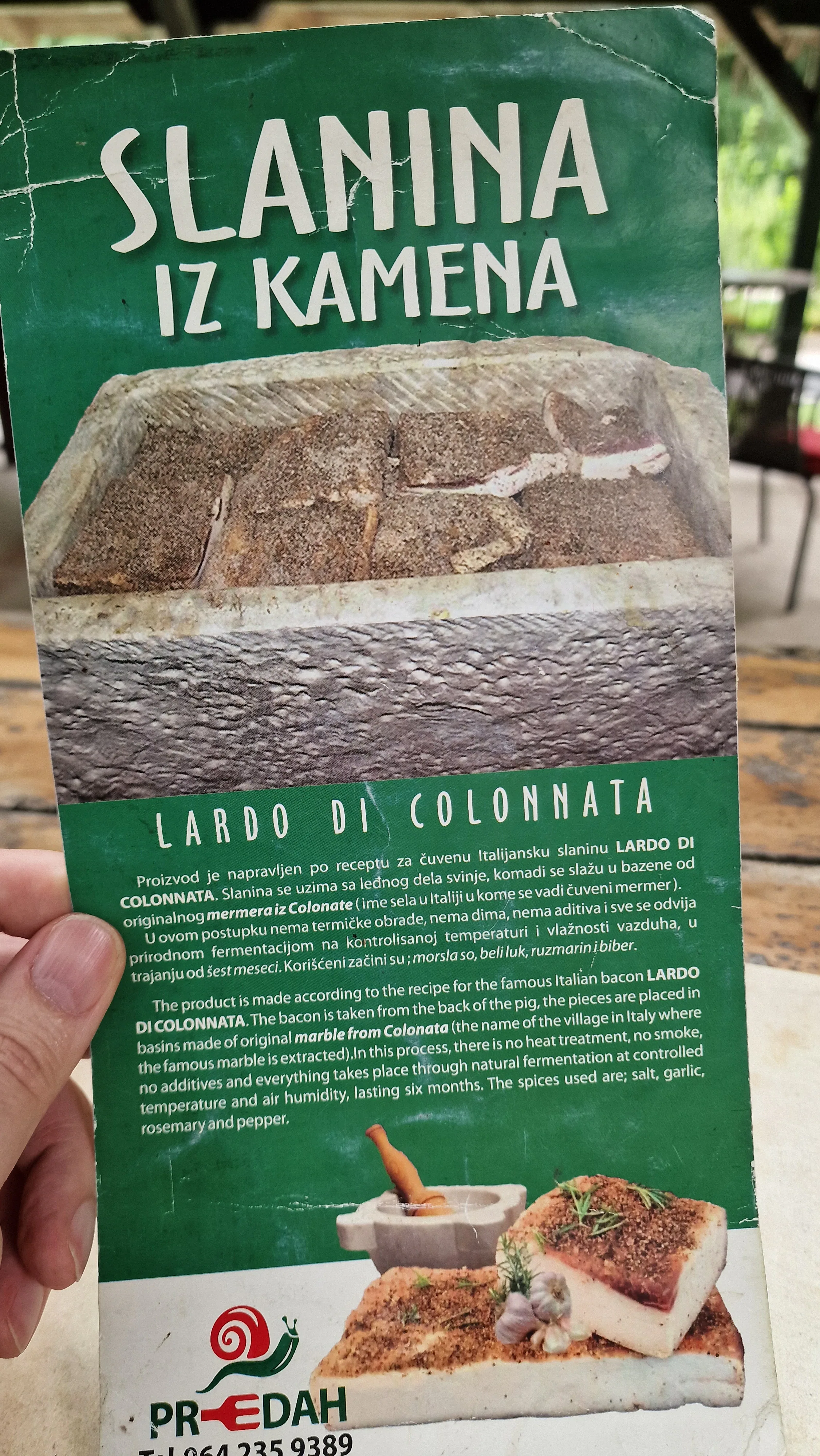
What arrived at our table was done correctly. A proper stainless steel escargot plate, twelve shells, tongs, a two-pronged fork, hot dark bread. The preparation was Bourguignon — compound butter of butter, garlic, and flat-leaf parsley packed into each shell, baked until bubbling. The texture is firm and slightly elastic — close to a chanterelle — with a faint salinity underneath all that garlic and herb. Alongside came a plate of pan-fried porcini — vrganj, as they are called here, from the surrounding forests of Jablanik and Maljen, simply done in butter and garlic, the way a mushroom that good demands to be treated. And on the same menu — lardo di Colonnata, Italian fatback traditionally aged in troughs hewn from Carrara marble in a Tuscan mountain village above the famous quarries — but this time produced locally. French escargots, Serbian porcini, Tuscan-style marble-aged fatback — over a stream, in a forest, on a checked tablecloth in the middle of western Serbia.
The wine was Grand Sud Chardonnay 2022, Pays d'Oc — unpretentious southern French Chardonnay, pale gold, cold. The canonical pairing for escargots Bourguignon is white Burgundy — Chablis, Meursault — and the structural logic is identical here: mineral freshness to clean the palate, a buttery note that rhymes with the shells rather than clashing. This is not white Burgundy. It is a fraction of the price and it worked exactly as needed, poured generously, with the stream audible and the forest green around us.
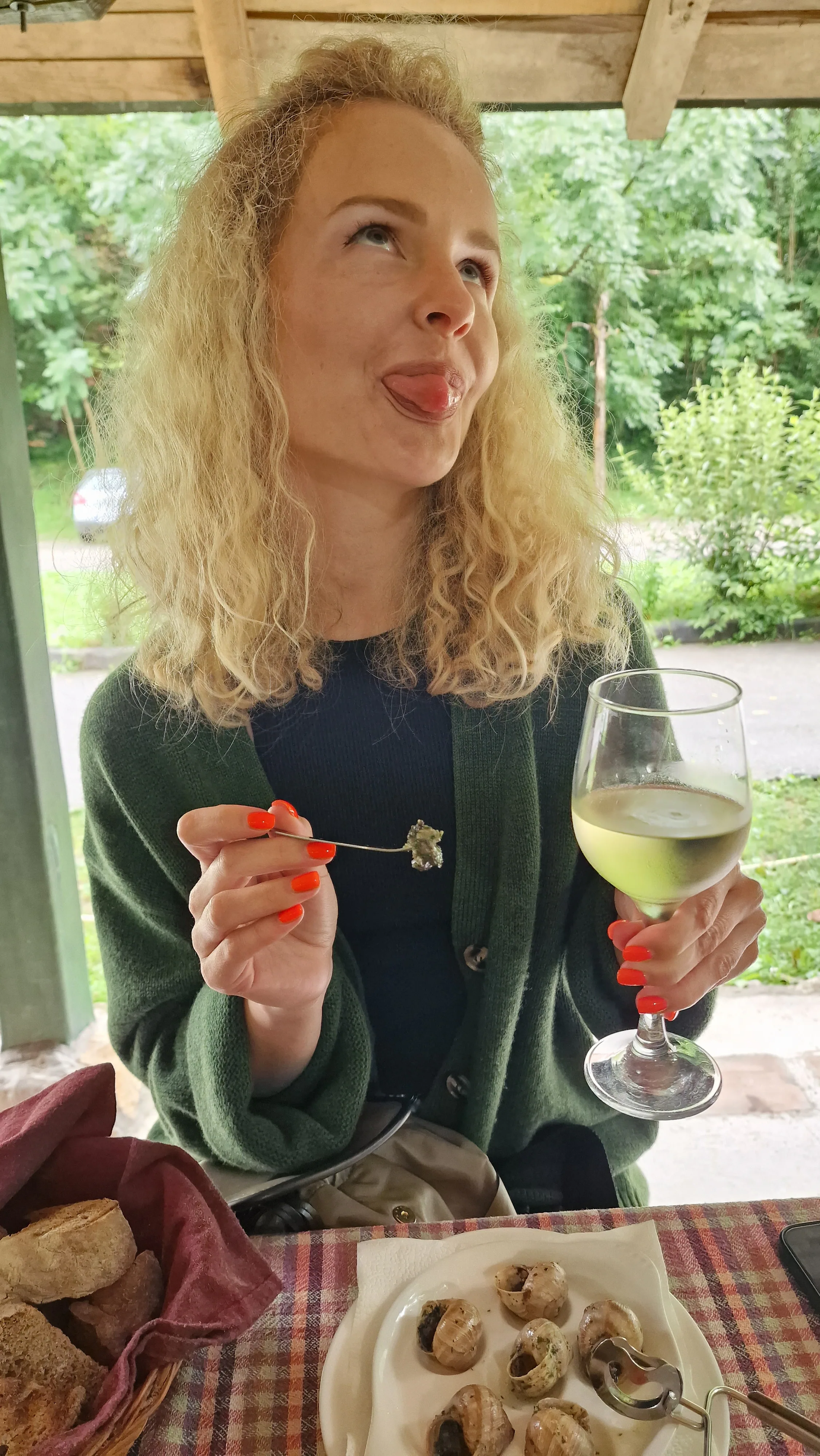
My fiancée first heard about Predah from a guide while touring Serbia with her mom during one of her visits to us. And this is how it started — we've been making a weekend drive from Belgrade at least two or three times every outdoor season ever since, which tells you more about the place than any review could. There's an interesting pattern we've noticed: hear foreign speech at a neighbouring table and you'll almost certainly see escargots in front of them; locals tend to order something else entirely. Interestingly, almost every trip to Predah for escargots was her idea. But then one day we found ourselves in a Paris bistrot that served snails. We ordered, and a noticeably larger version than what we're usually served at Predah arrived. She pulled out one snail from its shell, looked at it, looked at me, and said: "But it does look like a real snail! I can't eat it."
Pairs well with