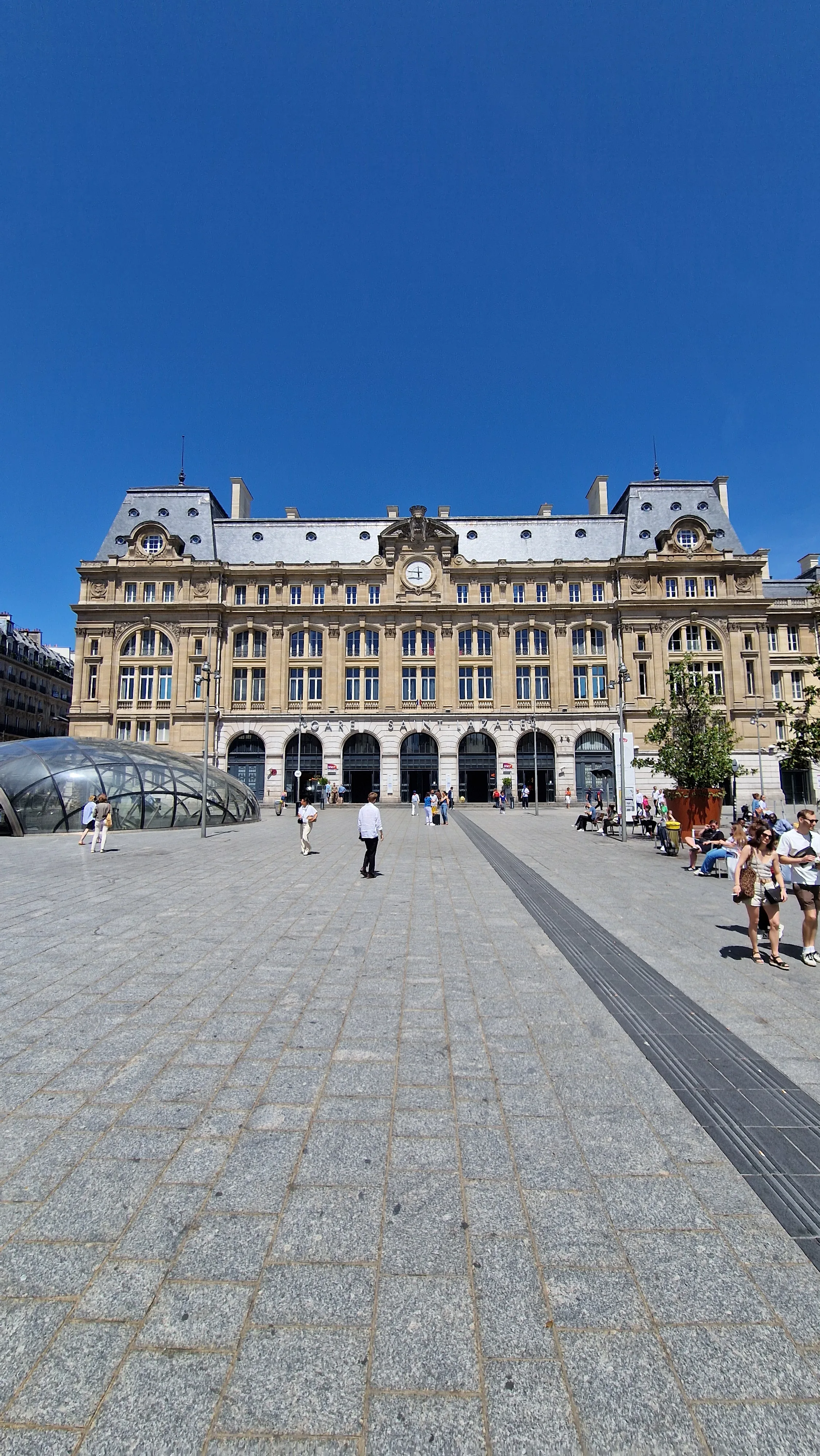
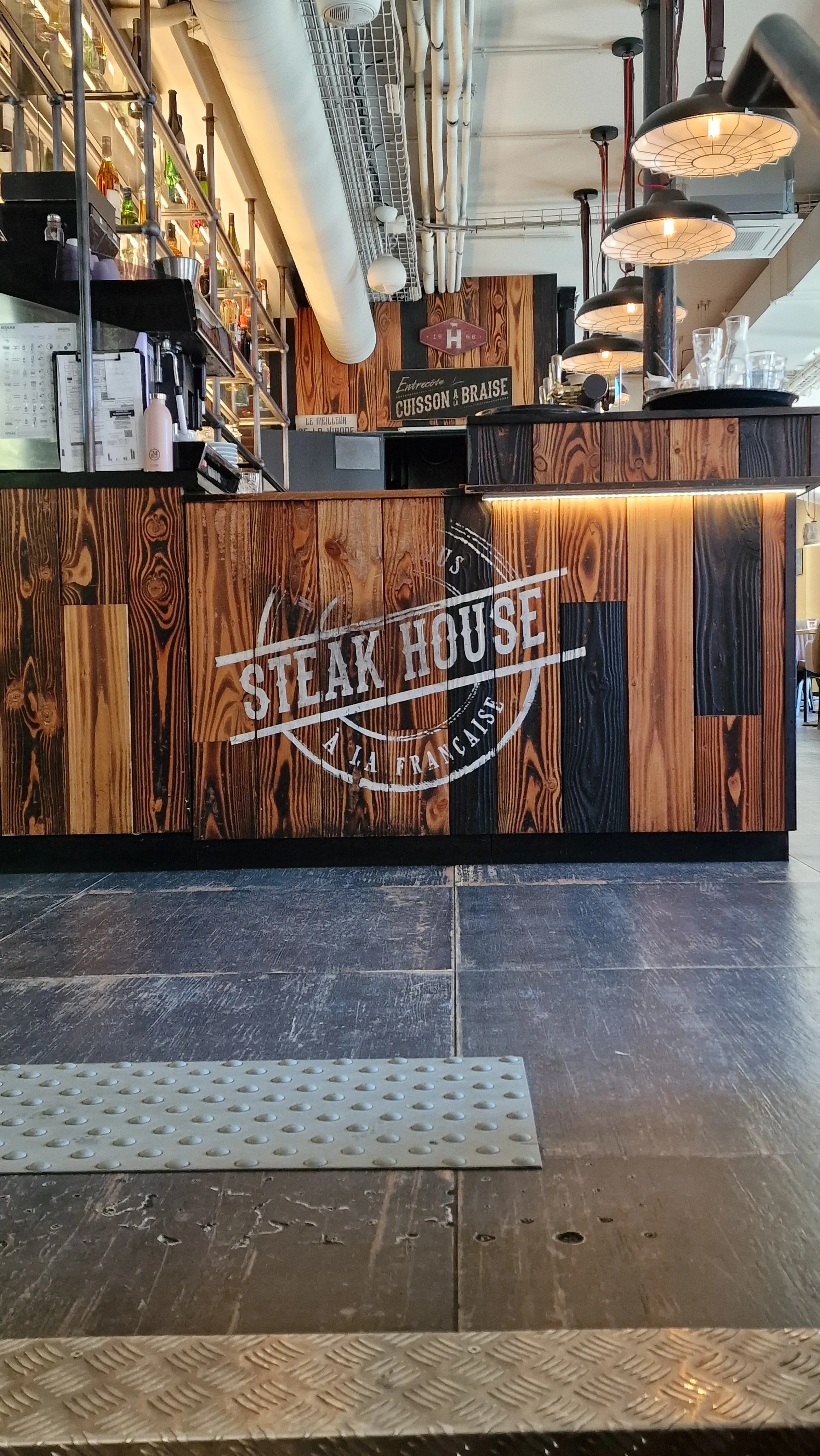
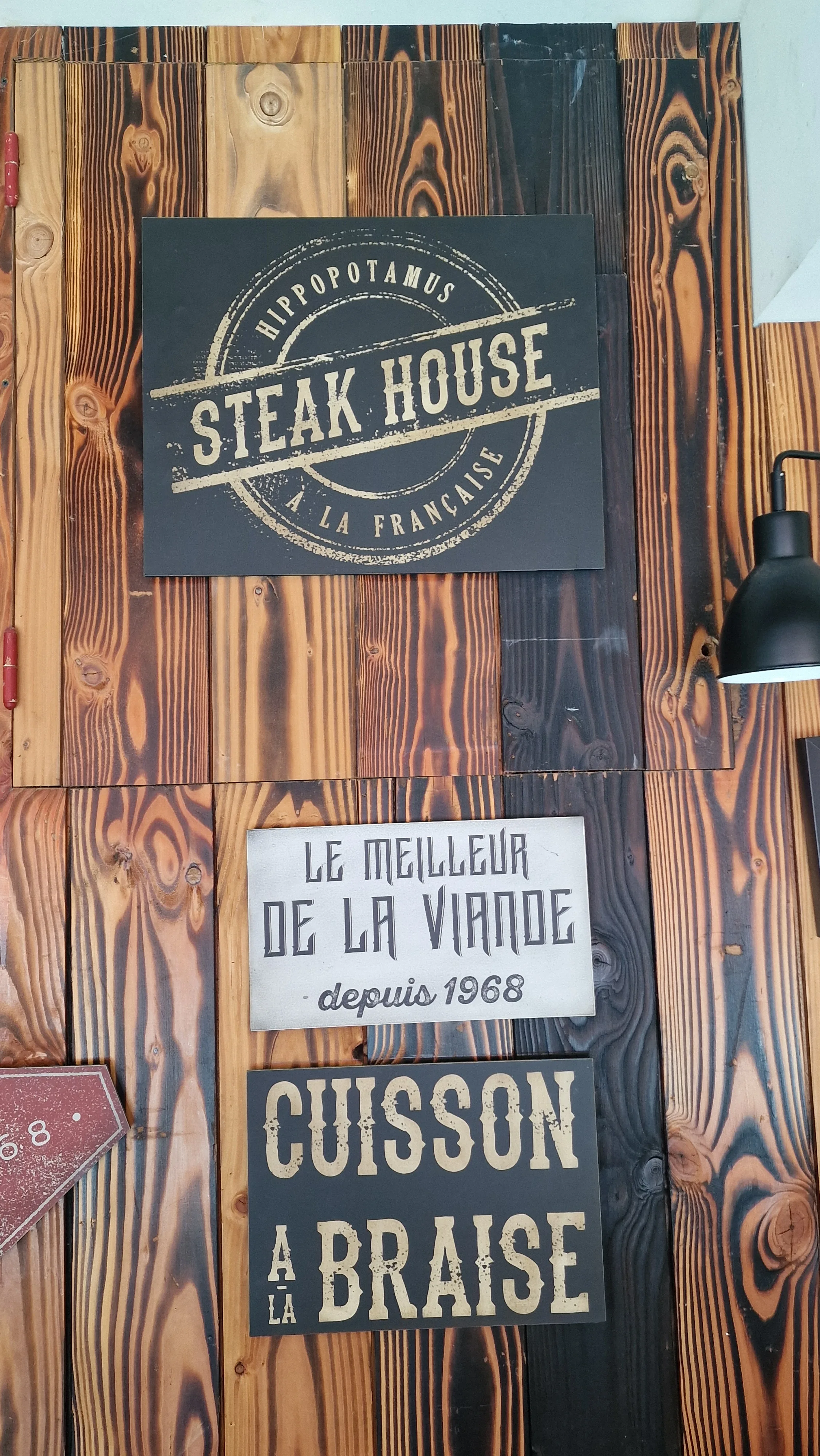
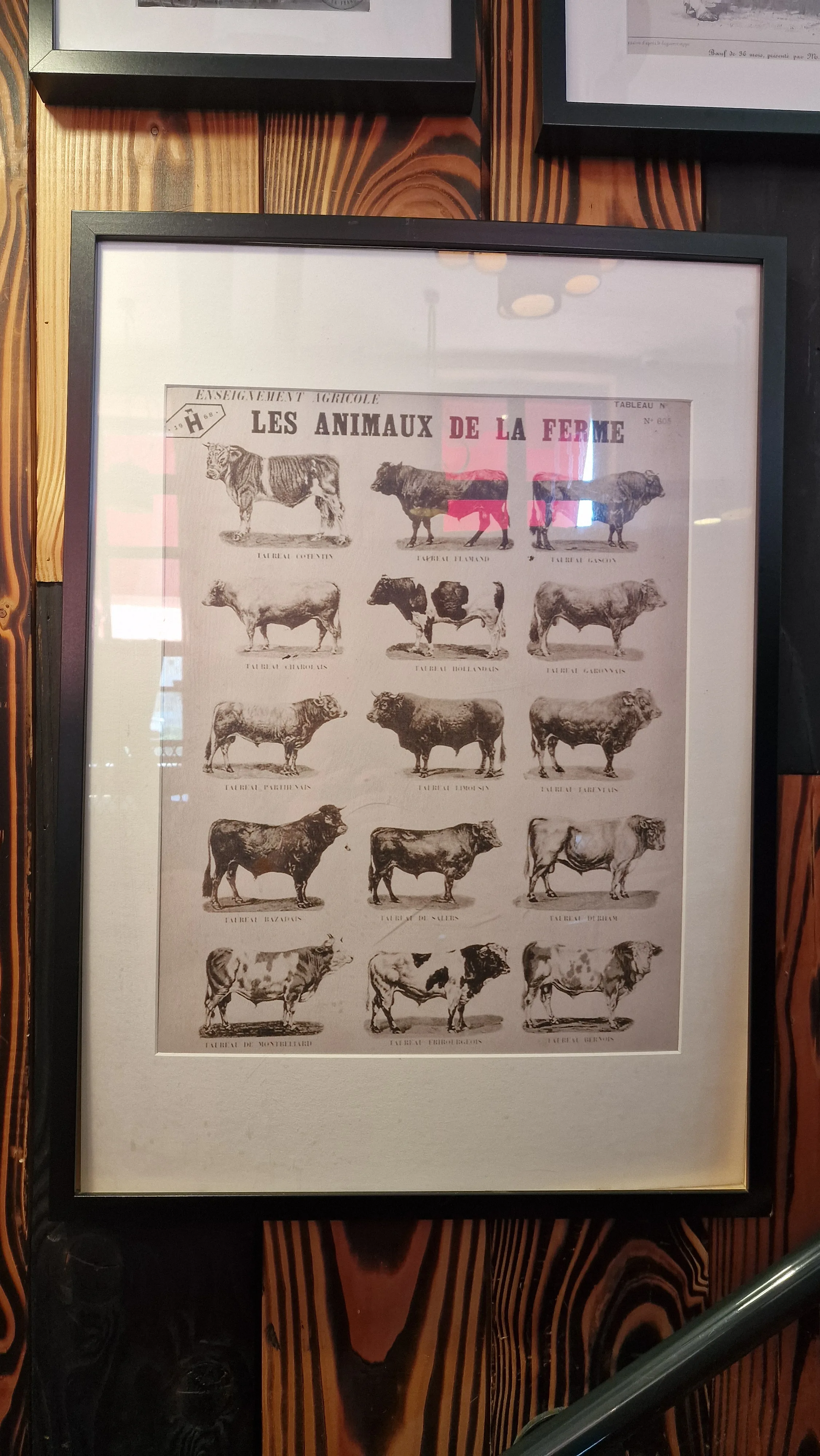
The conference in Deauville had ended on the Friday, and by Sunday lunchtime I was under the iron and glass of Gare Saint-Lazare with a few hours before my flight home to Belgrade. Saint-Lazare is the oldest of the Paris termini — trains first ran from here in 1837 — and the city’s gateway to Normandy. Monet gave it twelve canvases of steam and iron in 1877; the Impressionists rode these same lines out to paint the coast I had just left. I was making the trip backwards, for duller reasons, and a station appetite pulled me into Hippopotamus, a steakhouse chain on the square.
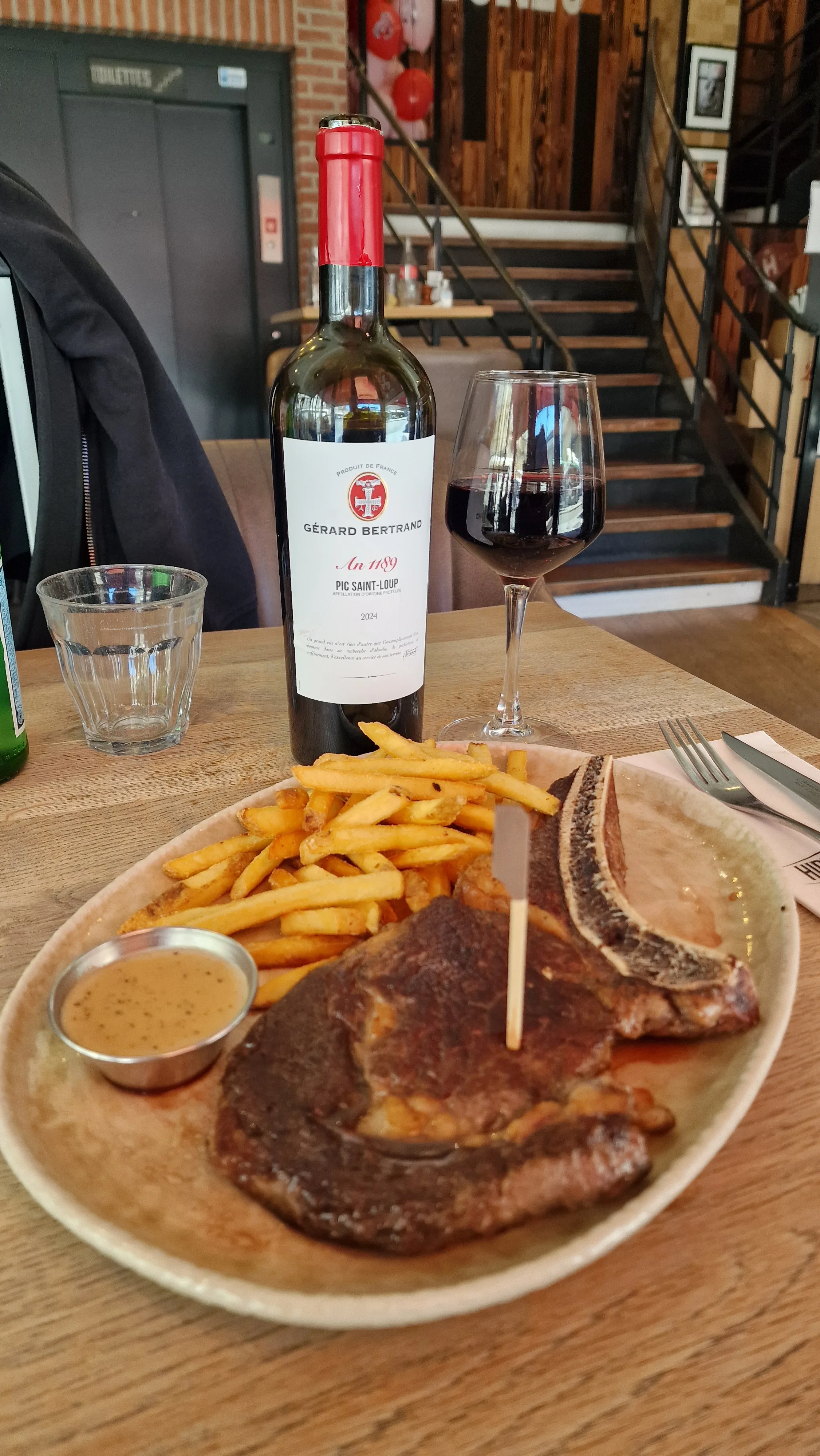
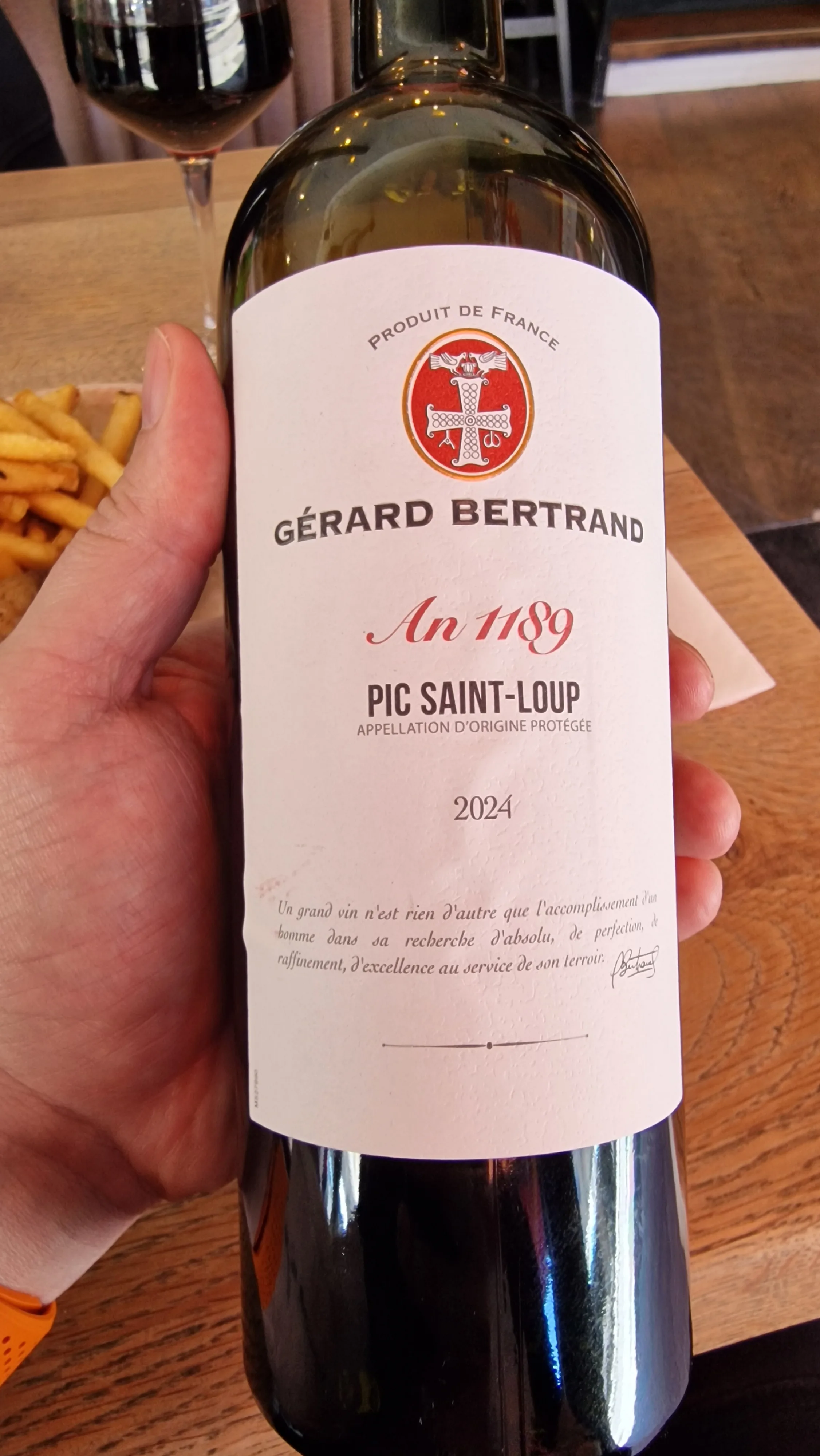
Sunday lunch is the one meal France still takes seriously, which was precisely the problem: the room was full and a single, drowning waitress was holding the floor together. My English and her lack of it produced a small farce. I asked for sparkling water and a bottle of red; she brought still water and one glass of wine. I tried again — San Pellegrino, and a bottle — at which point the San Pellegrino arrived, alone. Only when I assembled the words into “Une bouteille de vin, s’il vous plaît,” with an aplomb stolen from years among French colleagues, did the bottle finally appear. Pic Saint-Loup reads to me like an old acquaintance — last met as a heavy-glass cuvée called The Big Bad Wolf, in a Singapore lockdown. To go with it: a côte de bœuf cooked à la braise, over wood embers, with frites and a pot of sauce au poivre.
The producer is its own kind of anomaly. Gérard Bertrand was a professional rugby player — Narbonne, later captain of Stade Français — when his father Georges was killed in a car accident in 1987. At twenty-two he took over the family estate in Corbières, running it for seven years while still playing top-flight rugby and retiring from the game only in 1994. He has since built his house, based at Château l’Hospitalet near Narbonne, into one of the largest biodynamic operations in wine. He is a négociant-vigneron — a grower who also buys in fruit to blend under his own name — and this bottle is the fruit-forward end of a portfolio better known for biodynamic seriousness, drawn from parcels across the appellation, not a single slope.
The name rewards attention. Each cuvée in Bertrand’s Héritage range carries a date from the region’s past, and 1189 is a legend: three crusader knights — Guiral, Alban and Loup — came home in love with the same vanished princess and each turned hermit on a separate peak, lighting a yearly fire in her memory. The mountain kept the name of the knight Loup; the appellation is, etymologically, a wolf — more than the rest of the list could claim. Twenty kilometres north of Montpellier, a 658-metre wall of limestone — the Pic — faces the cliff of the Hortus across a valley of garrigue, the wild scrub of thyme, rosemary and juniper that scents the hills and the wines. Limestone soils, real altitude, a wide day-to-night swing and cool air off the Cévennes keep acidity alive where the southern plains cook it flat. Syrah gives the backbone and Grenache the flesh, but the variety that earns its keep is Mourvèdre: Spanish by birth — Monastrell, named for Murviedro near Valencia — thick-skinned, late-ripening and greedy for heat, quick to oxidise if mishandled, and worth it for the colour, grip and meaty depth it brings.
2024 gave nothing away for free. A mild, dry winter ran into a wet, cool spring — March alone dumped heavy rain on the region — and a cold snap in mid-April gave way to a cooler-than-usual May. Mildew came on hard, fruit set poorly, and Languedoc yields ended down by roughly nine percent. After the scorched, early-picked 2022 and 2023, ripening was slower and later, the harvest pushed into September and saved at the close by drying northerly winds. For a wine grown at this altitude, a cooler year is no hardship: it reads fresh and measured rather than baked.
In the cellar the wine is destemmed and given a long maceration of three to four weeks to draw colour and tannin, then put through malolactic — the softening secondary fermentation — before its élevage, the maturation before bottling. About a third spends some nine months in barrique, the small oak barrel, the rest resting in tank. That split is the point: the tank fraction guards the fruit while the oak rounds the tannins and adds a measured frame of toast and spice. The result is bone-dry and medium-full, the tannins present but polished almost to silk, the finish a little longer than medium.
Mechanically the pairing should have been a layup, and the wine kept its half of the deal. Its fine tannin scraped the rendered fat off the beef, its black-pepper-and-garrigue savour shadowed the peppercorn sauce, its dark fruit and acidity cut through the frites. The failure was on the plate. The steak was nowhere near worth its thirty-odd euros at a place that sells itself, in capital letters, on beef. The wine spent the meal flattering a cut that had not earned it — doing the work the kitchen had declined to do.
So the label promised a medieval romance — knights, a lost princess, a fire on a limestone peak — and the afternoon delivered a fluorescent station dining room, a waitress I had bested only in French, and a steak that never really turned up. The wine was the one honest thing on the table. The knights kept their fire burning for a woman who had vanished; I raised a glass to a steak that did the same, then caught my train.
Pairs well with