
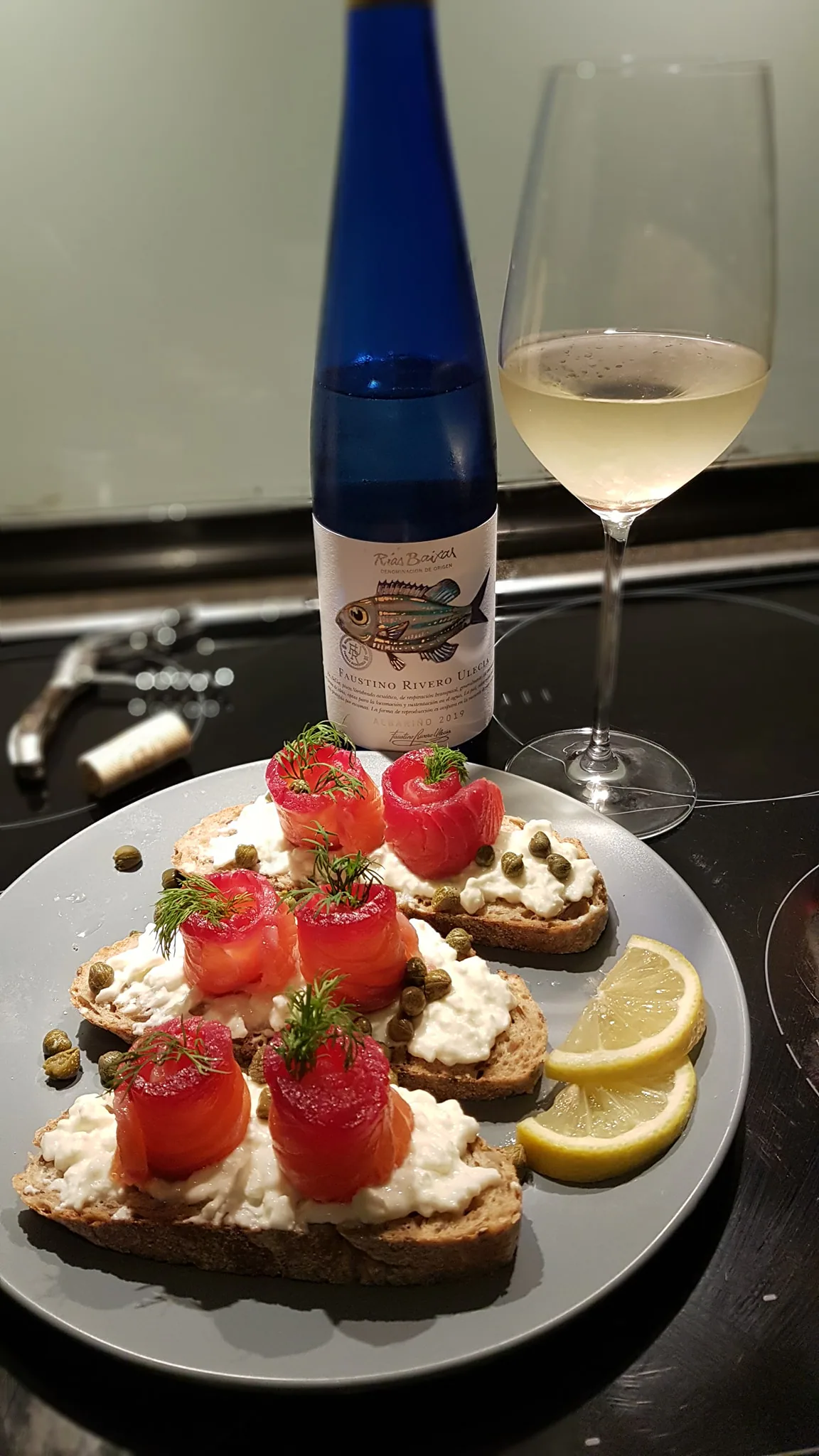
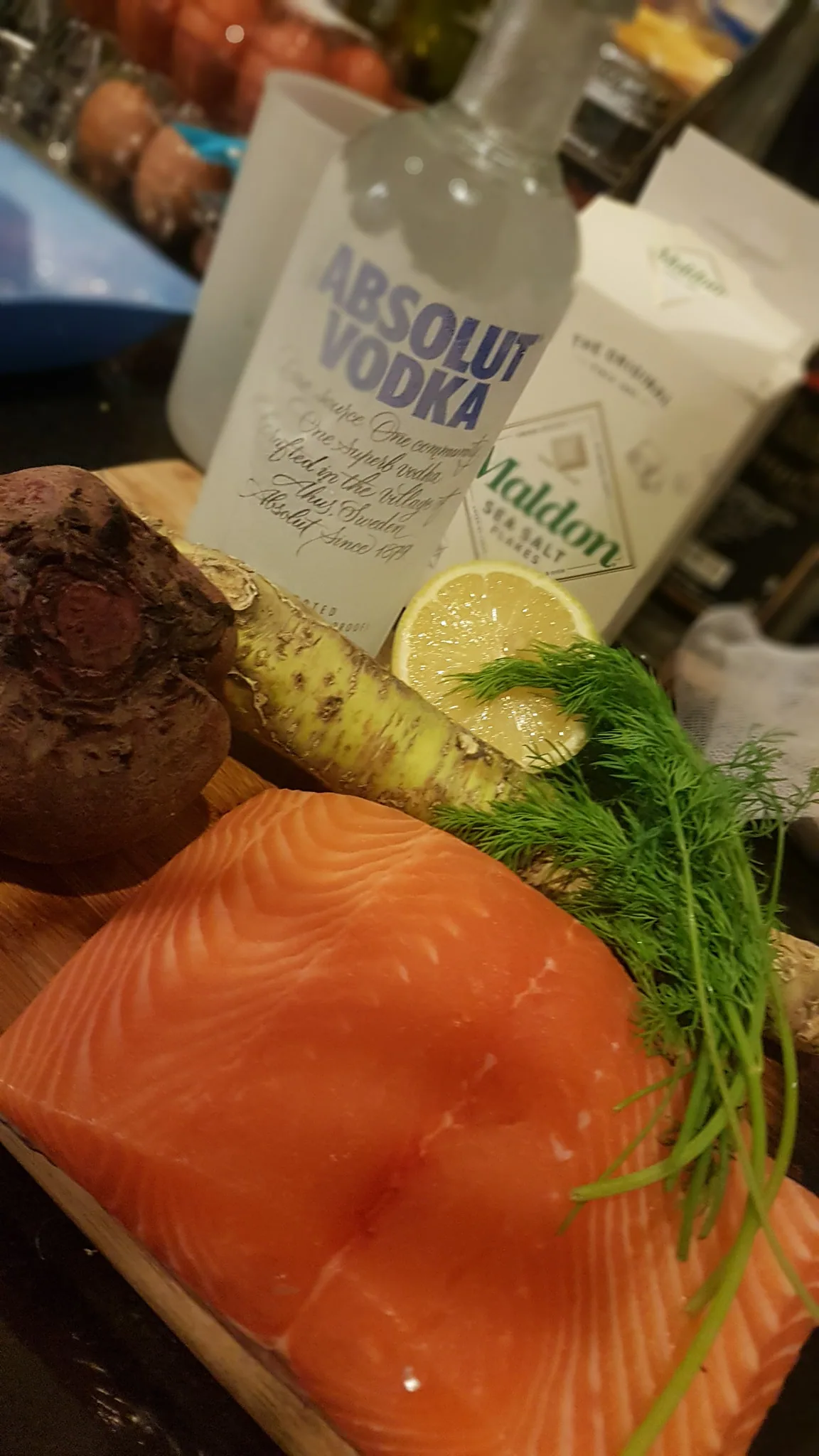
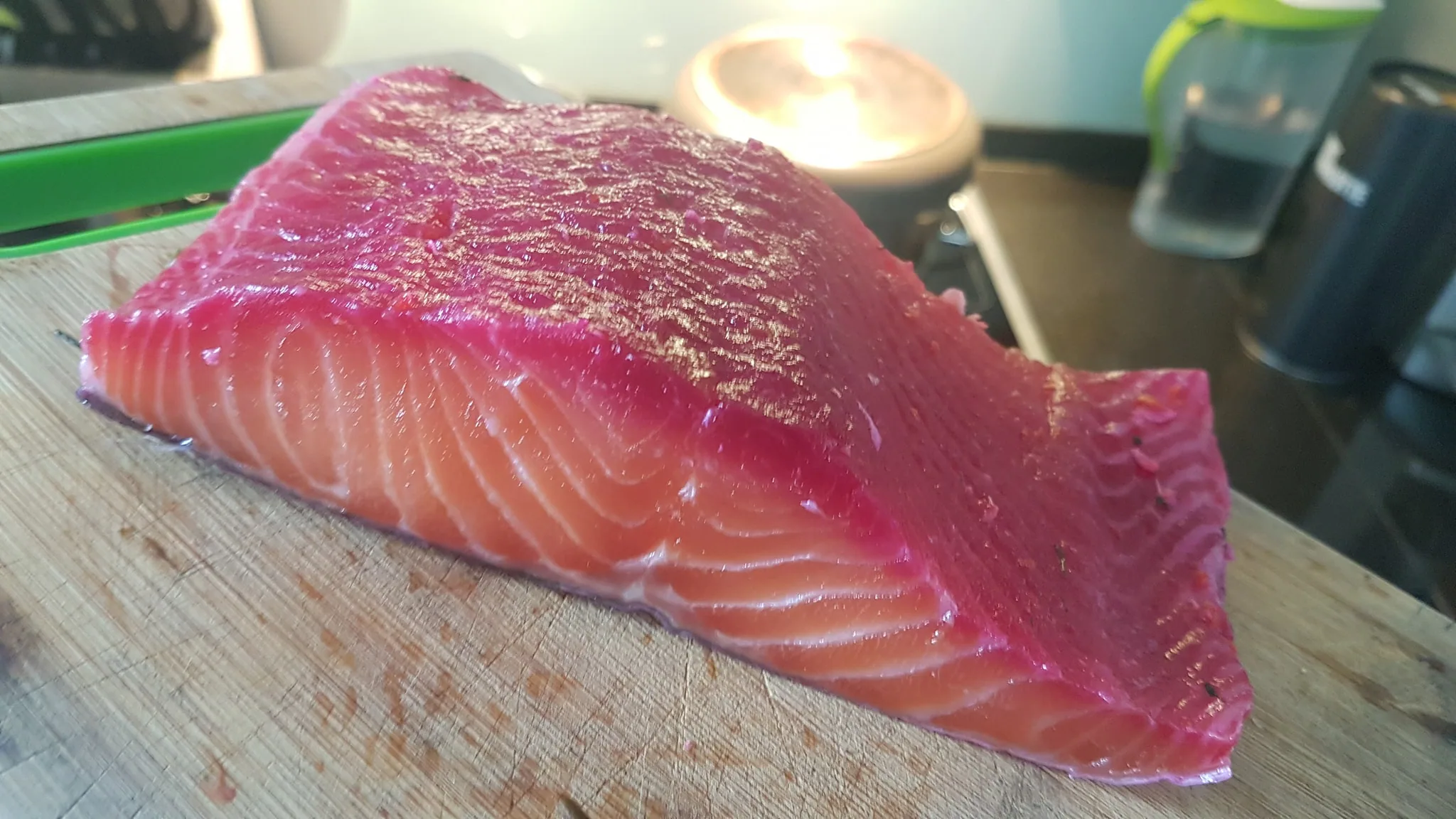
Lockdowns inevitably produce coping mechanisms; these chronicles are a record of mine. July 2020 in Singapore was defined by confinement. The mandatory Covid-19 lockdown meant life shrank to the dimensions of an apartment, and dog walks and supermarket runs became the only sanctioned expeditions to the outside world. Cooking shifted from daily utility to a mechanism for occupying hours. I decided to cure salmon. Gravlax — the Nordic method of burying raw fish in salt, sugar, and dill — takes on a different profile when you introduce beetroot and horseradish to the cure. The beetroot dyes the flesh an aggressive magenta and leaves an earthy sweetness, while the horseradish and Absolut vodka tighten the texture and provide a volatile edge. It was a three-day process that required something to drink at the end of it.
Wine Connection — a chain of retail shops in Singapore — was still operating. I did not walk in with a specific appellation in mind. I bought this wine largely because it had a metallic, vaguely steampunk fish stamped on a blue glass bottle. Choosing a wine based on graphic design is usually a reliable way to end up with unremarkable juice, but the lockdown was a time for lowered expectations. It turned out to be structurally sound enough to become a staple in the fridge for the next six months.
The label belongs to Faustino Rivero Ulecia. The Rivero family has been making wine in Rioja since the late nineteenth century, which makes an Atlantic white a geographical departure for the estate. In 2015, they launched a dedicated project in Galicia, eventually securing fifty hectares of estate vines around the town of Arbo. It is an exercise in diversification — a traditional red wine dynasty hedging its bets by moving into Spain’s primary white wine zone. The transition required a different technical approach, managed by winemaker Rodrigo Espinosa.
The grape is Albariño. Indigenous to Galicia and northern Portugal, where it is known as Alvarinho, it is an aromatically assertive, high-acid variety adapted to damp, maritime climates. Its exceptionally thick skins protect it from rot and fungal disease, while simultaneously contributing a slight phenolic grip and subtle bitterness that balances the citrus profile. To maintain that tension, Espinosa kept the élevage functional: cool fermentation in stainless steel and an absolute absence of oak. The stainless steel regime prevents oxidation and traps the grape's natural floral aromatics, ensuring the wine finishes clean rather than heavy.
Condado do Tea — the southernmost sub-region of the Rías Baixas DO — is the part of Galicia that most people who drink Albariño never think about. The reference point for the appellation is the coastal Val do Salnés, where the Atlantic sits close enough to define everything: the humidity, the acidity, the lean, saline tension that made Rías Baixas famous. Condado do Tea is something else. Sheltered inland along the right bank of the Miño river — the same river that forms the border with Portugal — it receives less direct oceanic influence and more continental heat during the growing season. The terroir runs on south-facing slopes at roughly two hundred metres, rooted in sandy granitic soils with a clay undercurrent; the elevation moderates what the Atlantic no longer can. The 2019 growing season complicated things further: an erratic, wet spring reduced yields sharply, followed by a warm, stable summer that pushed the surviving clusters to full physiological ripeness. The structural consequence is a wine with slightly more mid-palate weight and riper stone fruit than the leaner coastal examples — less of the razor-edged Atlantic bite, more grip and substance in the middle.
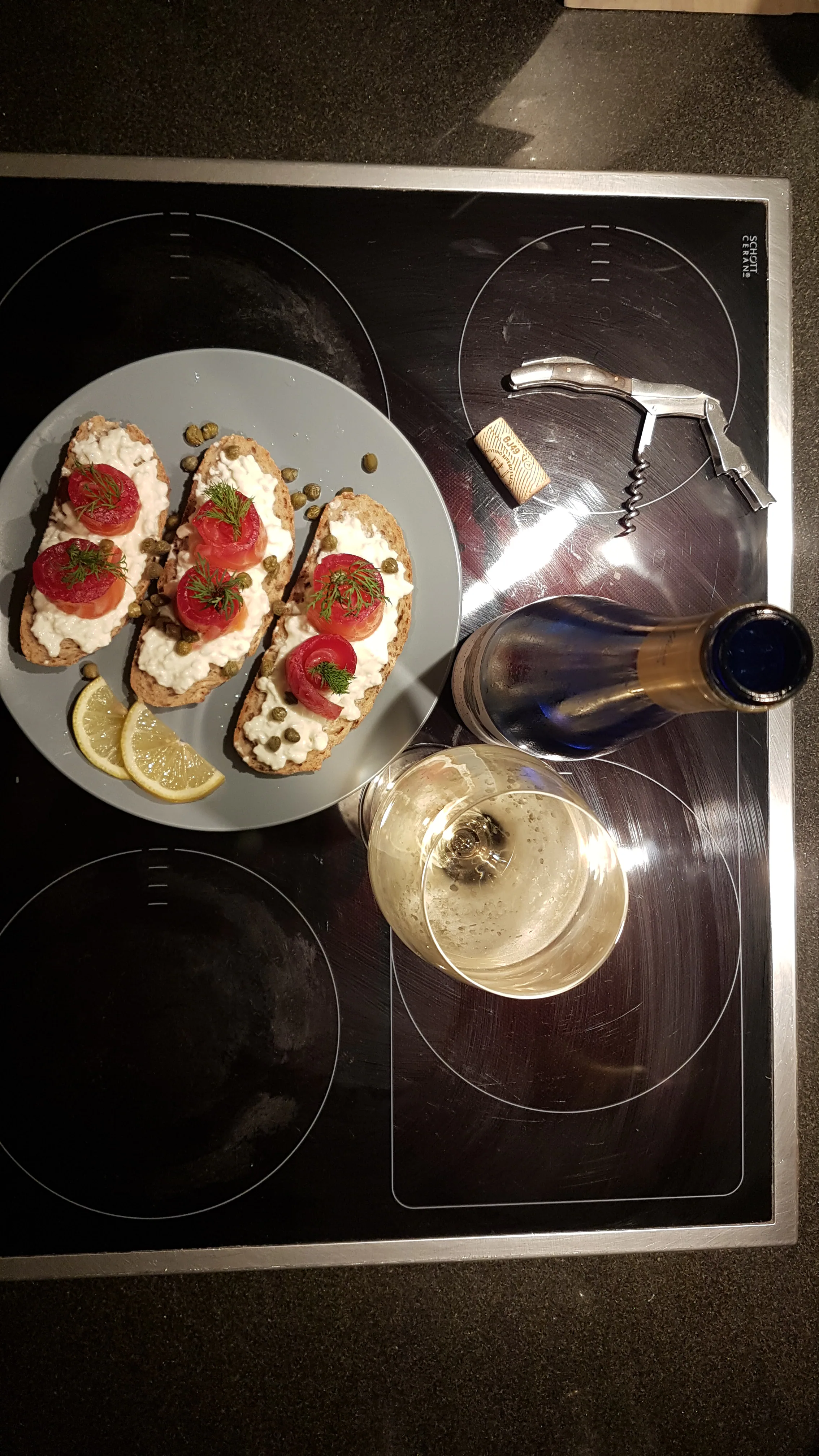
The pairing was not engineered, but it worked because of the structural tension between the plate and the wine. The fatty density of the salmon, cured into firmness by the salt and vodka, required high acidity to cut through it. The Albariño provided it. The beetroot, with its root-vegetable sweetness, smoothed out the sharp horseradish bite and found a counterweight in the wine’s bone-dry, medium-plus acidic structure. The wine did not overwhelm the fish, and the fat did not flatten the wine. A bottle bought for the graphic design on the front label served its purpose entirely.
Pairs well with


