
It was February 2020, and the news coming out of Northern Italy was beginning to sound less like a localized medical issue and more like an impending collapse. I had flown in from Singapore, landed in Milan, and rented a BMW. At fourteen degrees Celsius in the city, no one at Hertz was thinking about winter weather, and they handed over a two-ton SUV on summer tires without a second thought.
That oversight became acutely relevant halfway across the Alps when the snow started to fall. Having lived in Asia for the best part of my life, I had hardly ever driven in snow. Navigating a mountain pass in a heavy, high-riding vehicle on summer rubber in a blizzard was a specific kind of white-knuckled education. I eventually made it across the border to the French ski resort of Brides-les-Bains to meet my then-girlfriend, who was there skiing. Our plan was to spend a night in Chambéry before driving back down into Piedmont for a tour of the region's wineries.
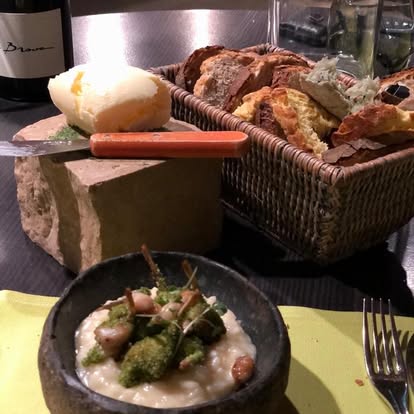
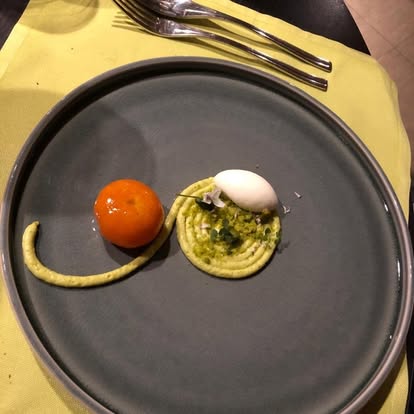
The tension of that week is difficult to reconstruct now, but it felt as though an invisible perimeter was closing right behind us. Yet, sitting in the vaulted stone cellars of Le K'Ozzie — an ambitious, Michelin-selected restaurant in Les Marches, just outside Chambéry — that night, the global shutdown felt entirely abstract. The kitchen was operating with the kind of hyper-focused precision that defines modern French fine dining: a vivid green herb risotto served in a rough-hewn stone bowl, a block of artisan butter presented on a slab of raw rock alongside rustic bread, and a dessert that was pure trompe-l'œil — a flawless, glossy faux mandarin orange resting on a pistachio swirl. The world was fracturing, but at that table, everything was flawlessly composed.
Since we were in Savoie, the wine choice was deliberate, and the grape had to be Mondeuse. Officially known as Mondeuse Noire, it is an indigenous Alpine variety genetically linked to Syrah, and it is notoriously demanding to grow. It is a late-ripening, thick-skinned grape that requires exceptional sun exposure to reach maturity; without it, the resulting wine can be thin, painfully acidic, and aggressively rustic. But when planted in the right site, it yields a structured, peppery, dark-fruited red with serious cellaring potential. The absolute reference point for the variety is Arbin — a specific geographical cru within the broader Vin de Savoie appellation, and the only one dedicated exclusively to red wine from Mondeuse.
The terroir here is defined by steep, south-to-southeast-facing hillsides at the foot of the Bauges Mountains. The vines are rooted in red clays and clay-limestone soils covered by a deep layer of stony scree, or éboulis. This combination of intense solar radiation to ripen the fruit, poor, fast-draining soils to force deep root systems, and cool Alpine nights to lock in the grape's signature acidity is what makes Arbin the premier site for the variety.
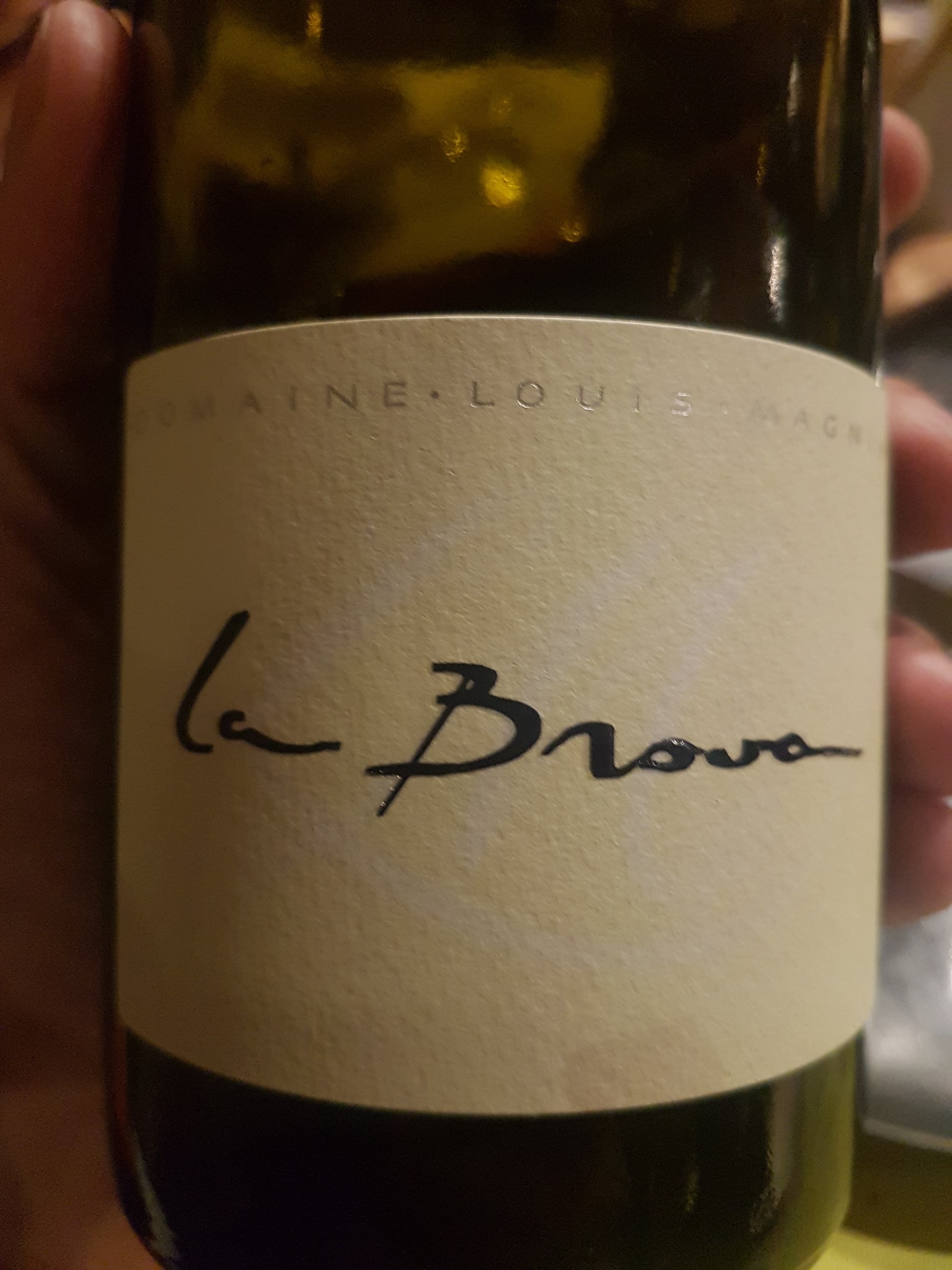
The bottle on the table was Domaine Louis Magnin's La Brova. Louis and Béatrice Magnin represent the third generation of the family estate, taking over in the early 1980s and eventually transitioning their eight hectares to certified organic and biodynamic farming. What separates the Magnins from much of the region is a decision they made regarding time. For decades, the commercial expectation for Savoie reds was that they should be light, bright, and consumed quickly by the ski-resort crowds. The Magnins refused that model, treating Mondeuse with the gravity usually reserved for serious Northern Rhône Syrah.
For their La Brova cuvée — drawn from vines averaging fifty years of age — the fruit is entirely destemmed and subjected to a long maceration of around thirty days. The élevage is uncompromising: for vintages from 2010 onward, the wine spends approximately thirty-six months maturing in a mix of seasoned oak barrels and large wooden foudres. That extended, slow oxygenation in wood does not mask the wine with oak flavor; instead, it polymerizes the fierce, youthful tannins of the Mondeuse, transforming a potentially aggressive structure into something firm but velvety.
This specific bottle was the 2015, a vintage that provided exactly what Mondeuse needs to thrive. The 2015 growing season across eastern France was marked by intense summer heat and dry conditions, which accelerated ripening and kept disease pressure low. For a grape that struggles to achieve phenolic ripeness in cool years, the solar weight of 2015 was a profound advantage. It produced smaller berries with higher natural concentration, yielding a wine with softer, more rounded tannins than the cooler Alpine years, all while maintaining the white-pepper spice and savory, herbal tension that defines the grape.
We drank it alongside that meticulously crafted meal, entirely unaware that the Piedmont border we were scheduled to cross the very next day was about to become the epicenter of a European lockdown. We were drinking a mountain red built to withstand decades, right at the moment when the immediate future had simply ceased to exist.
Pairs well with