
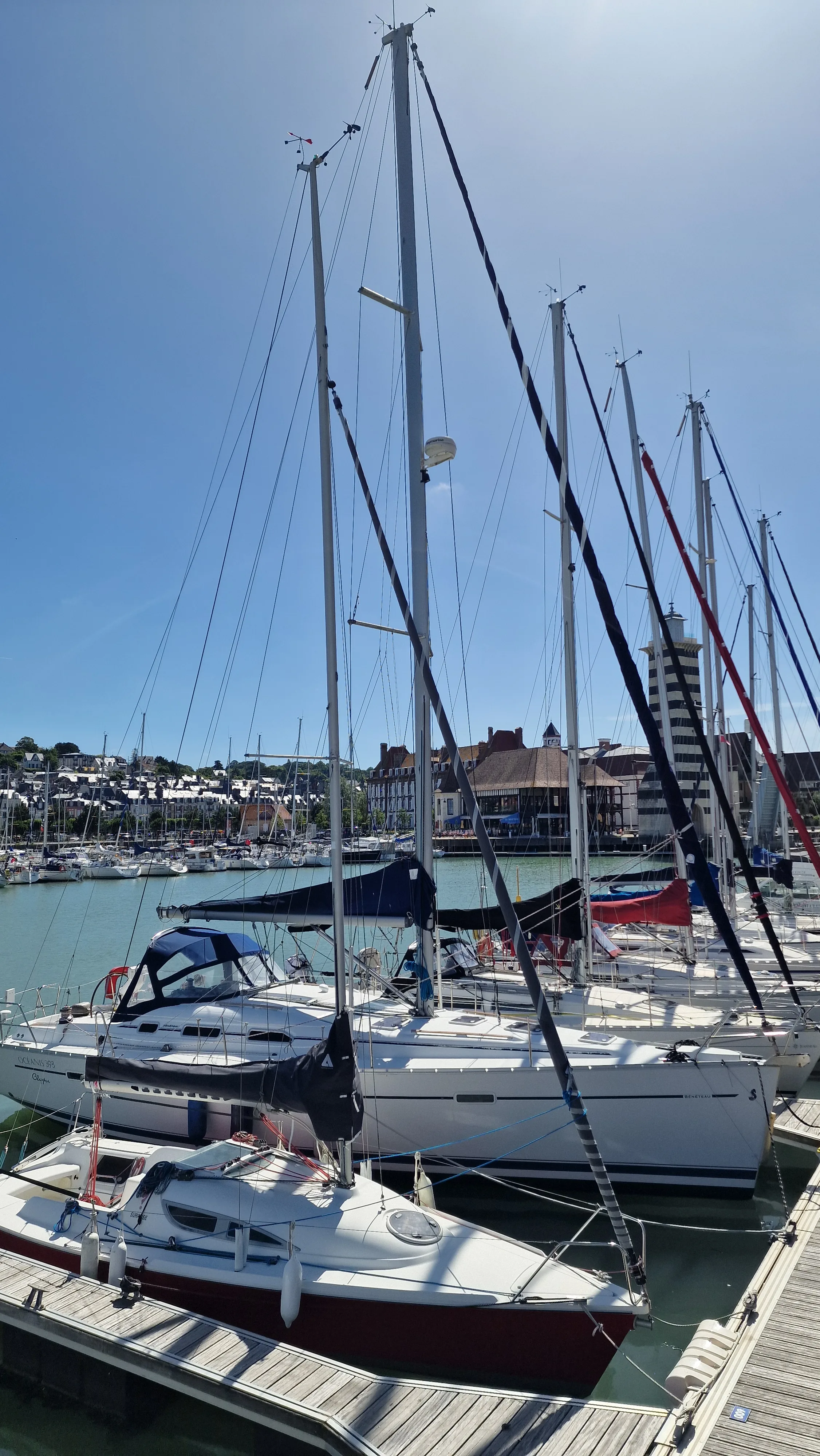
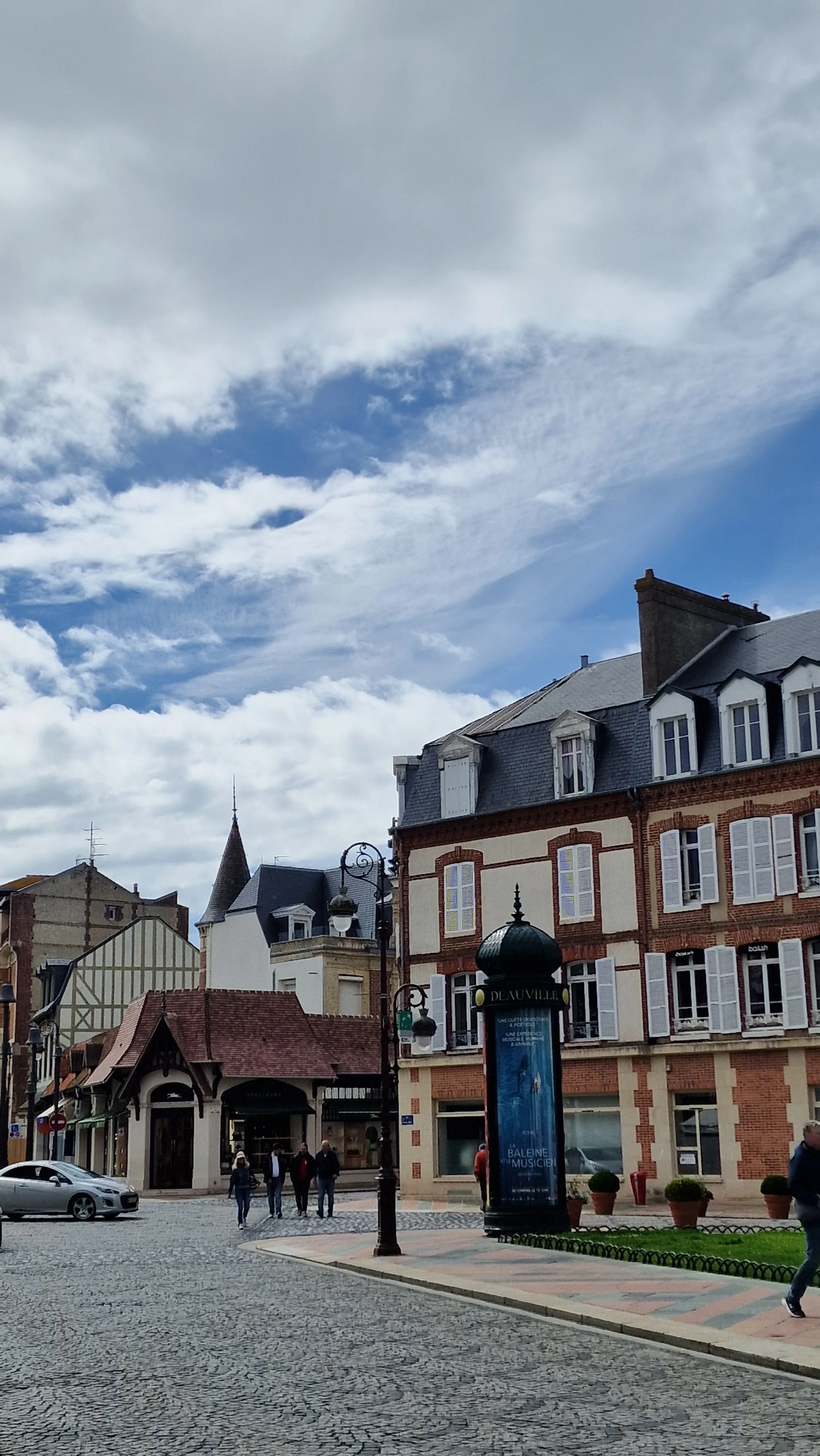
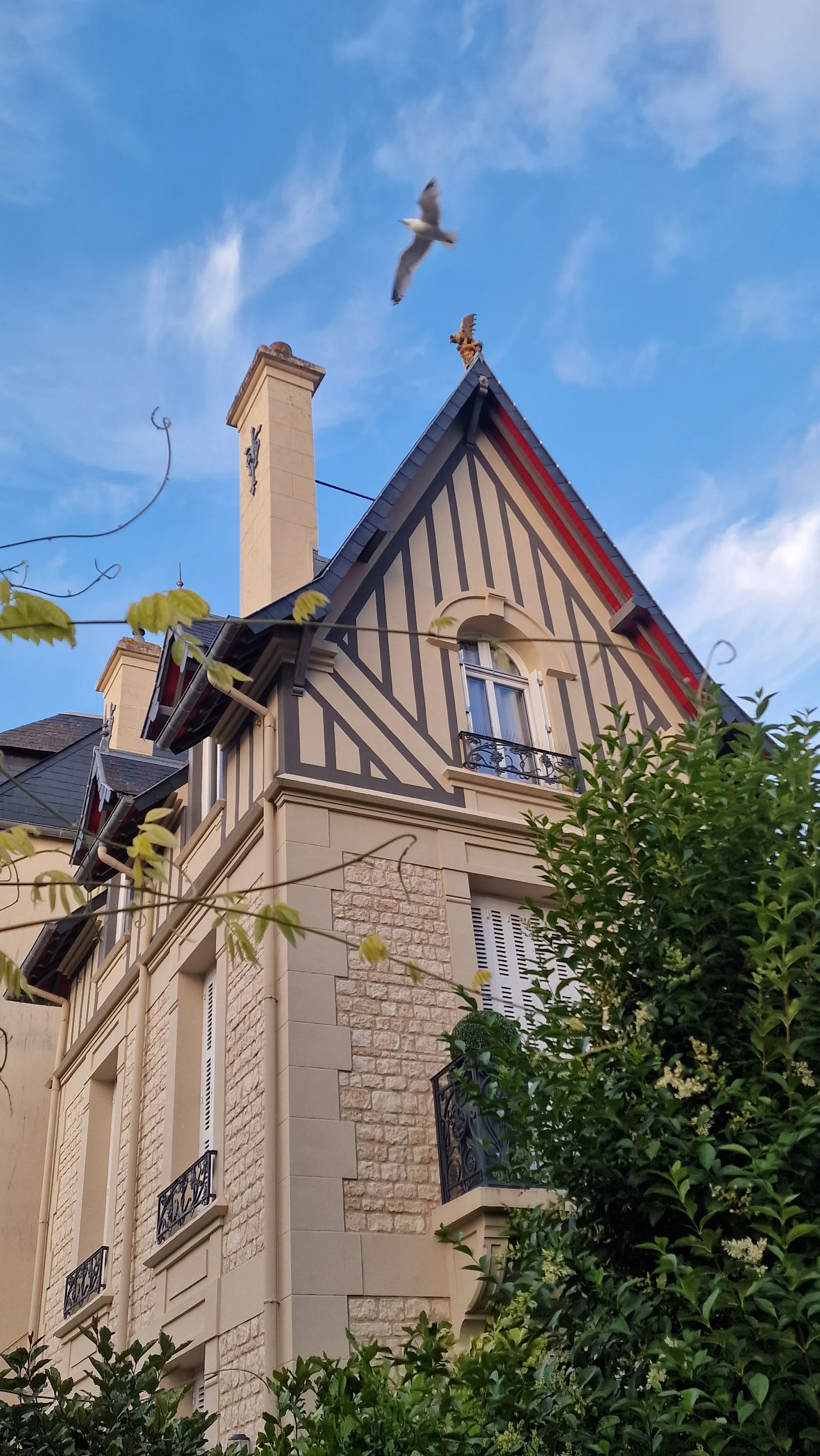
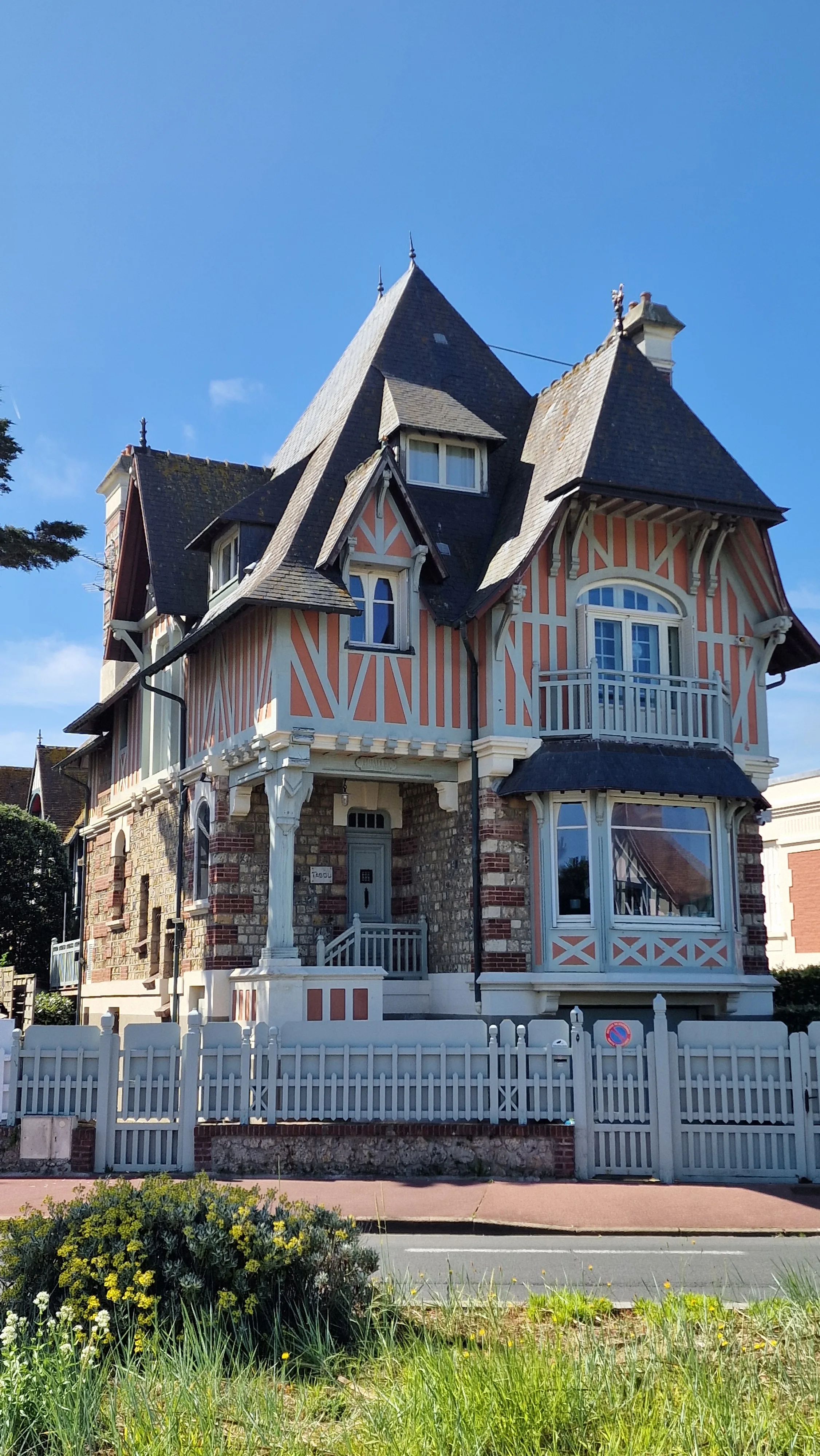

The second week of June 2026 brought a specific kind of crowd to Deauville, the upscale seaside resort in Normandy defined by its wide beaches and the distinctive colombage—the French iteration of Fachwerk half-timbering—that defines its Neo-Norman architecture. A global conference on particle therapy had taken over the town, gathering an international coalition of current and prospective users of the advanced medical technology. Our venue for the evening was Le Comptoir & La Table, a restaurant sitting directly across from the marina. The table held twelve people, an international mix anchored by a group of Korean clients in town for the summit. Ordering wine for a table of twelve on a corporate budget is an exercise in applied diplomacy. You need volume — two bottles of white, two bottles of red, just to maintain momentum — and you need labels that look respectable on the table without triggering an immediate audit of your expense report by the finance department. You do not get to order what you actually want. You order the smartest compromise available.
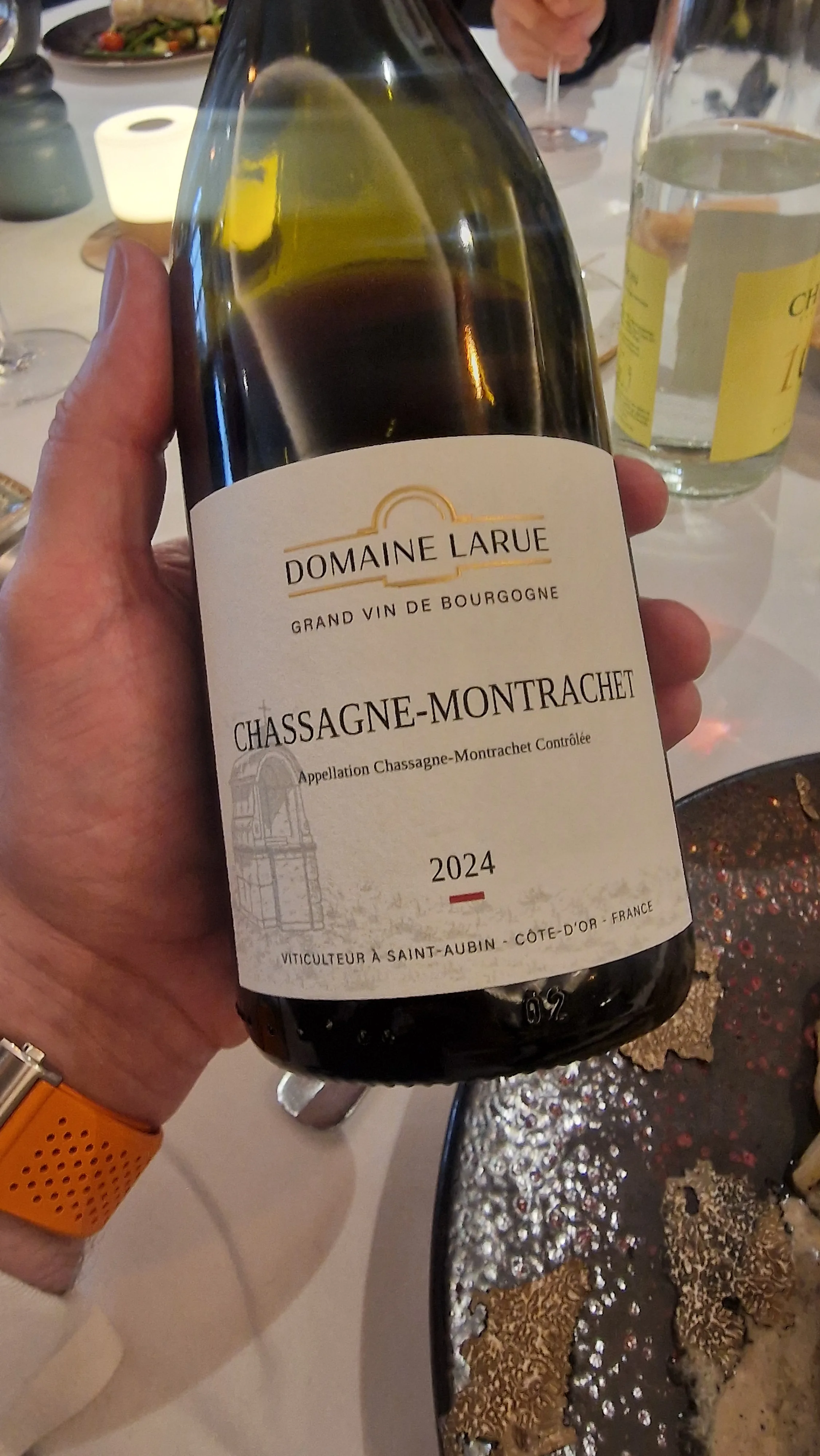
When the wine list arrived, I scanned the reds and stopped. Listed right there was a Chassagne-Montrachet. I had always understood the commune as unapologetically white-first — its reputation and its highest prices built almost entirely on Chardonnay. My immediate assumption was a misprint by the restaurant; I simply did not know that a red Chassagne existed. The reds, it turns out, account for roughly a third of the commune's production, living permanently in the shadow of the whites. Driven by the necessity of the budget and the novelty of the discovery, I chose the Domaine Larue Chassagne-Montrachet Rouge 2024. A Chassagne rouge is a respectable, terroir-honest Côte de Beaune Pinot Noir, but it is not in the conversation with the great red-dominated communes further north or south — Gevrey-Chambertin, Vosne-Romanée, Volnay, or Pommard. The tier ceiling here is the honest limit: this is a village-level wine, with no Premier Cru or specific climat named on the label. It caps the ambition, offering a good, honest red Burgundy that sits well above everyday drinking but comfortably below grand.
The specific terroir of the red parcels — heavily concentrated in the southern sector of the commune toward Santenay, featuring clay-limestone soils over a base of Jurassic limestone — provides a heavier, more water-retentive environment than the steeper white-wine slopes. It produces a Pinot Noir with a firm, savoury edge rather than plush, dark fruit.
Domaine Larue is technically an outsider to the commune. The family estate, founded in 1946, is headquartered in the neighbouring village of Saint-Aubin, where brothers Didier and Denis Larue, now joined by their sons Bruno and Vivien, built their reputation on high-altitude Premier Crus. Their approach to this village-level Chassagne is highly disciplined, lifted above the generic by meticulous, low-intervention farming and the use of old vines. The Pinot Noir for this rouge is drawn from vines ranging between 45 and 80 years old, delivering a concentration and depth that younger-vine village wines simply do not possess. The élevage — the post-fermentation maturation phase in the cellar — relies on roughly ten months in French oak barrels, with only a small minority of the wood being new. This specific regimen is designed to gently oxidize the wine and smooth the tannins without masking the fruit beneath aggressive layers of vanilla or toast.
The 2024 vintage added its own strict parameters. It was a cool, wet year with severe mildew pressure that slashed yields across the region, resulting in a small-crop vintage where quantities were exceptionally tight. However, the constant winds channelling through the Saint-Aubin and Chassagne valleys helped keep the Larue vines relatively dry. What survived the season yielded a classic, low-yielding profile: fresh, perfumed, and lighter-framed reds built entirely on balance rather than power. The wine presented with lower alcohol and higher acidity, a flattering profile for an elegant, mid-weight village Pinot Noir meant to be drunk over five to fifteen years rather than buried in a cellar for decades.
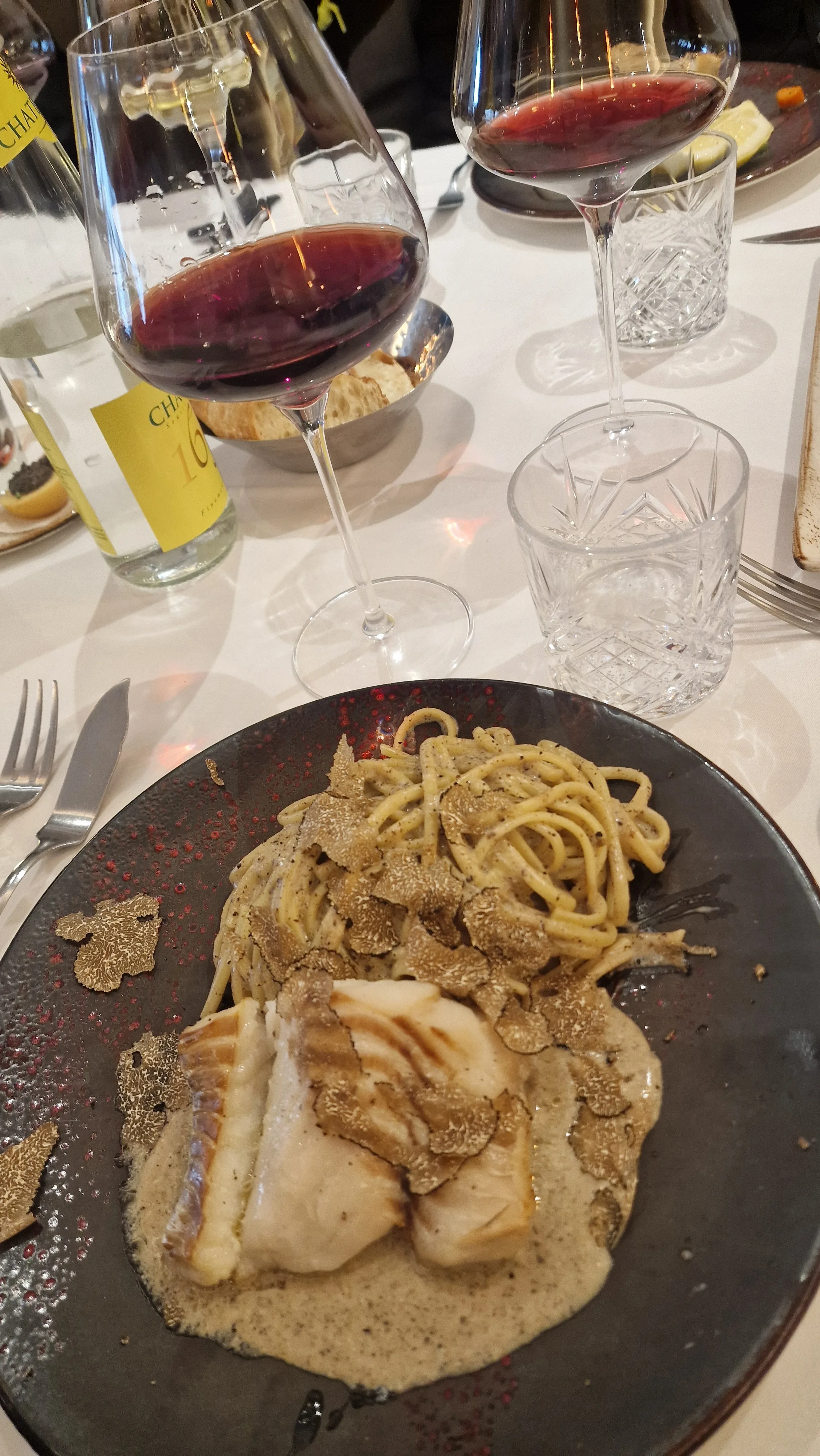
That structural lightness turned out to be necessary, because the food at Le Comptoir & La Table completely missed the mark. I ordered cod served over truffle pasta. Visually, it was impressive — generous shavings of expensive black truffle scattered across the plate. In reality, the sauce anchoring the pasta was entirely flat, lacking any of the savoury depth or seasoning required to make the dish work. It was an expensive illusion. The wine handled the pairing fairly well, not through any brilliant culinary synergy, but simply because the bone-dry, high-acid profile of a cool-vintage Pinot Noir cuts cleanly through uninspired cream.
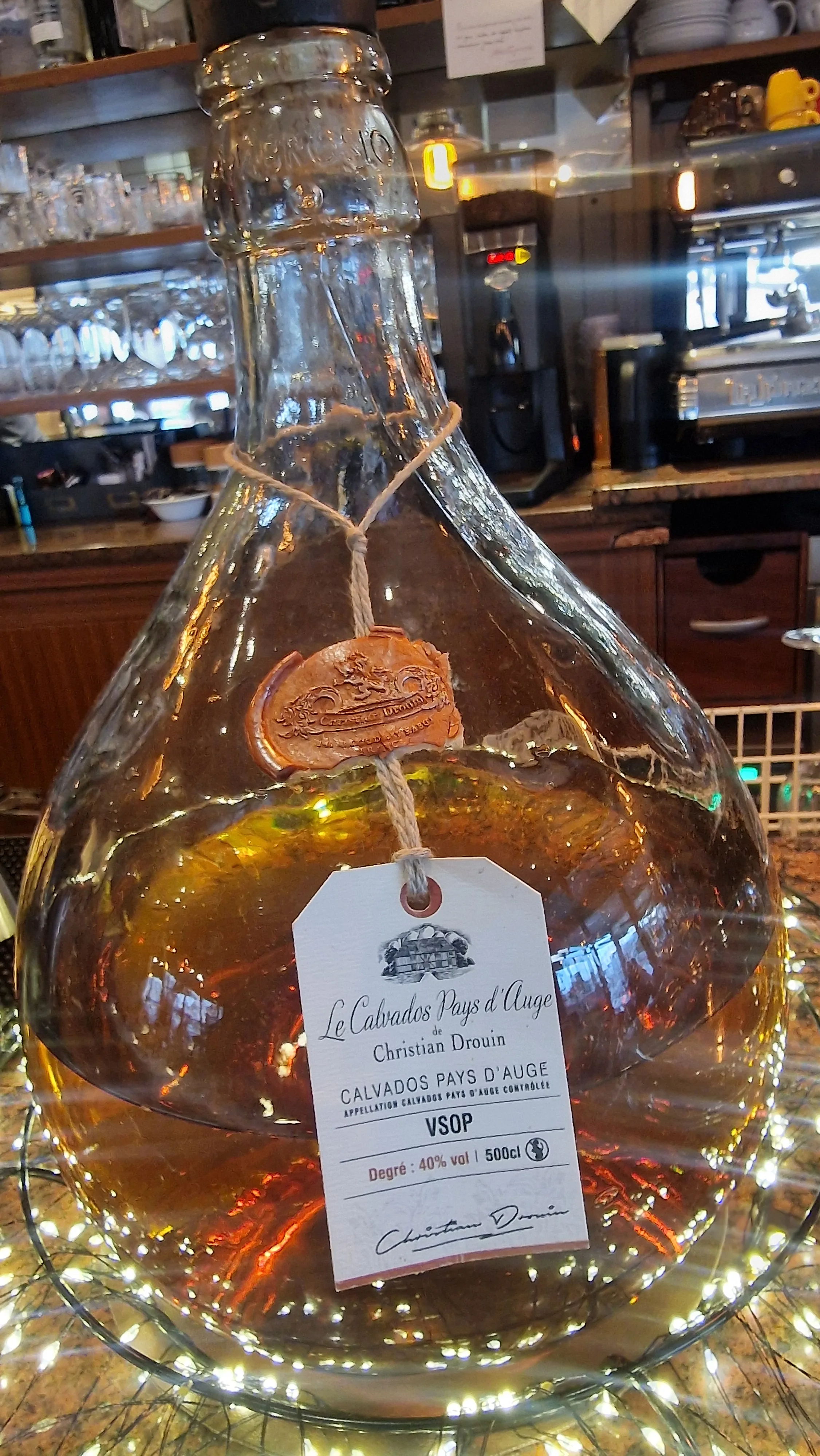
We were, of course, in Normandy, which means wine is only the preamble to the region's historical agricultural anchor. At the end of the meal, an enormous, wax-sealed glass demijohn of Christian Drouin VSOP Calvados Pays d'Auge — the highest-tier appellation for the apple-based spirit, requiring double distillation in copper pot stills — made an appearance at the bar. It provided the punch and character the main course had lacked.
Corporate dinners rarely produce profound culinary revelations. They are functional events, meant to grease the wheels of commerce and keep clients engaged. The Larue Chassagne-Montrachet Rouge did exactly what it was expected to do.
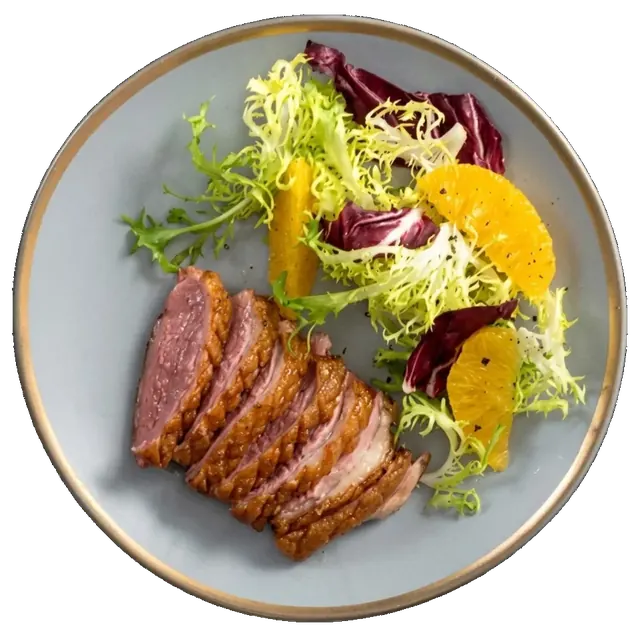
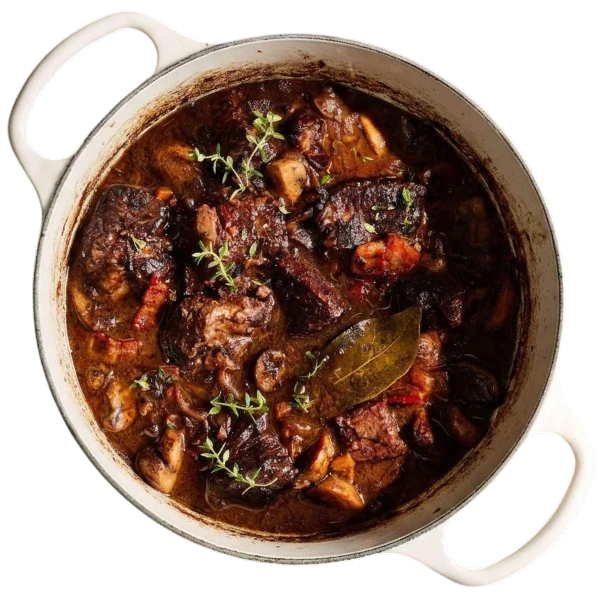
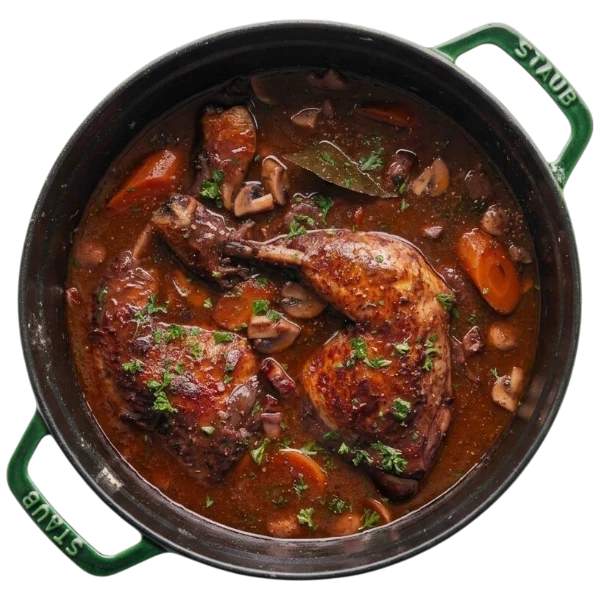
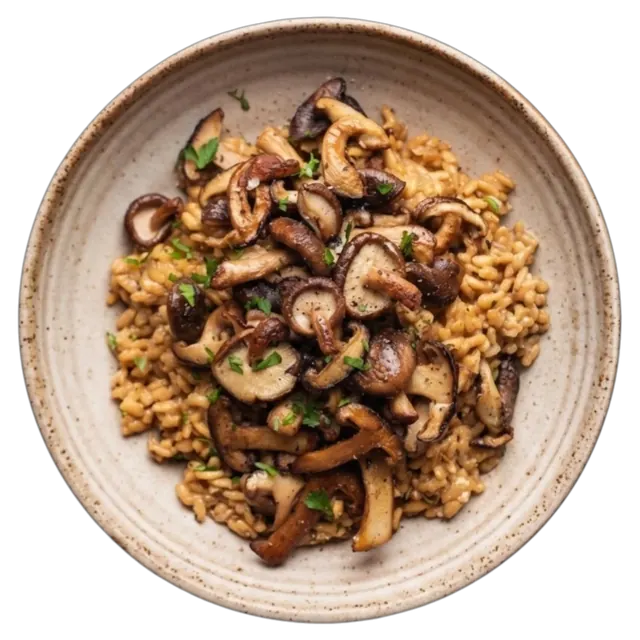
Pairs well with