
Fruška Gora is named after people who never lived on it. The Romans called the ridge Alma Mons, the fertile mountain; the Slavs named it after the Franks, Fruzi in the old language, whose campaigns along the Danube it once bordered, and it has been Fruška Gora, the Frankish mountain, ever since. The ridge stands in Srem, or Syrmia, the land between the Danube and the Sava that forms the southern part of Vojvodina, Serbia's northern province. Srem begins at the western edge of Belgrade, where Zemun and New Belgrade stand on its soil, and runs west across the Croatian border, where its far end is called Srijem. It runs for about eighty kilometres out of the Pannonian Plain, tops out at 539 metres, and in 1960 became Serbia's first national park. The village of Mala Remeta on its southern slope took its name from another kind of resident. Remeta is an old Serbian word for a hermit, borrowed from the Greek, so Mala Remeta is, roughly, the Little Hermitage. On the last Sunday of September solitude was the one thing on the mountain nobody could find.
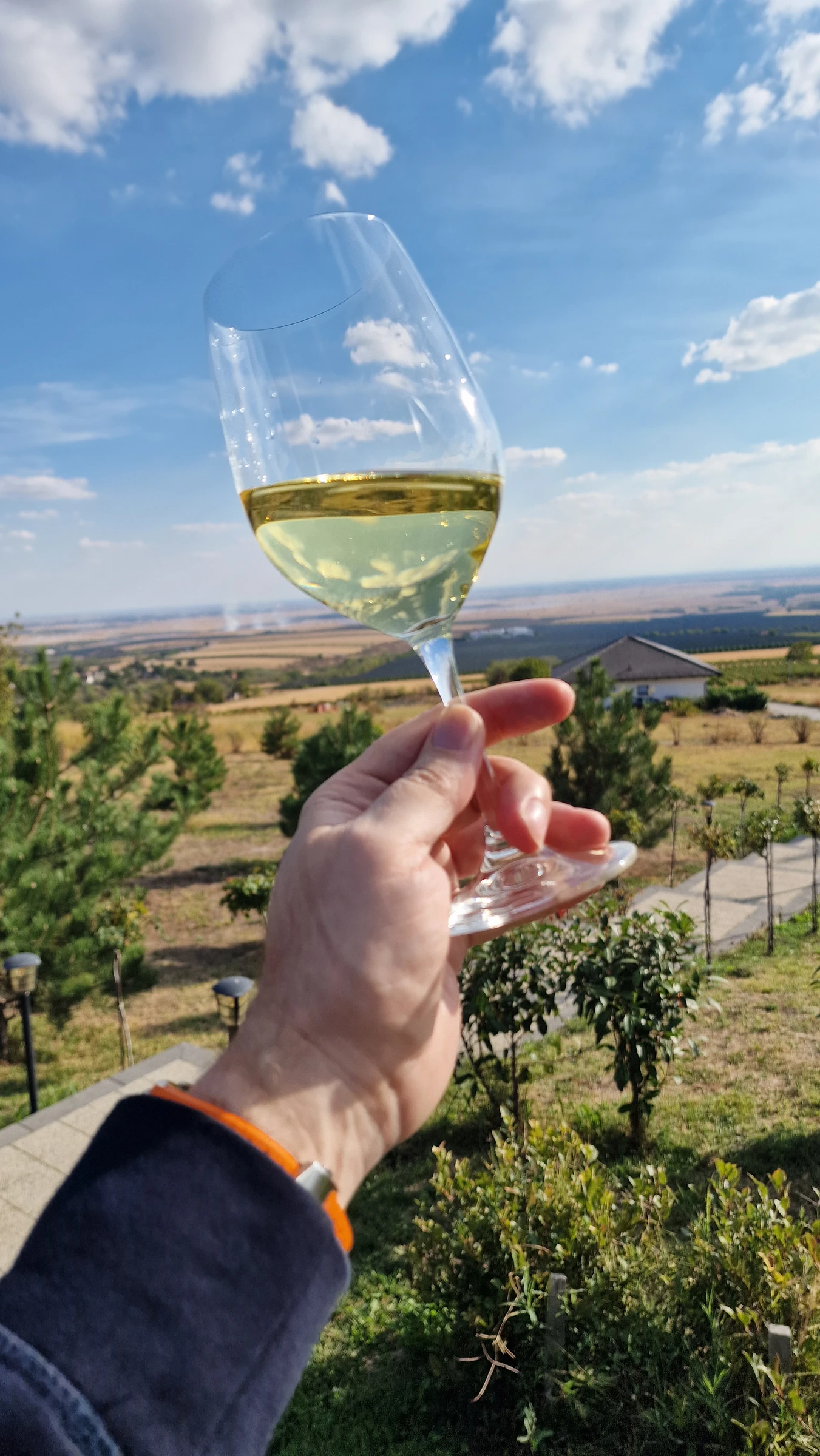
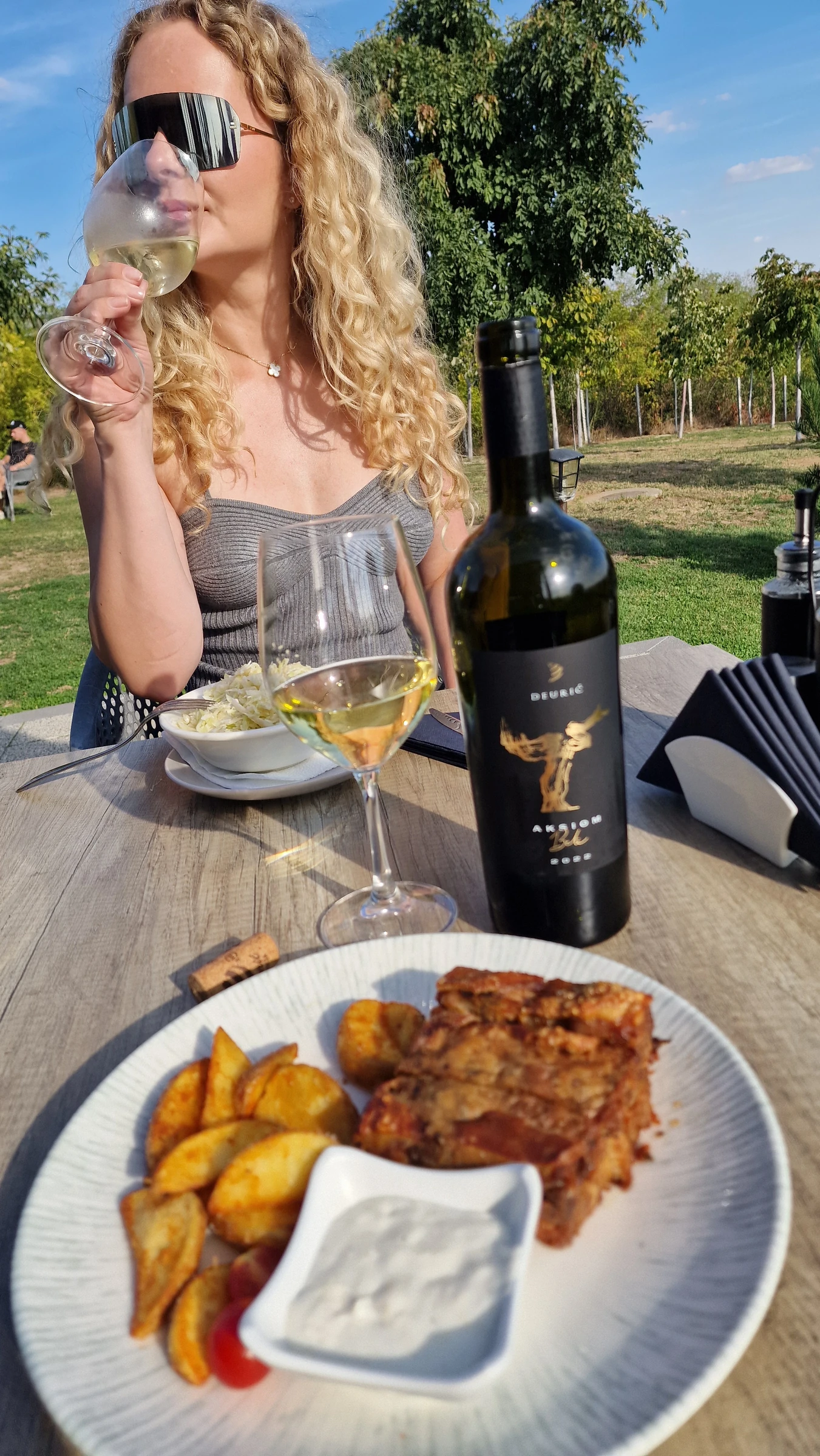
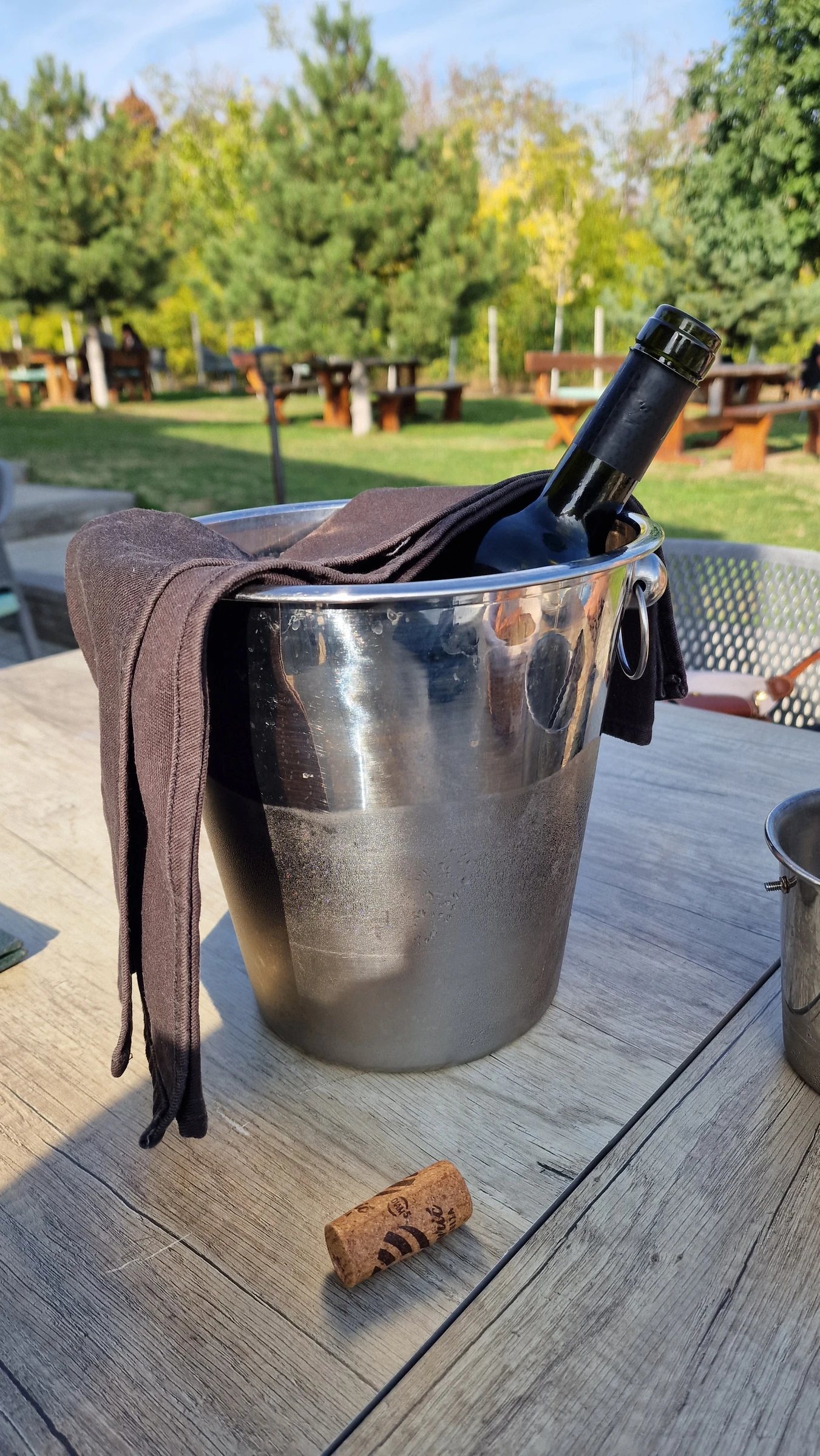
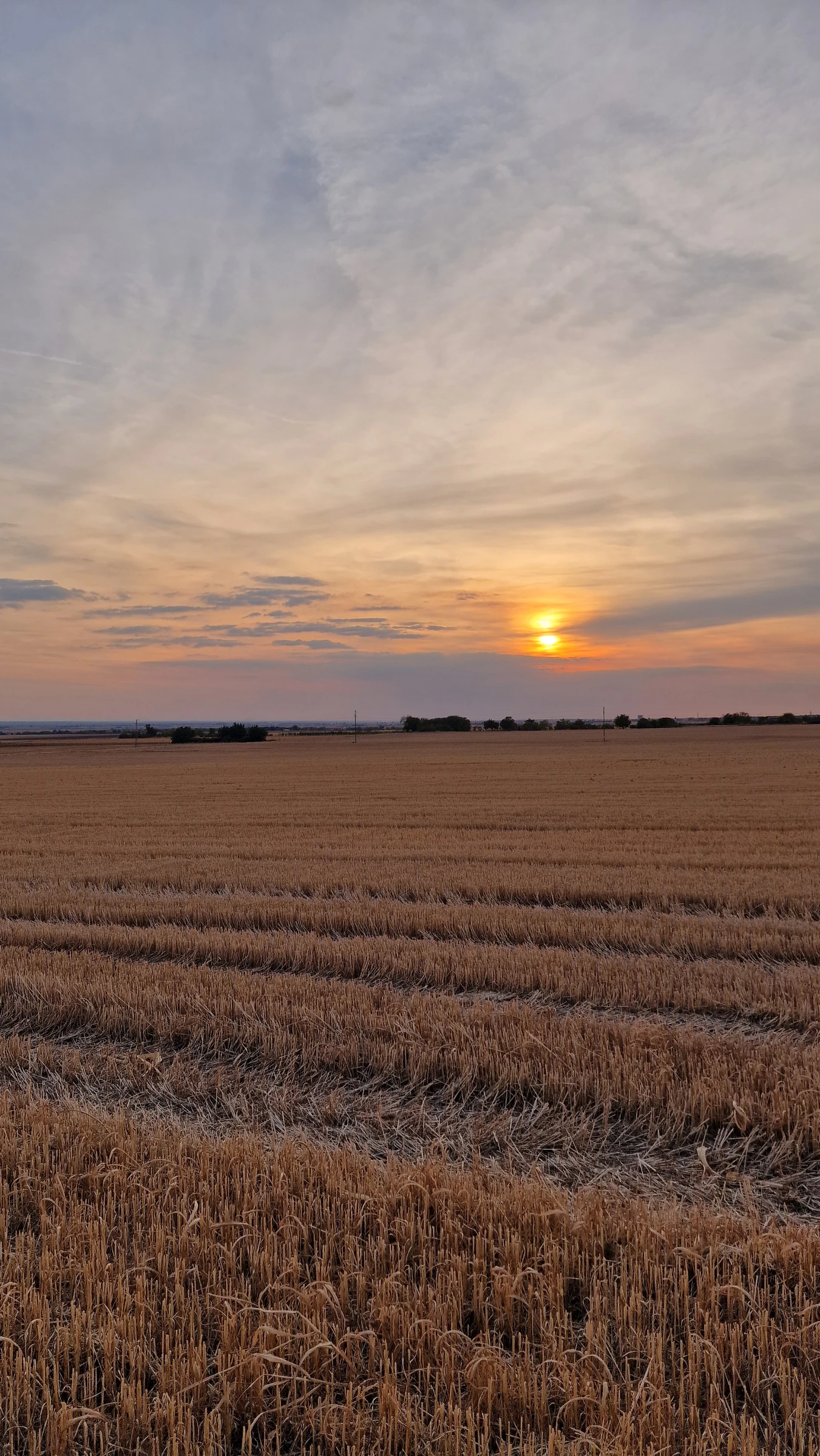
It was one of the last warm days of the year, the kind when you can still sit outdoors dressed for summer, and my fiancée and I wanted to spend it at a winery outside the city. The evening before, I phoned several. Every one was fully booked. We settled on Deurić, where we had been a few times before and had always found a free table, and drove the hour from Belgrade on that assumption. This time there was none. The hostess was sorry, and as far as I could tell the whole of Belgrade was on Fruška Gora that day. She sent us to Ruža vetrova, the Wind Rose, a restaurant five minutes down the road. Having spent an hour getting there, we had nothing to lose. It turned out to be newly built, alone on a slope in the middle of nowhere, facing south across the plain toward the Sava. Below it Srem lay in its late-September colours, harvested fields gone to stubble the colour of straw, dry grass, the first yellow in the trees. It is the season when farmers burn the stubble, which the law forbids and every autumn ignores, and the whole plain sat under a soft haze. The smoke never reached us as smoke, only as a faint smell of something smouldering a long way off, the kind that belongs to the end of a harvest rather than to a fire. The sun was bright and the heat had gone out of it, which is exactly what a day like that is for. The wine list had a white from the winery that had just turned us away. We could not get into Deurić, so Deurić came to our table.
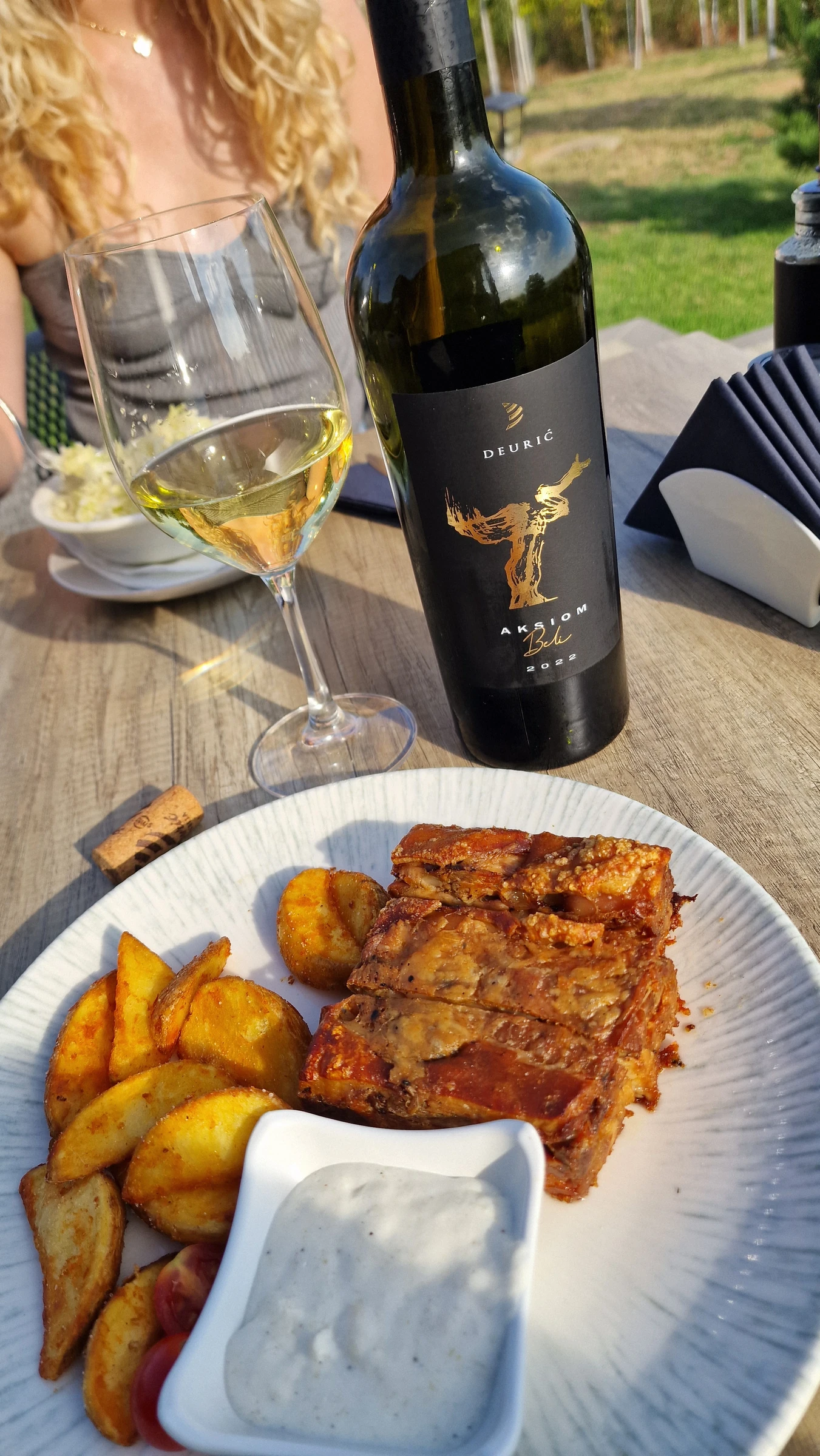
Deurić planted its first vineyard in 2009, gave up herbicides and artificial fertilisers in 2012, built its winery in 2013 and made its first commercial harvest in 2014. The address on the back label is Ekonomija Salaš, a salaš being the isolated farmstead of the Pannonian plain, house, barns and land in one, which is the closest Vojvodina comes to a château. Mirko Niškanović, who runs the winemaking, joined in 2012 after studying viticulture in Novi Sad, and the French consultant Dominique Delteil has worked with him since 2014. The decision that defines this wine is a contrarian one. A young Serbian winery that wants a flagship white for an export shelf usually builds it on Chardonnay, which sells itself. Deurić built Aksiom Beli on Morava, at about 70 percent of the blend in every vintage for which a split has been published, with Chardonnay and Sauvignon Blanc making up the rest. Retailers call it the first Serbian wine to put Morava together with those two, which I cannot verify. An axiom is a proposition accepted without proof. A white led by a grape nobody outside Serbia has heard of is anything but self-evident.
Morava is a modern crossing, not an old local variety, and its pedigree reads like a breeding programme's family tree: ((Kunbarat × Traminer) × Bianca) × Riesling. The Serbian breeders Cindrić, Korać and Kovač produced it, and it was granted variety protection in 2003. Bianca, a Hungarian hybrid, brought resistance to disease; Riesling and Traminer brought acidity and perfume. The result ripens late and stands up to botrytis, the grey rot of wet autumns, to downy mildew and to frost, and it gives fresh, aromatic whites often compared with Sauvignon Blanc. What makes it demanding is not the vineyard but the market. In 2016 the whole of Serbia had about 34 hectares of it, and a wine built on a grape that rare has to explain itself with every bottle.
The terroir is a south-facing slope at about 250 metres. Sources disagree about the soil in detail, limestone and marl in the producer's version, sand and clay in others, even phyllite and volcanic rock in one importer's, but all agree on a calcareous base, and the ridge itself is a geological patchwork, an old rock core under younger marine sediments. Light, free-draining soil keeps the vines from running to leaf. The slope takes the full afternoon sun, the nights stay cool enough for a wide gap between day and night temperatures, which is what holds acidity in the grapes, and the light winds the estate mentions dry the bunches after rain. For a late-ripening grape, that extra sun at the end of the season is the difference between ripe and merely sharp.
2022 put the slope to work. The Serbian weather service ranked it the second-warmest year since national records began in 1951. Heat arrived early, with a hot spell in the north of the country from 12 to 17 May, ahead of flowering, and the summer brought four heat waves and a national peak of 40.6°C on 23 July. From May to August the drought came close to that of 2017, one of the worst on record. A dry year has one irony for this blend: Morava was bred to resist rot and mildew, and in 2022 there was almost none to resist. What the heat tested instead was acidity. Chardonnay loses acid quickly in a hot summer; a late-ripening variety with Riesling in its pedigree holds on to it, and here it carried the freshness of the blend. The producer has published no harvest dates or analysis. The label reads 13.5%, a little riper than a lean white, and that suits a vintage that gave weight rather than tension.
The back label gives a bottling date of 17 September 2024, almost two years after harvest. The élevage is documented in detail only for the 2019: each variety fermented and aged separately, the Chardonnay for twelve months in French oak, the Sauvignon Blanc for about three, then blended and settled together in large stainless-steel tanks. One Belgrade retailer put the oak influence on the finished wine at four or five percent. If the 2022 followed the same recipe, and the bottling date fits a year in barrel plus time in tank, the oak did a narrow job. It rounded the Chardonnay and gave the blend some vanilla and toast, while steel kept Morava's aromatics intact. The result is a medium-bodied dry white with peach, apple and honeydew melon, framed by wood rather than built on it.
The dish was Praseća bajadera, crisp boneless roast pork with baked potatoes and a horseradish sauce. Bajadera is the name of a layered nougat praline from Kraš, the Zagreb confectioner, and the restaurant's English menu duly translated it as Praline Pork. Red wine with meat is the default, but Vienna settled the question for pork long ago. Wiener Schnitzel, by Austrian rule, is veal; the pork version has to be labelled vom Schwein, and both come with Grüner Veltliner, not a red. The reasoning holds here. Pork is mild, and what a wine has to deal with is fat and crackling, not the iron and blood of red meat. Tannin binds to protein, which is why it works with beef; pork does not need it, but the fat does need acidity, and the blend's Morava supplied it. The horseradish settled the rest. Its heat comes from allyl isothiocyanate, the same compound as in mustard and wasabi, and against it the tannin and oak of a red turn harsh and bitter. A white with fresh acid and ripe fruit takes the sauce's cream and lets the heat pass. The crackling's browned surface met the toast of the barrel-aged Chardonnay, and Morava's aromatic lift did for the pork what apple sauce does in an English kitchen.
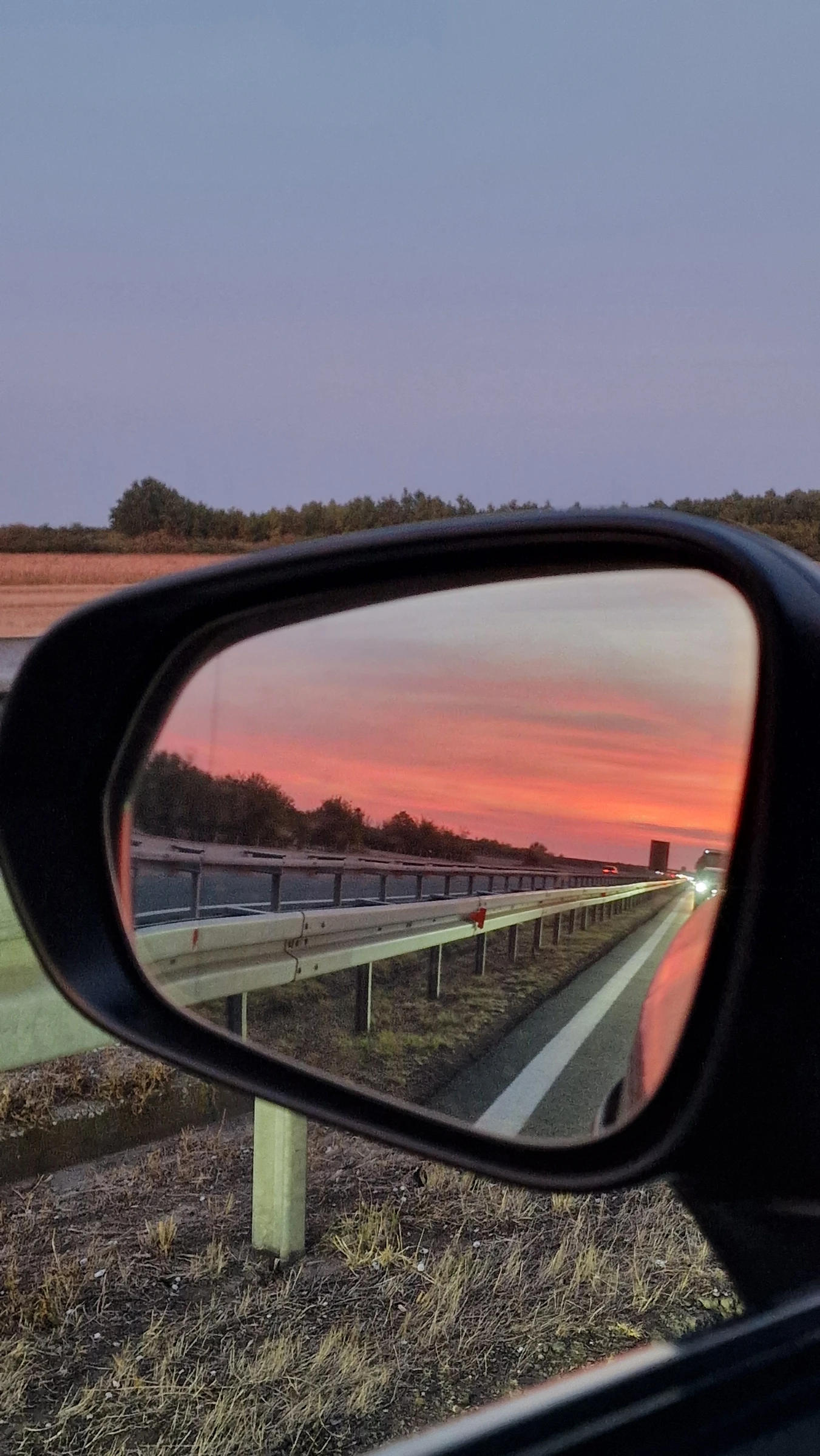
Red with meat is a rule people repeat without proof. The bottle on our table was called Axiom, and it supplied the proof. We drove east to Belgrade with the sunset behind us, the sun going down red into the haze over the stubble fields of Srem, and we watched it all the way in the rear-view mirror.
Pairs well with


