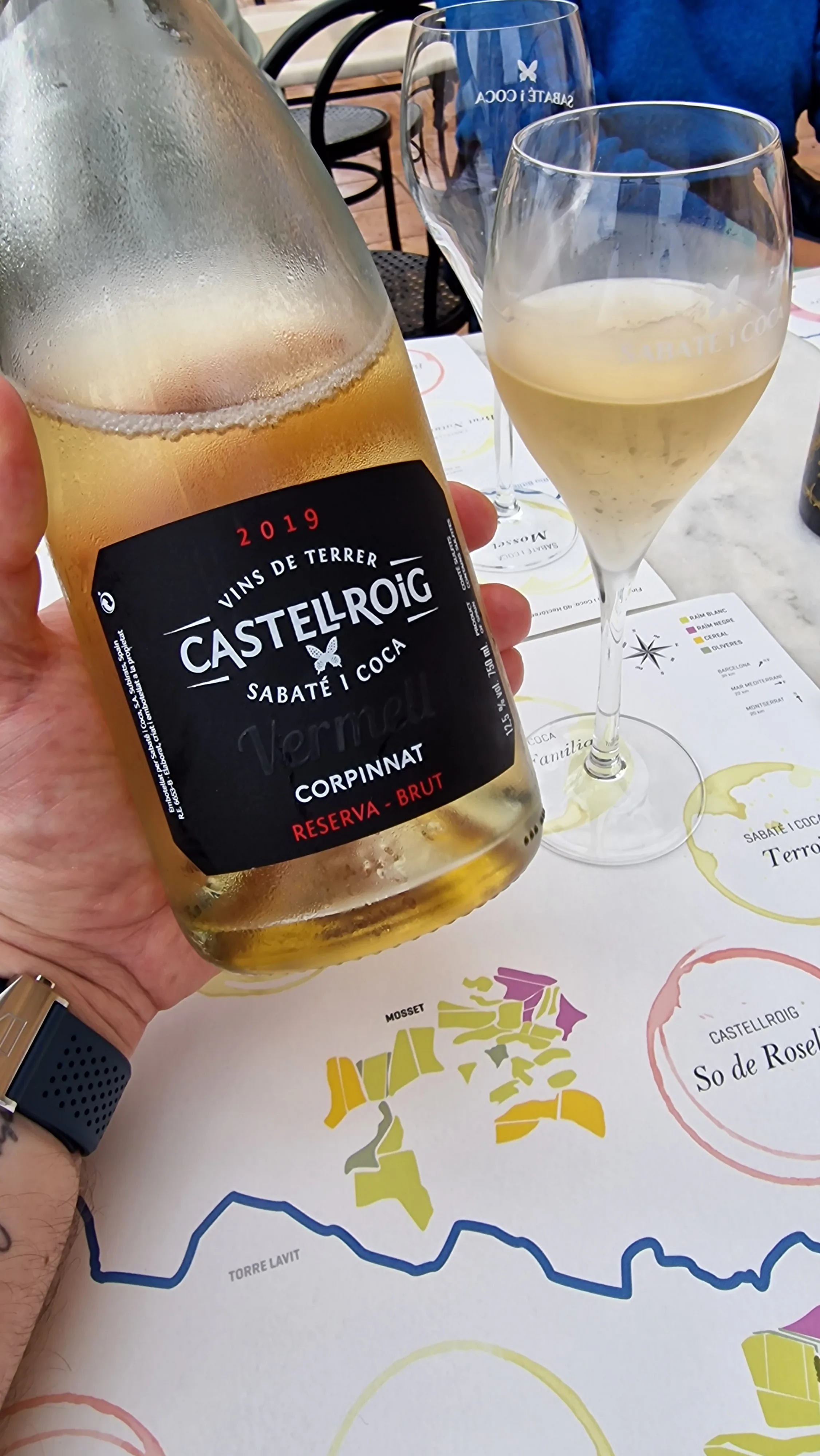
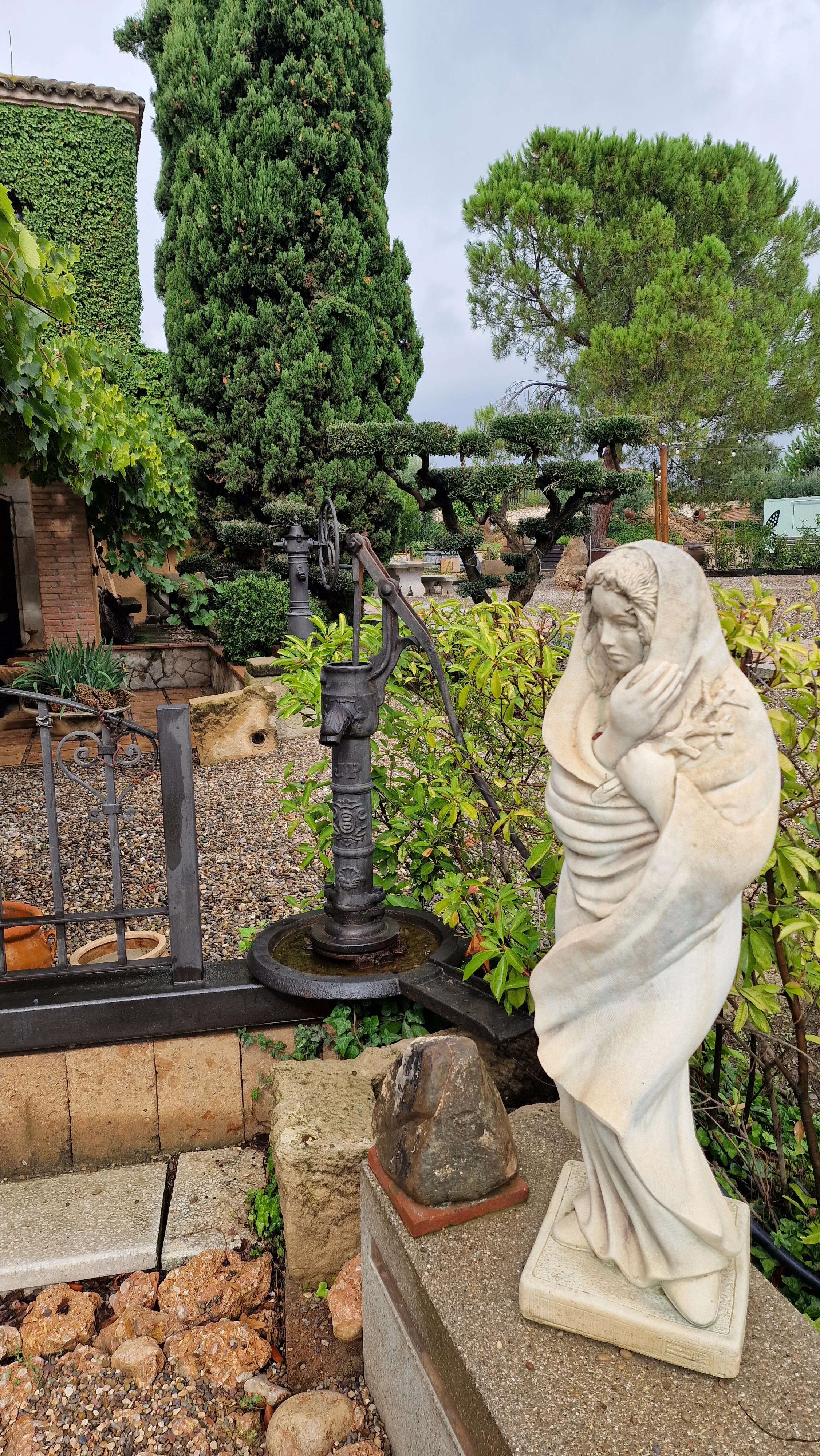
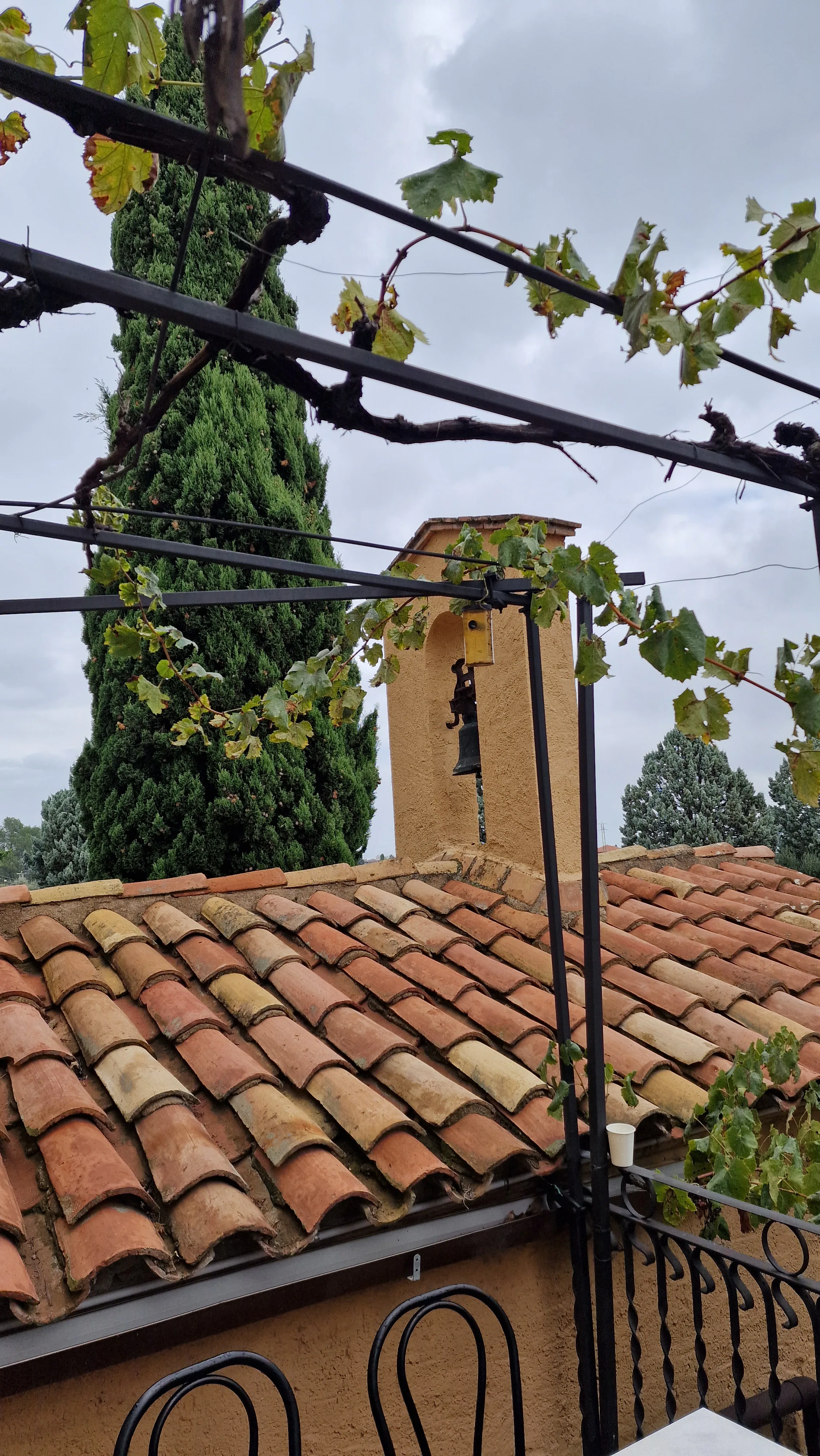
In early 2019, a group of Penedès producers — Sabaté i Coca among the founders — resigned from DO Cava. The issue was geographic dilution: Cava had expanded across multiple Spanish regions to the point where origin meant nothing. The group formed a new privately held certification covering only the historical heartland of Penedès sparkling wine production — Corpinnat, a compound of two Catalan concepts: cor, meaning “heart”, and pinnat, derived from the Latin pinnae, the 10th-century root of the word Penedès itself. Heart of Penedès. Requirements: 100% certified organic viticulture, hand-harvesting, estate fruit exclusively, minimum 18 months on lees for Reserva. One of the most demanding sparkling wine certifications in the world, and sitting on that terrace with the Vermell in hand, you understand exactly why they thought it was worth the fight.
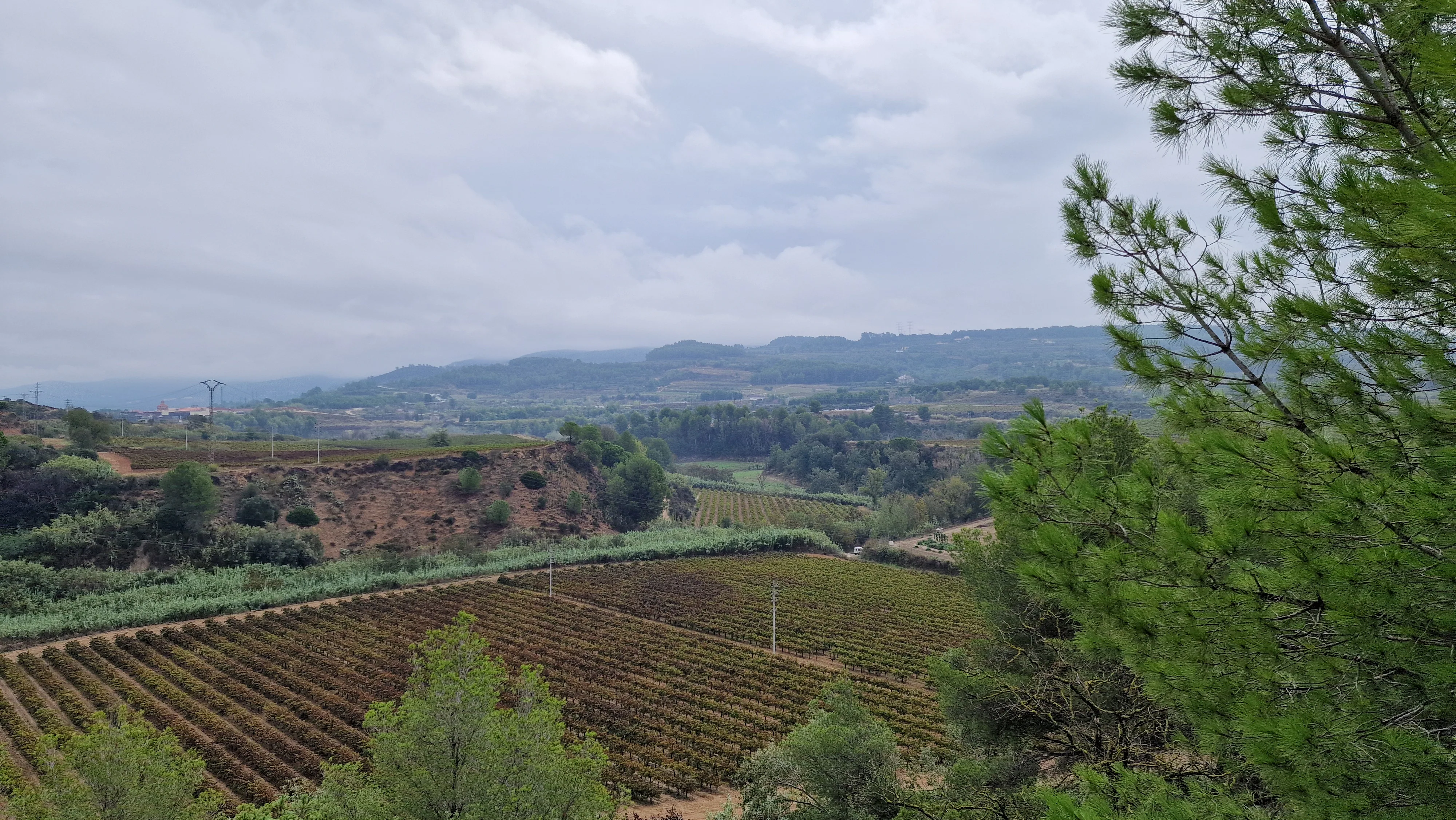
So, it's September 2024 and we're on our way to Subirats — a rural municipality of some 3,000 people, forty minutes southwest of Barcelona. It sits within the comarca of Alt Penedès, one of Catalonia's administrative districts that partially overlaps with DO Penedès. Subirats itself falls in the Penedès Central band — 200 to 500 metres, limestone-dominant soils, warm days, cold nights, the kind of diurnal range that keeps acidity intact even in a warm September. The estate occupies the Bitlles valley between the villages of Torrelavit and Sant Pere de Riudebitlles. This is old sparkling wine country — older than the word Cava, older than the appellation system that would eventually both define and constrain it.
Castellroig means “red castle” — a reference to the rust-coloured limestone outcrops in the Bitlles valley on which the masia stands. The estate has been here since the 18th century, currently run by brothers Josep and Marcel Sabaté, fourth generation. Their father Marcelino converted the original winemaking facilities into a working museum, preserving the production history of the place rather than erasing it. Marcel then spent fifteen years properly mapping the estate's soils — and found far more complexity than anyone had assumed. The geological structure has been intact since the Miocene, some 14 million years ago, undisturbed because the family never flattened their vineyards to facilitate mechanisation — unlike most of their neighbours in Penedès, where bulldozers routinely reshape the land before planting, destroying the natural soil stratification in the process.
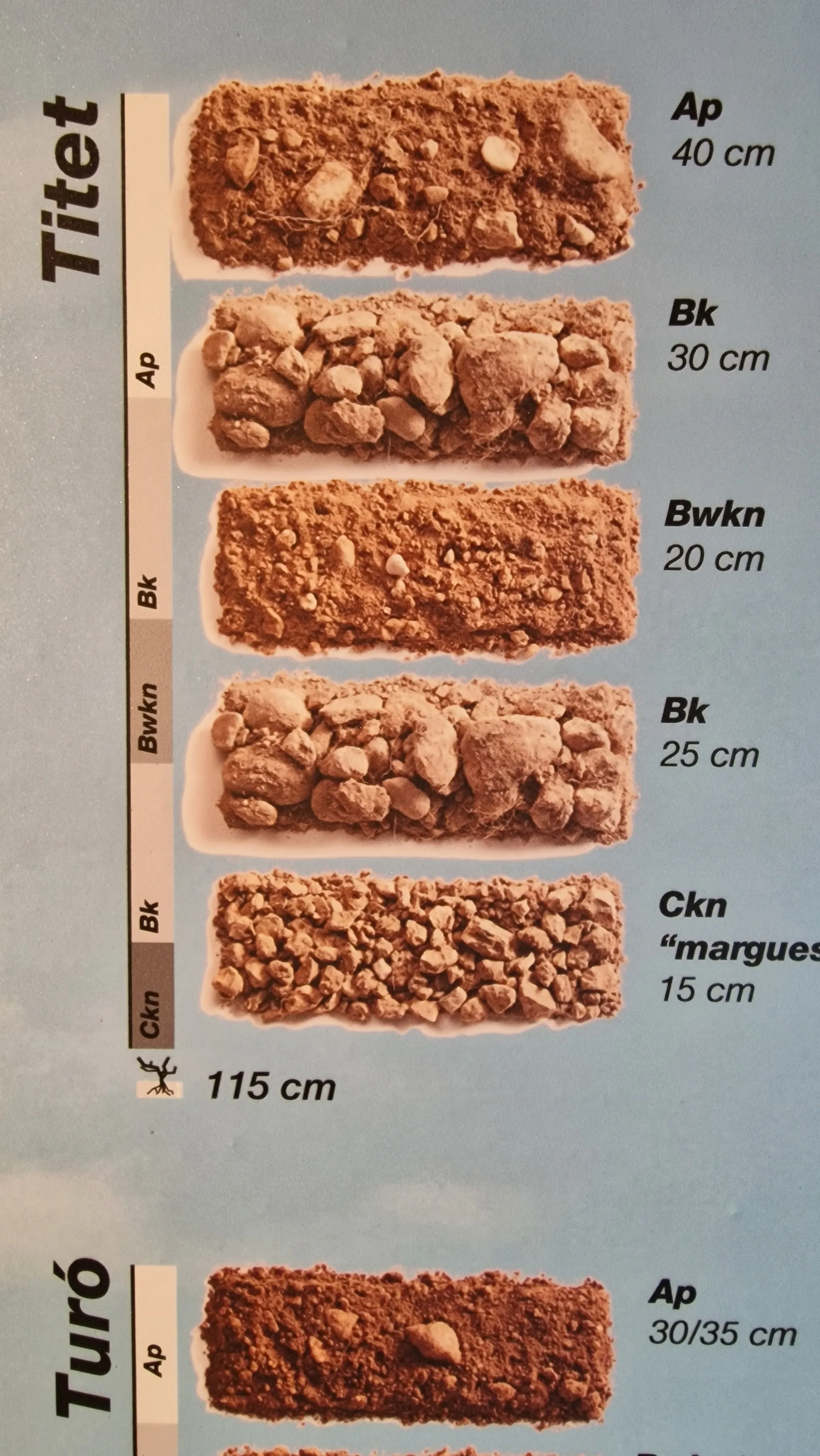 Titet and Turo soil profiles on display at Castellroig.
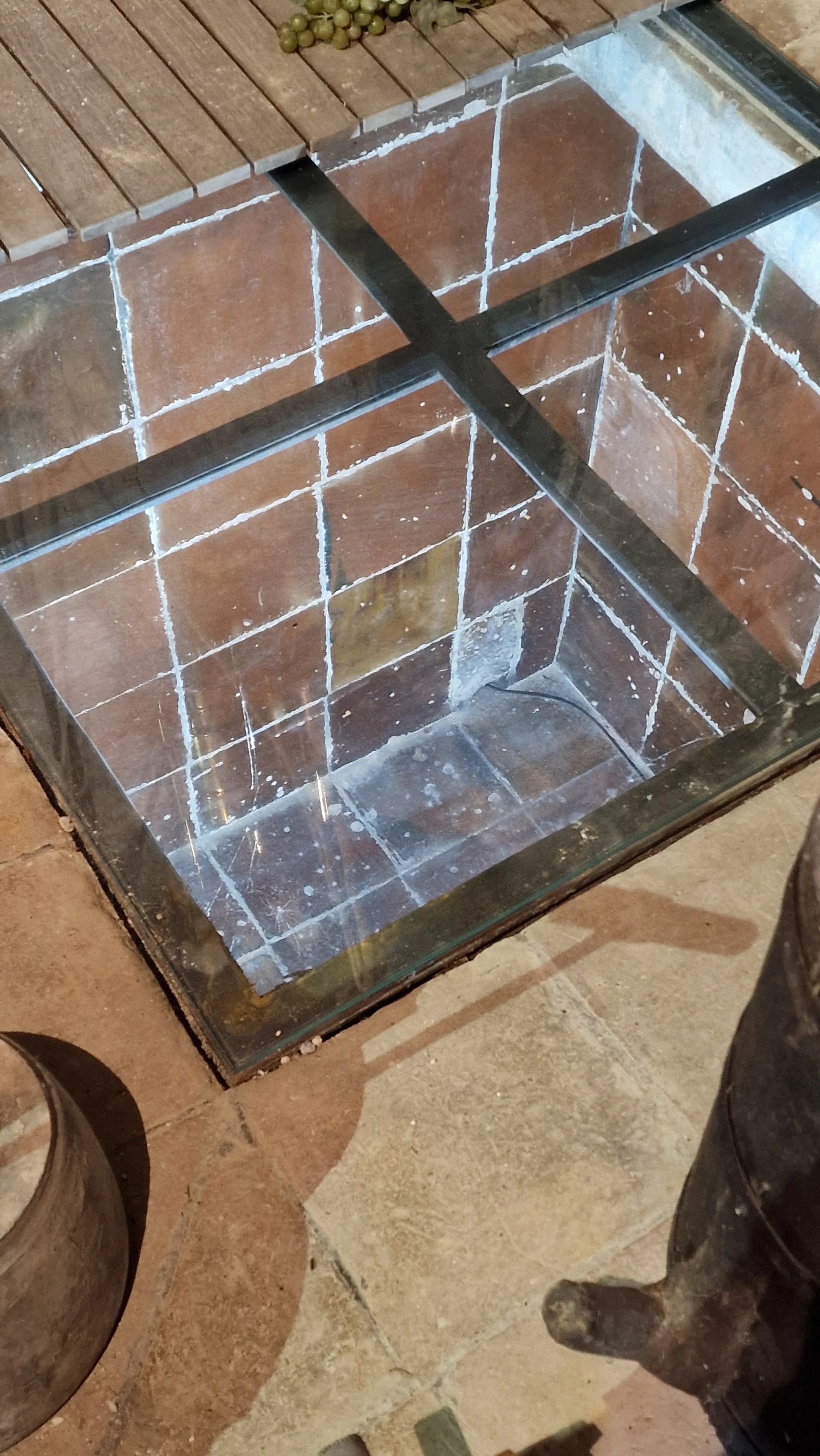
Somewhere in the cellar, under a glass panel in the floor, sits an 18th-century fermentation vessel — a tina de rajola, a tiled underground pit where must fermented by gravity and ambient temperature long before anyone here was thinking about secondary fermentation in bottle. It predates Cava as a concept entirely.
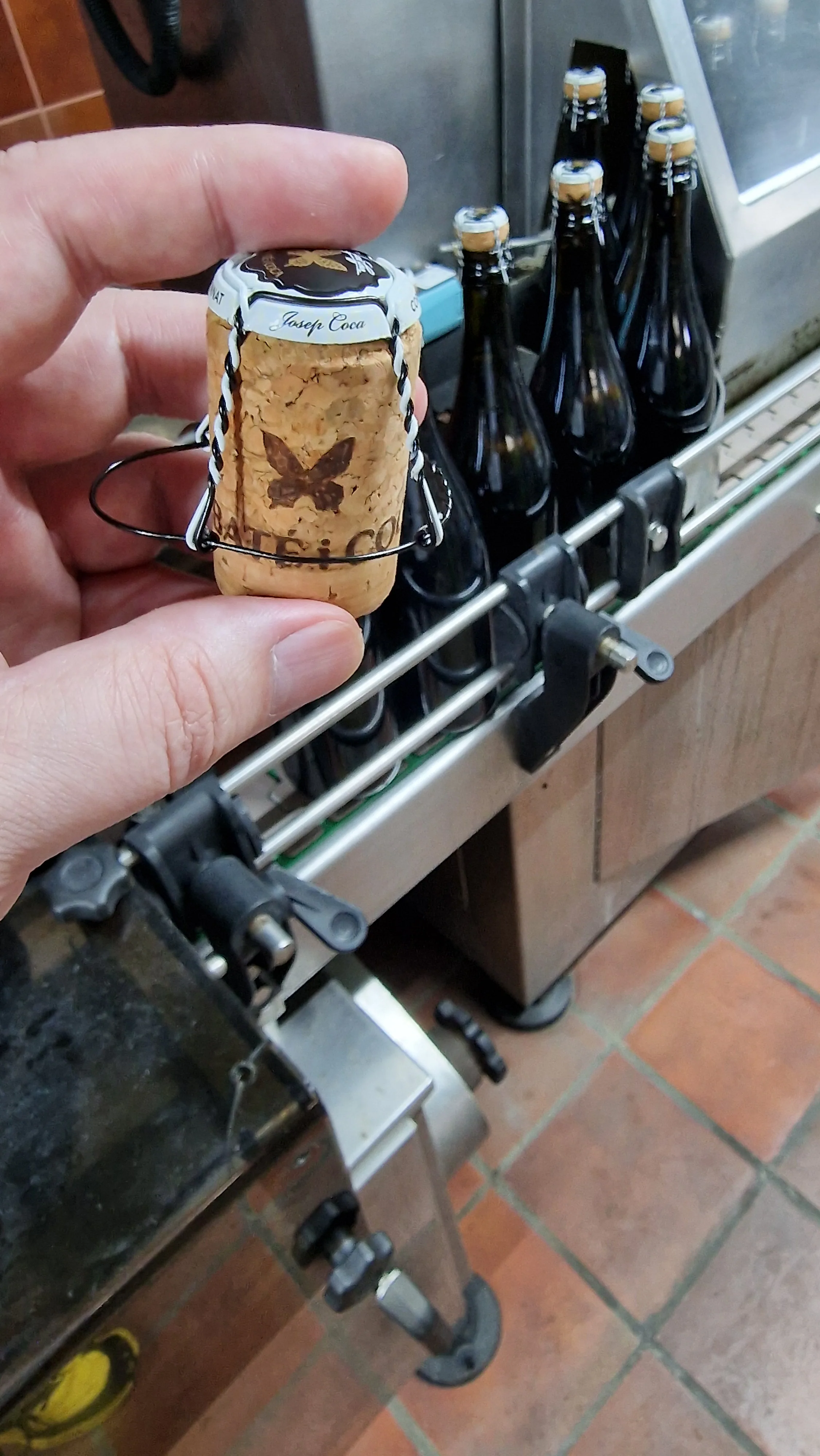
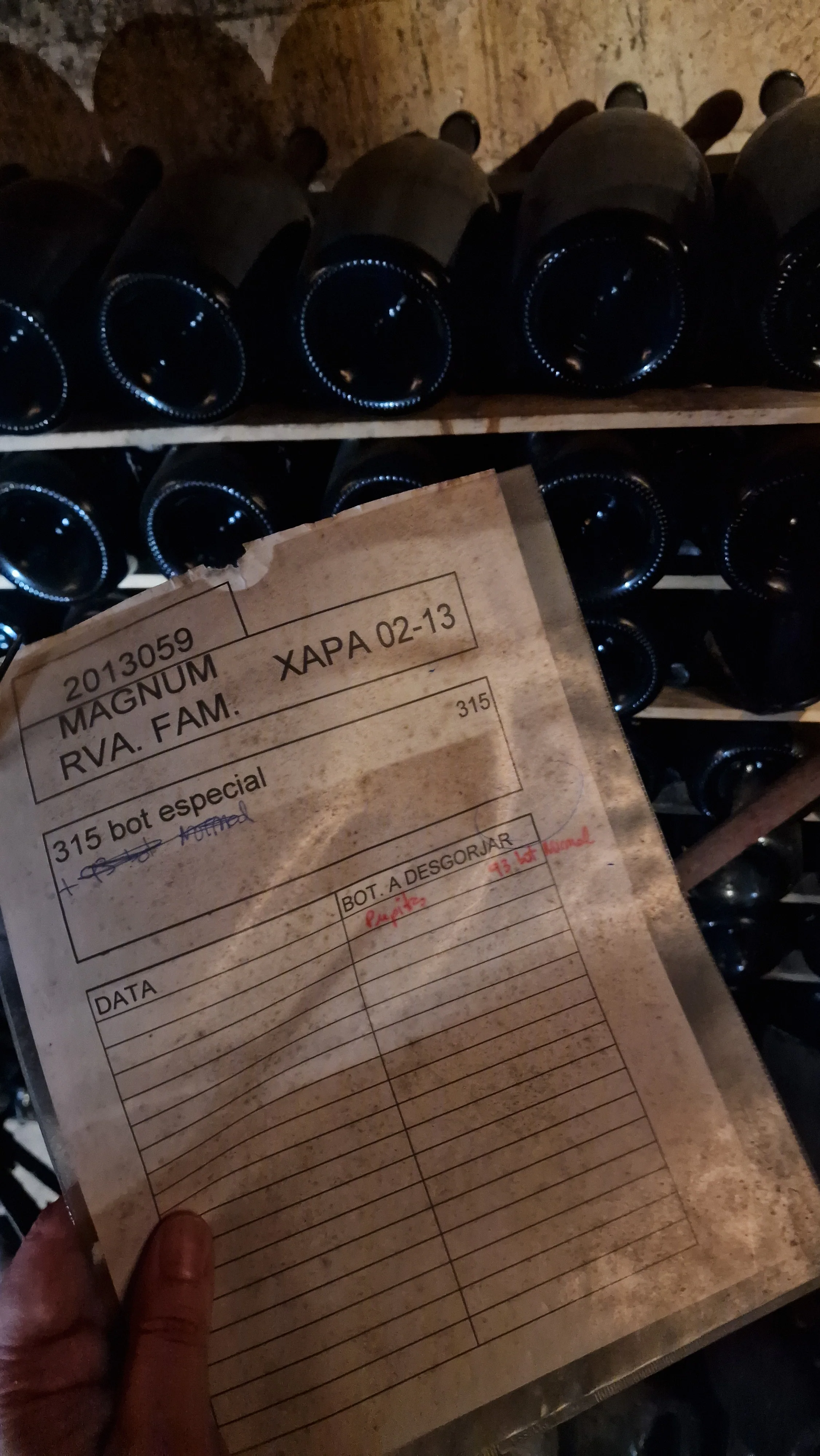
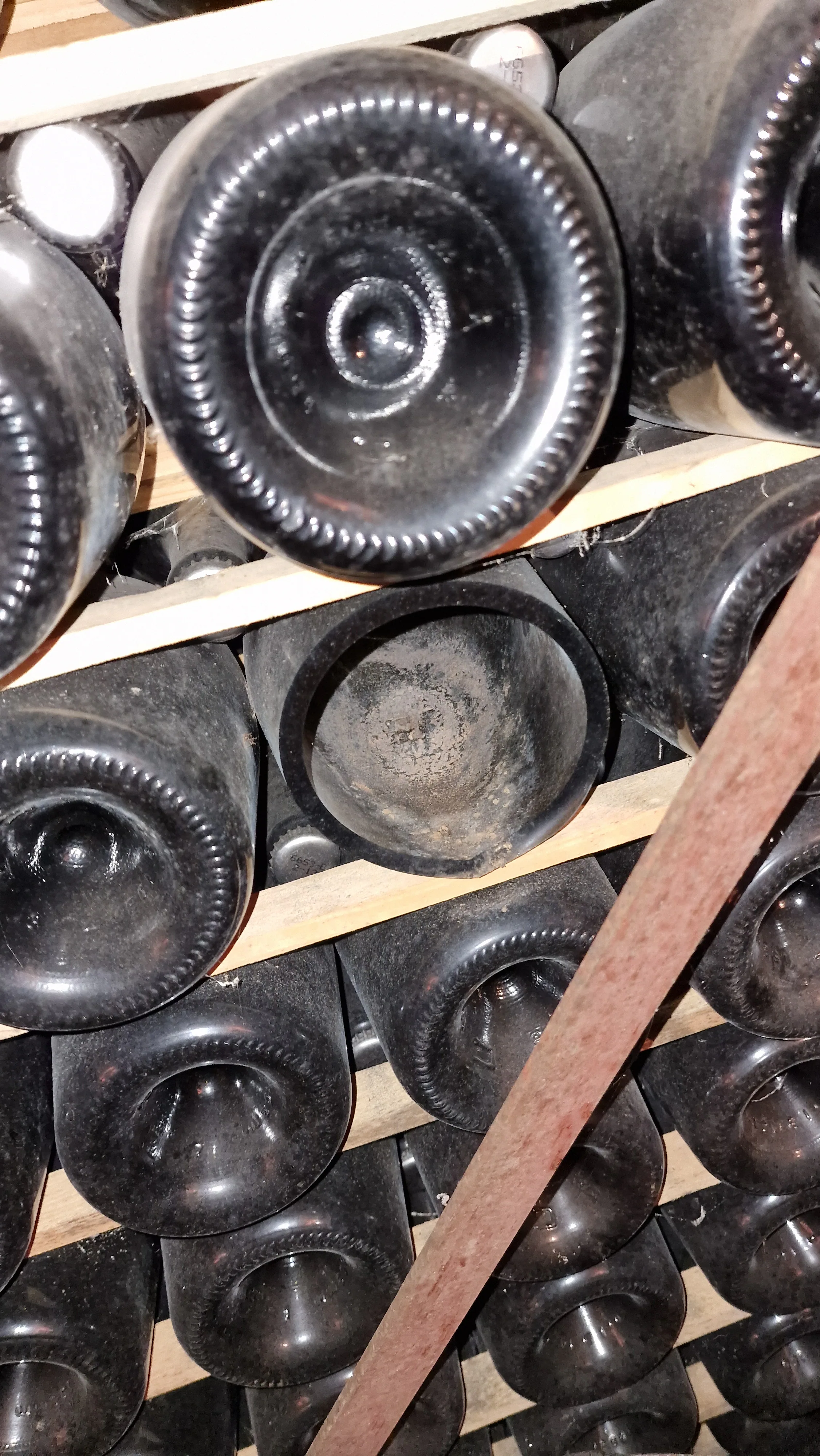
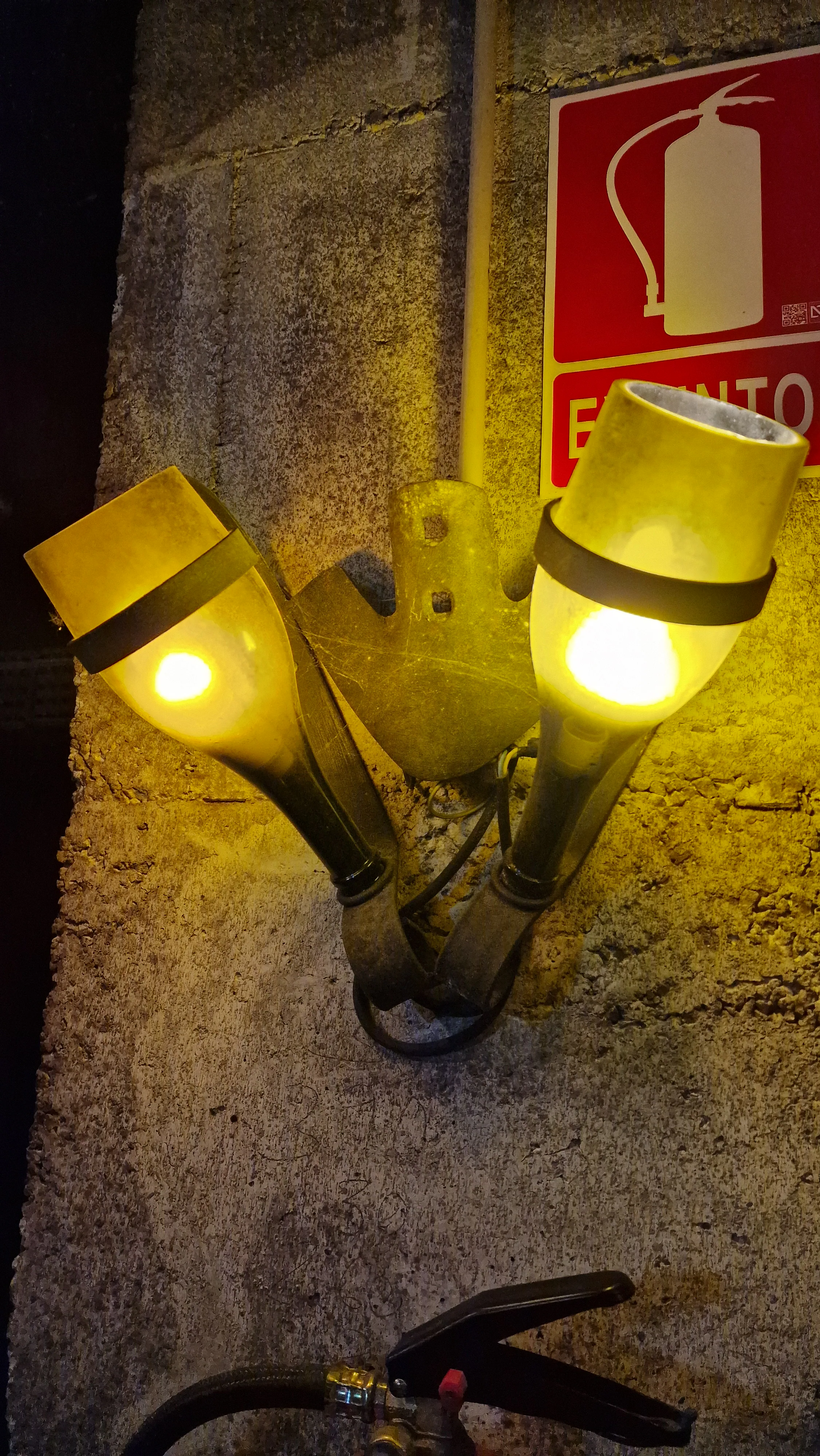
The serious work happens deeper in. Manual riddling — remuage — still done by hand, thousands of bottles inverted in traditional pupitres, sediment consolidating toward the neck over weeks. Secondary fermentation generates roughly 6 atmospheres inside the bottle, and not every bottle survives — the ones whose bases blow out become light fixtures in the cellar. The top of the range, Reserva Familiar, spends a minimum of sixty months on lees before disgorgement: single-vineyard Terroja, old Xarel·lo vines on iron-rich red soil, 700 bottles a year. The cellar log for a 2013 magnum batch — 315 bottles on a battered paper card — tells you exactly how small this operation is.
Marcel's mapping identified 18 distinct soil types across 40 hectares and 66 individual plots, each micro-vinified separately. Vine roots in the dominant Titet profile penetrate to 115 centimetres, reaching calcium carbonate-rich Bk horizons and marl at depth. That root access in well-drained limestone soils is what keeps Xarel·lo structurally tight — the variety simply doesn't accumulate sugar easily here.
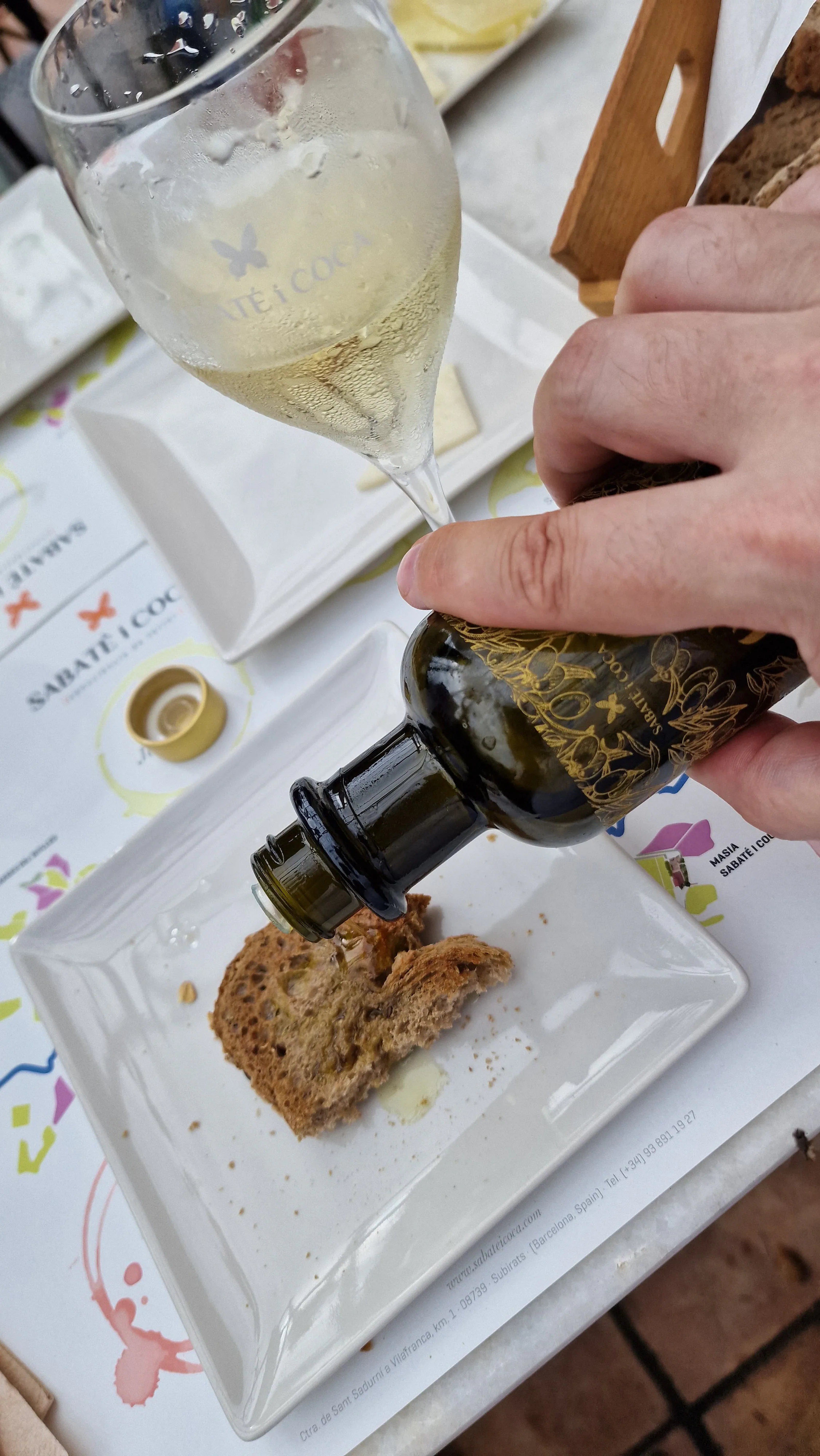
Castellroig Vermell is built on Xarel·lo Vermell, a pink-skinned somatic mutation of the classic Xarel·lo, rare even within Penedès. Vermell is Catalan for red — the grape's pigmented skin, not the wine's colour. In the glass it reads pale salmon, closer to a serious Provençal rosé than anything in the traditional Cava register. The tasting ends on the terrace with bread and the estate's own arbequina olive oil — and that pairing deserves more than a passing mention. Arbequina is one of the oldest cultivated olive varieties in the Mediterranean, its name taken from the town of Arbeca in the comarca of Les Garrigues, inland Catalonia. The variety arrived here reportedly via Aragonese knights returning from the Levant during the Crusades — which would place it in this landscape somewhere in the 12th or 13th century, making it nearly as historically rooted as the vines themselves. It produces oil with a distinctive profile: fresh-cut grass, green apple, a whisper of almond, soft bitterness at the finish — markedly gentler than Tuscan varieties like Frantoio or Moraiolo. Sabaté i Coca grow their own arbequina on the same estate, on the same limestone soils as the Xarel·lo. The oil carries that minerality — and next to a glass of Vermell, the combination makes a certain geological sense. Same ground, different crop, same signature.
Pairs well with