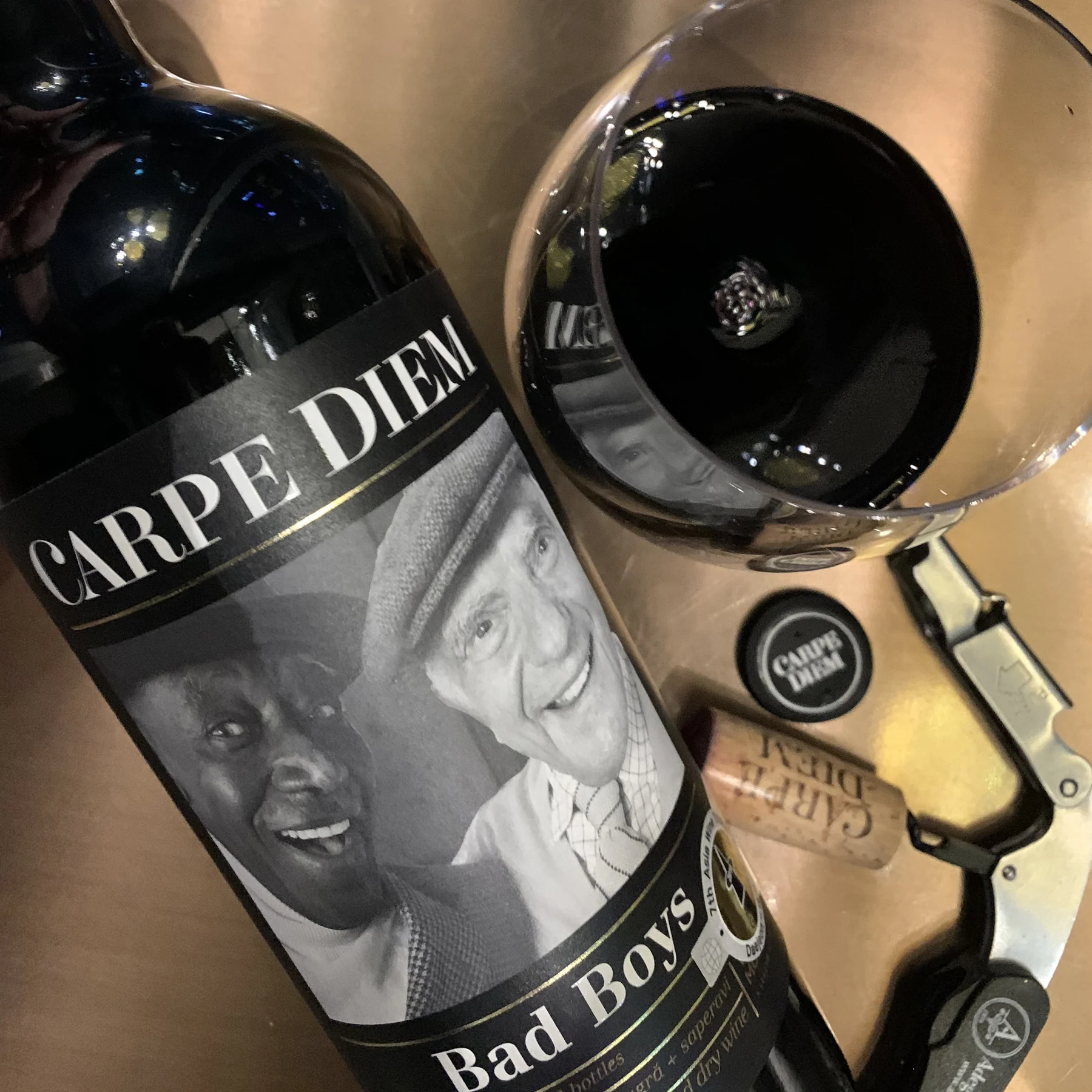
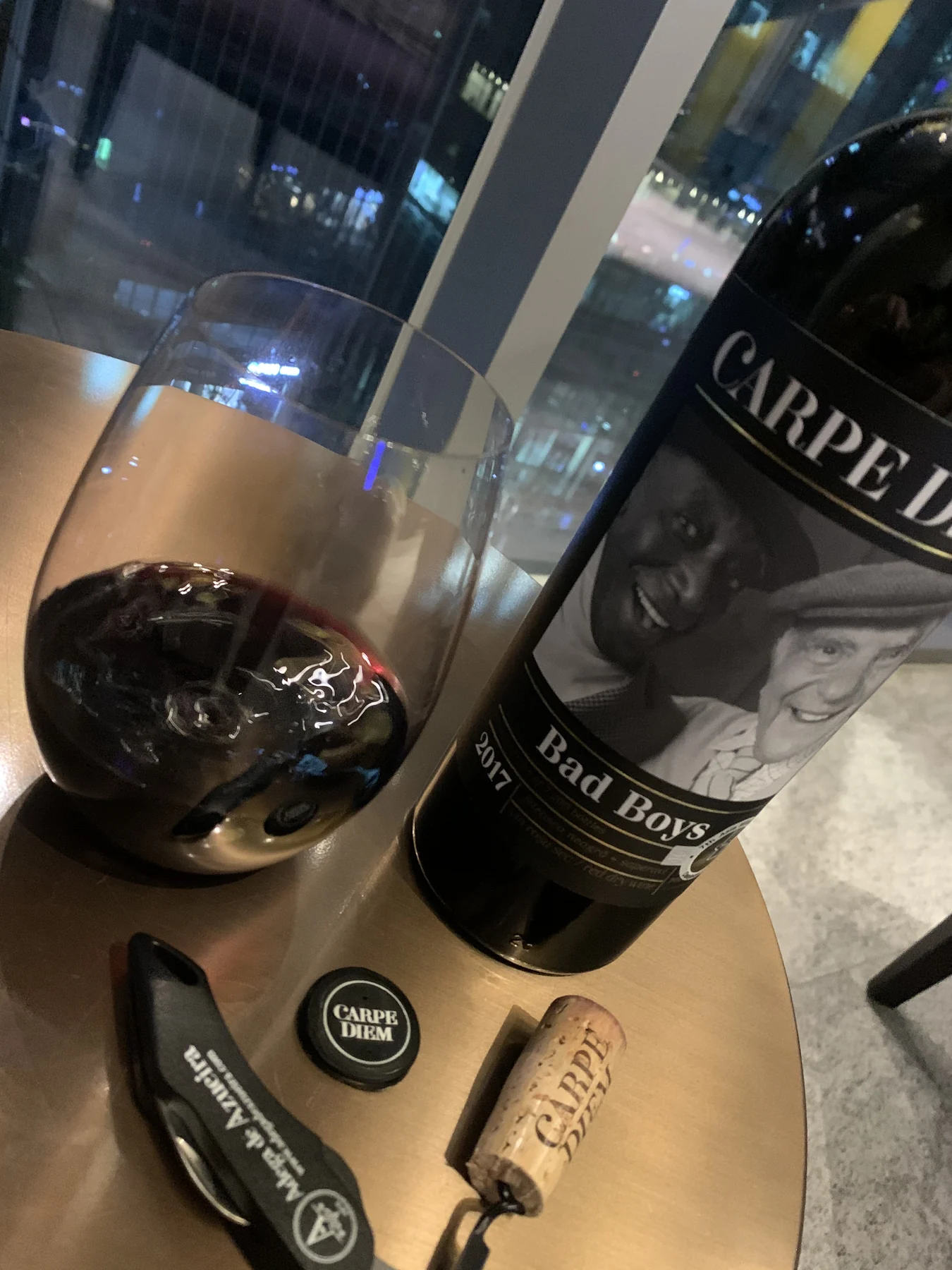
The geography of this bottle makes no immediate sense. It was April 2021, and I was in Seoul — specifically, the L7 Gangnam hotel on Teheran-ro — having just cleared a 14-day mandatory COVID-19 quarantine. I was in Korea for business, and with the borders back to Singapore tightly managed, I found myself somewhat stranded. My quarantine survival supply of two bottles — the legal import limit — was long gone. Wine Works, the shop at the nearby Hyundai Department Store, had been my first stop out of confinement, yielding a California Pinot Noir that fundamentally changed my view of the grape. But it was on that same shelf, entirely out of its expected context, that I found this: a bottle of Carpe Diem Bad Boys from the Republic of Moldova.
Finding a Moldovan red in the middle of Seoul's luxury retail district is an anomaly. The Republic of Moldova sits roughly on the same latitude band as Burgundy and the northern Rhône, but its wine industry is defined by an entirely different history. For decades, it was the volume engine of the Soviet Union, producing semi-sweet bulk wine for the Russian market. In 2006, Russia imposed a sudden embargo, cutting off roughly 80% of Moldova's wine exports overnight. It was a brutal economic shock, but it forced the industry to pivot sharply toward quality, lower yields, and Western markets. Casa Vinicolă Luca — the producer behind the Carpe Diem label — represents that exact pivot.
The estate is run by Ion Luca Jr., a fourth-generation winemaker whose family history mirrors the national one. His great-grandfather tended vines before the Soviet era; in 1949, the family’s property was nationalised, and they were deported to a labour camp in Siberia. The subsequent generations worked in the state-run Cricova winery before eventually re-establishing their own private production under the family name in 2011. Today, Luca works with a small 10.5-hectare estate, focusing heavily on indigenous and regional varieties, harvesting by hand into 10 kg crates, and rejecting the high-volume models of the past. The Bad Boys label, with its distinctive black-and-white double portrait, is a deliberate, slightly ironic departure from formal wine marketing.
The 2017 Bad Boys is an IGP Codru classification. Codru — Romanian for ‘forest’ — is Moldova’s central wine zone, a temperate continental region of ridge-and-valley topography where limestone-rich chernozem soils and the moderating influence of surrounding woodland provide the country's best terroir for fine reds. The 2017 is a two-grape blend: 51% Fetească Neagră and 49% Saperavi.
Fetească Neagră — literally 'Black Maiden' — is an indigenous Romanian-Moldovan variety that ripens late and brings structure, dark cherry fruit, and a faintly savoury, herbal lift to a blend. Saperavi is a Georgian variety — its name translates as 'paint' or 'dye' — known for being a teinturier grape, meaning its flesh, not just its skin, is red. It contributes light-absorbing colour, a core of mulberry and blackberry, and a characteristic spine of dark spice, leather, and firm natural acidity. Both are thick-skinned, late-ripening grapes that benefit from Codru’s long autumns, allowing them to achieve full phenolic maturity without dropping their acidity. Luca vinified them in stainless steel and aged the wine for 12 months in French oak barriques before bottling this specific 2017 vintage as a limited edition of 7,200 bottles.
Poured into a hotel-room glass, the colour was exactly what the Saperavi promised: a deep, opaque ruby with violent purple highlights. The oak signature was present but clean — toasted bread, vanilla, and cocoa — framing a dense, structured core of black cherry and black pepper. It is a full-bodied, aggressive wine, driven by firm tannins and elevated acidity, completely unconcerned with being delicate. The specialist press has occasionally compared the cuvée’s spicy, structured profile to a Côte-Rôtie, which is a flattering, if geographically confusing, shorthand for what this wine actually is: a genuinely serious, cool-climate, spice-driven red.
There was no grand dinner to accompany it. Just me, the hotel room, and the understanding of how it ended up there: the 2017 Bad Boys had won a Gold medal at the Daejeon International Wine Festival in 2019, which explained its unexpected presence on a Gangnam retail shelf. It is a strange trajectory for a wine — from a family whose estate was nationalised by the Soviets, rebuilt from the ground up, and then carried by an Asian wine trophy to a department store in South Korea, only to be opened by a stranded expat on a Tuesday night. It tasted exactly like what it was: something built to survive.
Pairs well with