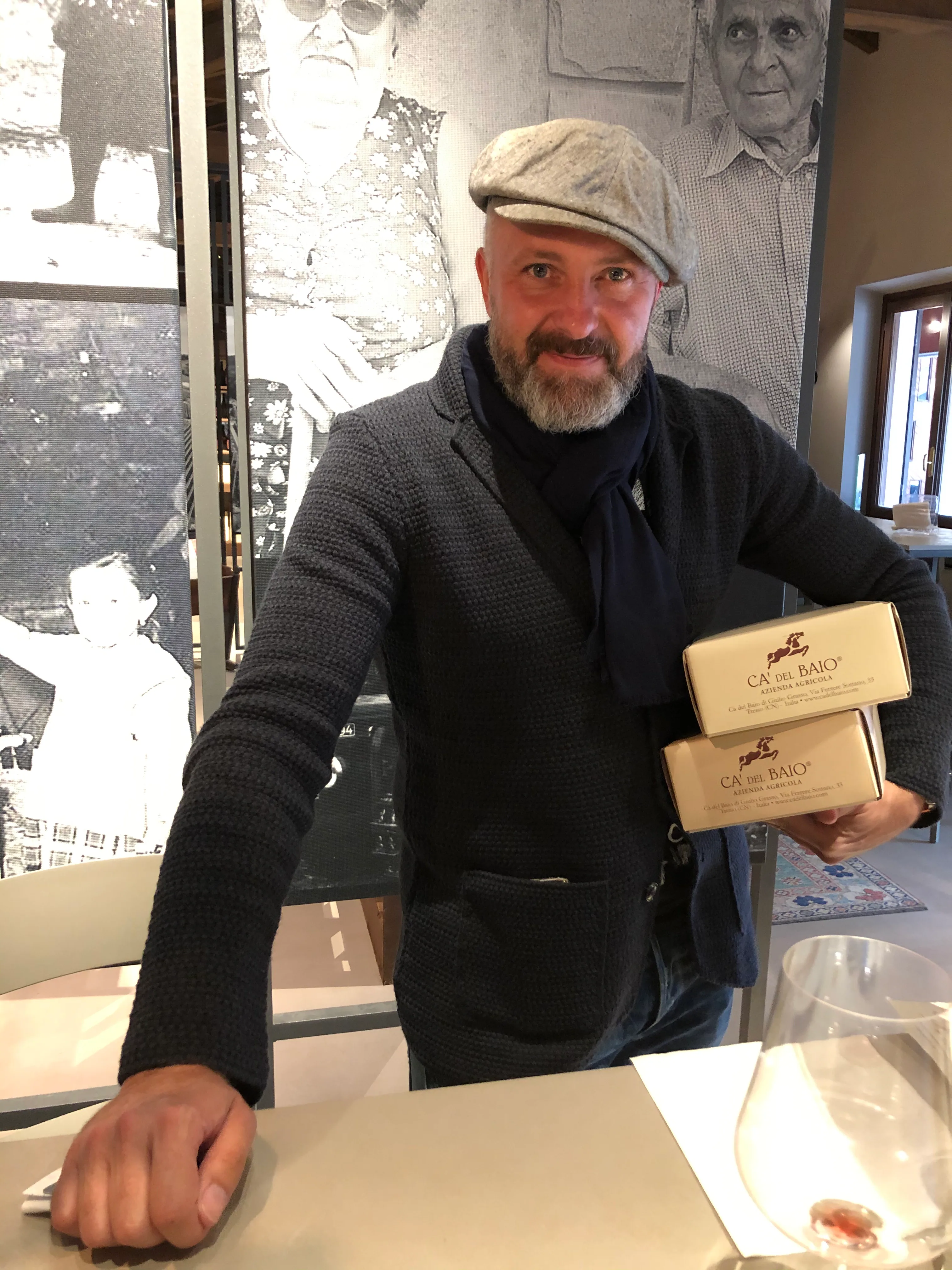
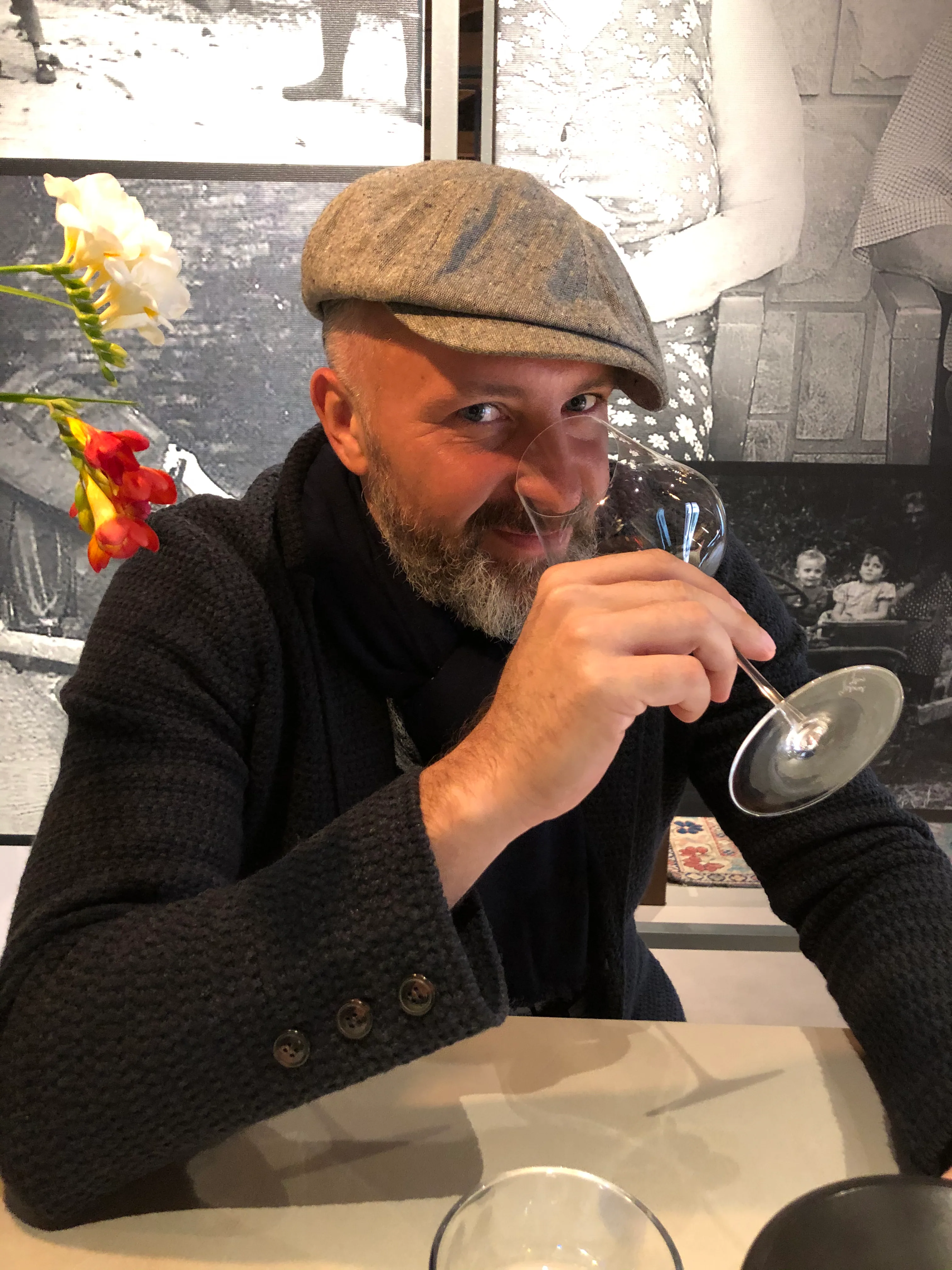
February and March are usually the quieter months in the Langhe area of Piedmont. Visitor numbers are lower, and many restaurants even close for the winter break. Yet, that was exactly when I happened to be in Piedmont and even met the winemaker while visiting a winery that produces Barbaresco from one of the elite crus of the DOCG - Asili. The reason this is so notable is that, when visiting wineries, you usually meet customer-facing staff - estate hosts or tasting room staff - rather than the person behind the wine. In other words, you don't get lucky enough to meet the winemaker on every visit.
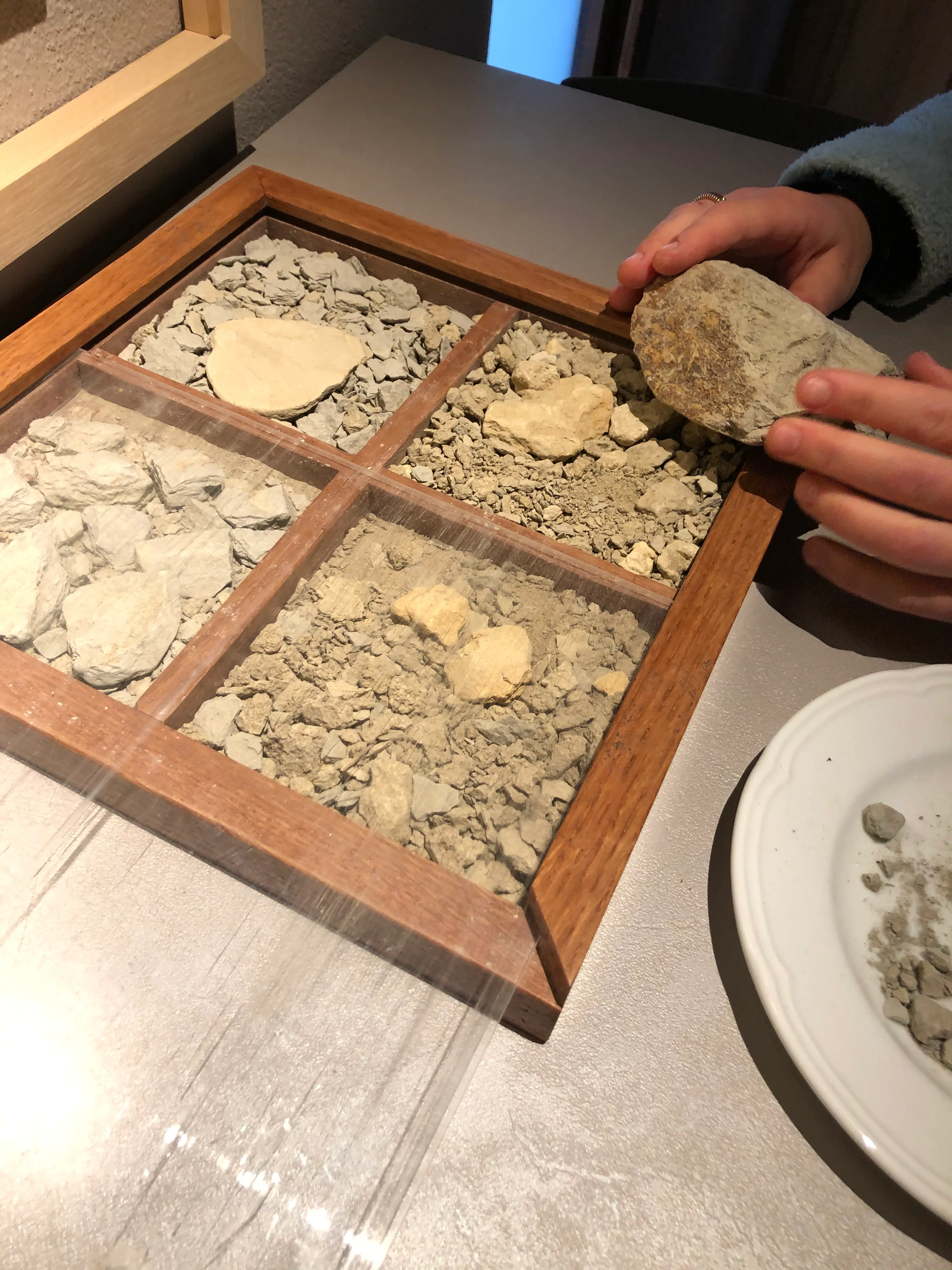
Barbaresco has been known since the 19th century for producing elegant, structured, finely tannic wines from Nebbiolo, a varietal indigenous to this area. Originally centered in the Barbaresco commune alone, today the Barbaresco DOCG also includes the communes of Neive and Treiso, as well as San Rocco Seno d'Elvio, a frazione of Alba. The appellation is defined by two main soil types: the calcareous Sant'Agata Fossili marls found in Barbaresco and part of Neive, and the Lequio Formations - a mix of marl and sandstone - in the other part of Neive, Treiso, and San Rocco Seno d'Elvio.
Beyond the broader geology of the appellation, Barbaresco is also defined by its Menzioni Geografiche Aggiuntive - or crus, in international terms - that produce some elite wines due to their location, exposure, and microclimate, which together with the soil form what is known as terroir. Asili is one of the best-known of these crus, and it is here that the family-run winery Ca' del Baio owns a substantial parcel. In Piedmontese dialect, Ca' del Baio means "House of the Bay Horse," and the winery has been owned by the Grosso family for four generations, with roots dating back to the early 1920s. Forbes listed Ca' del Baio among the 25 best Barbaresco producers in 2019.
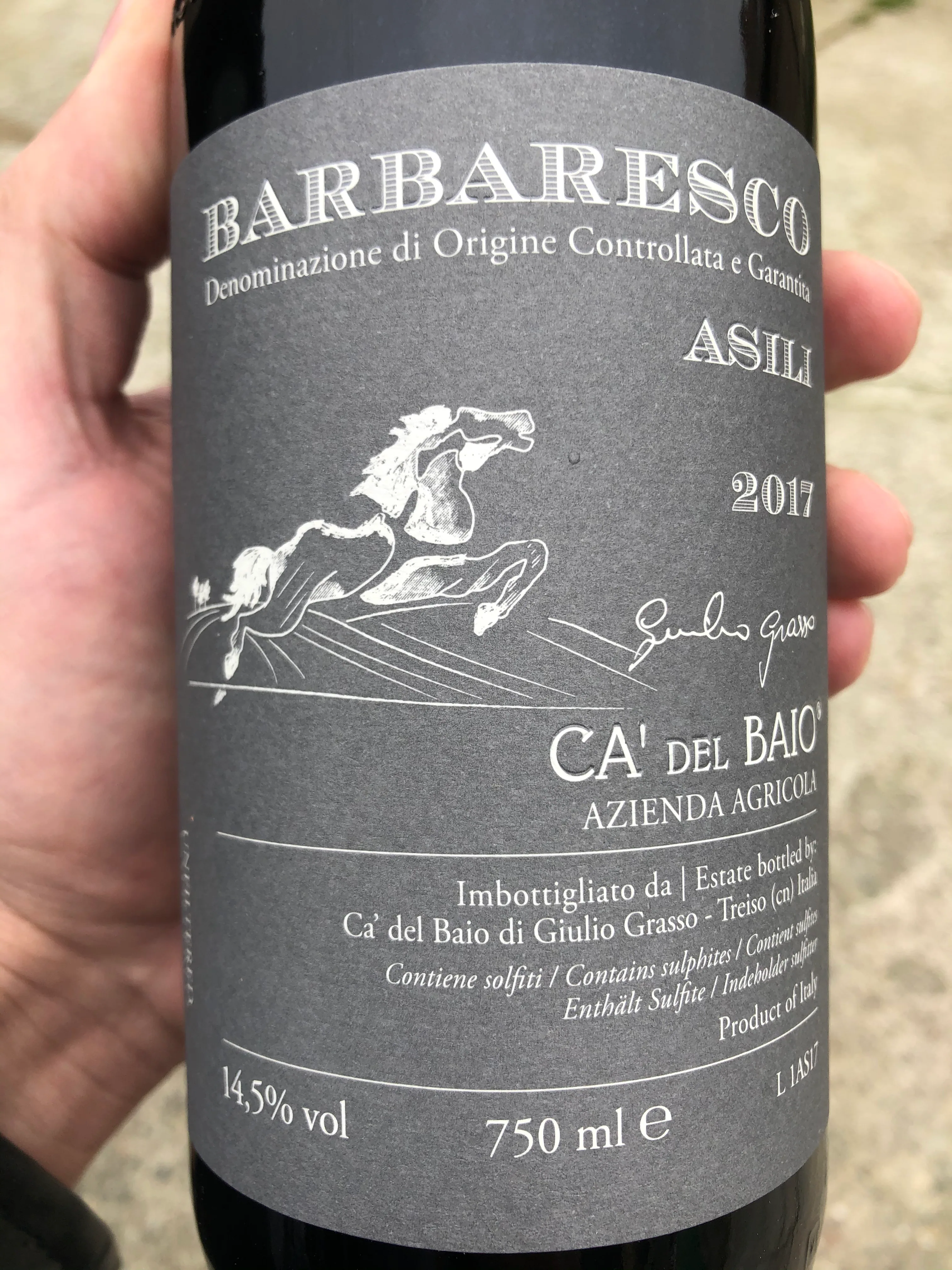
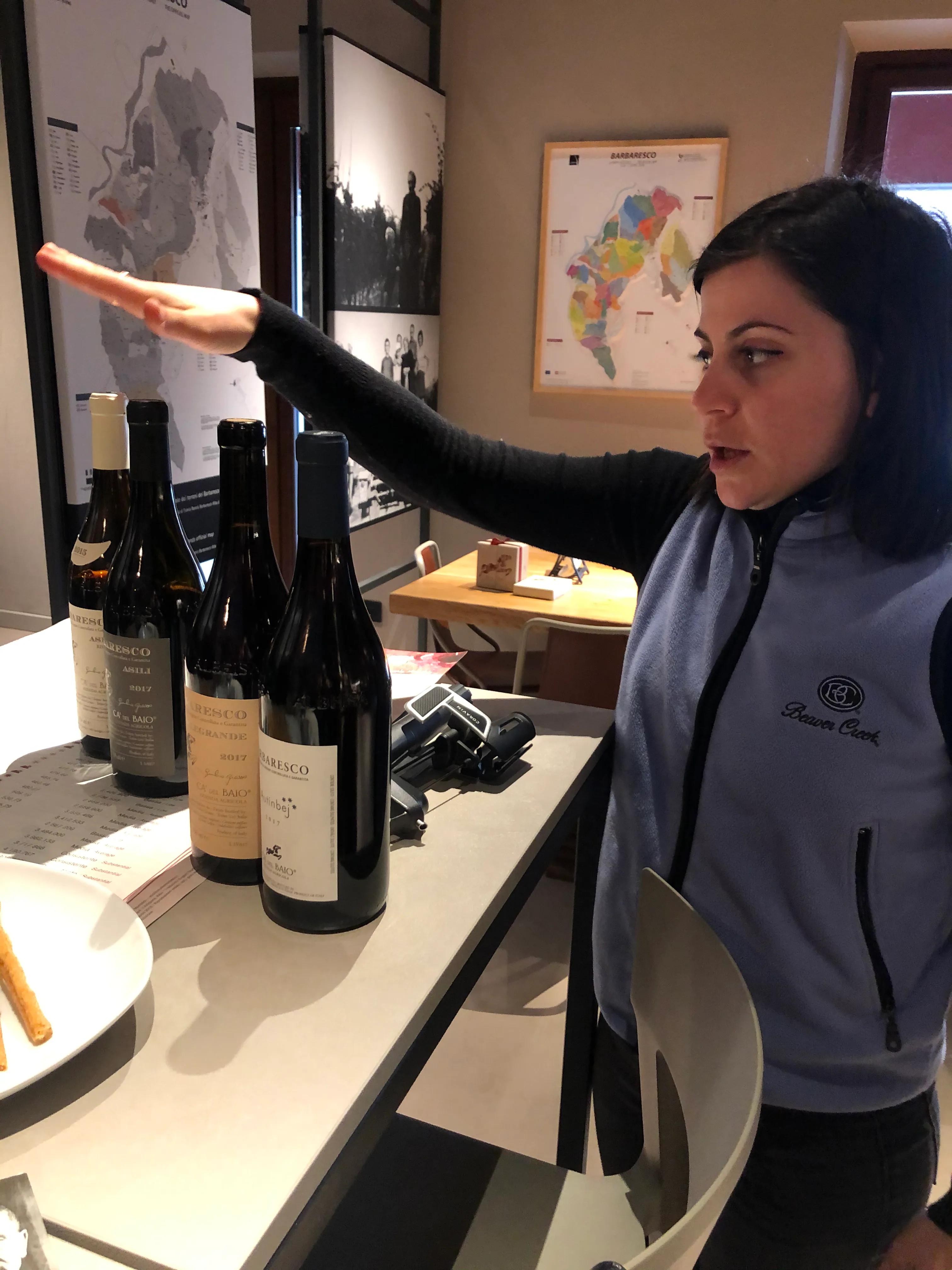
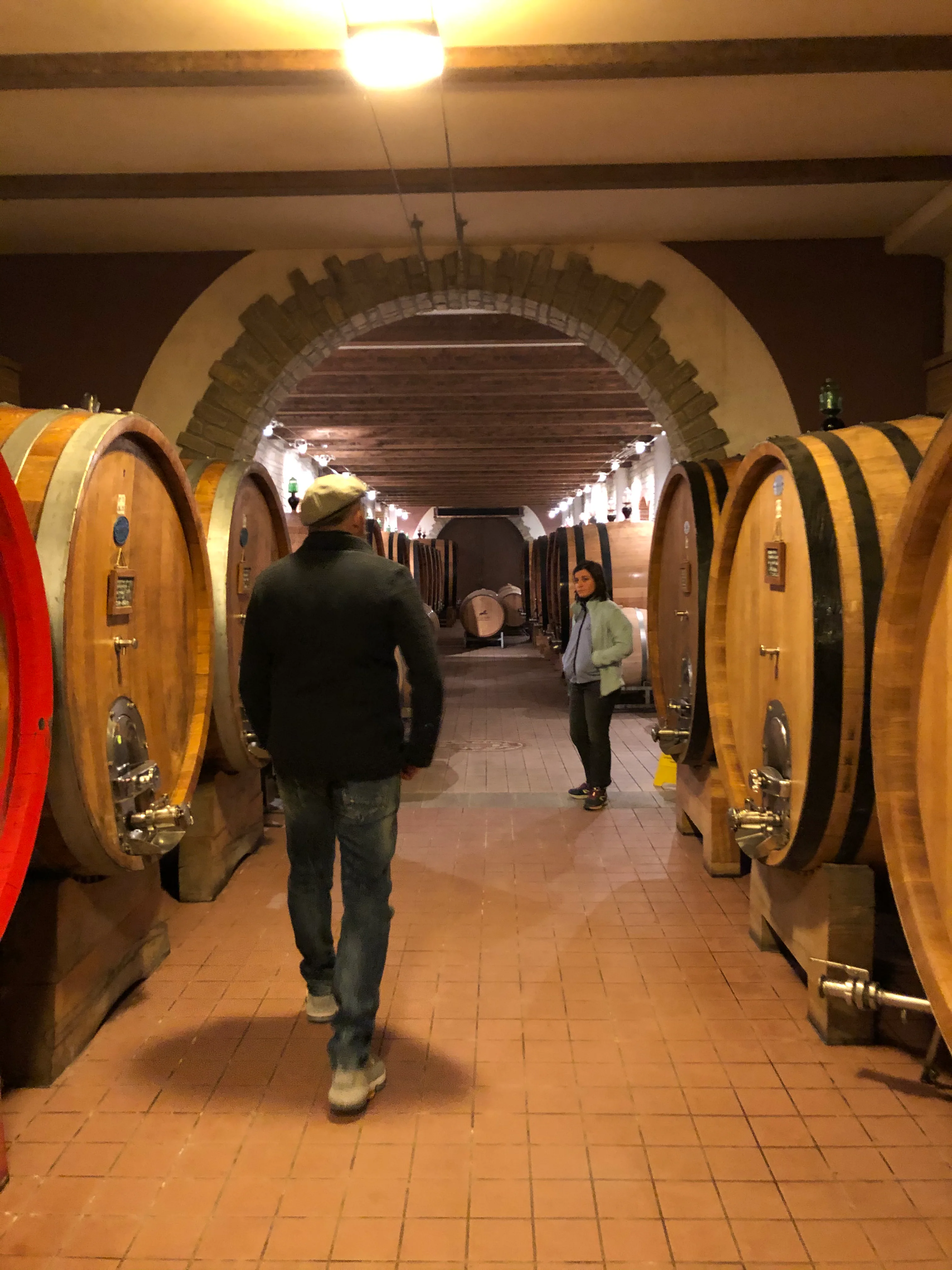
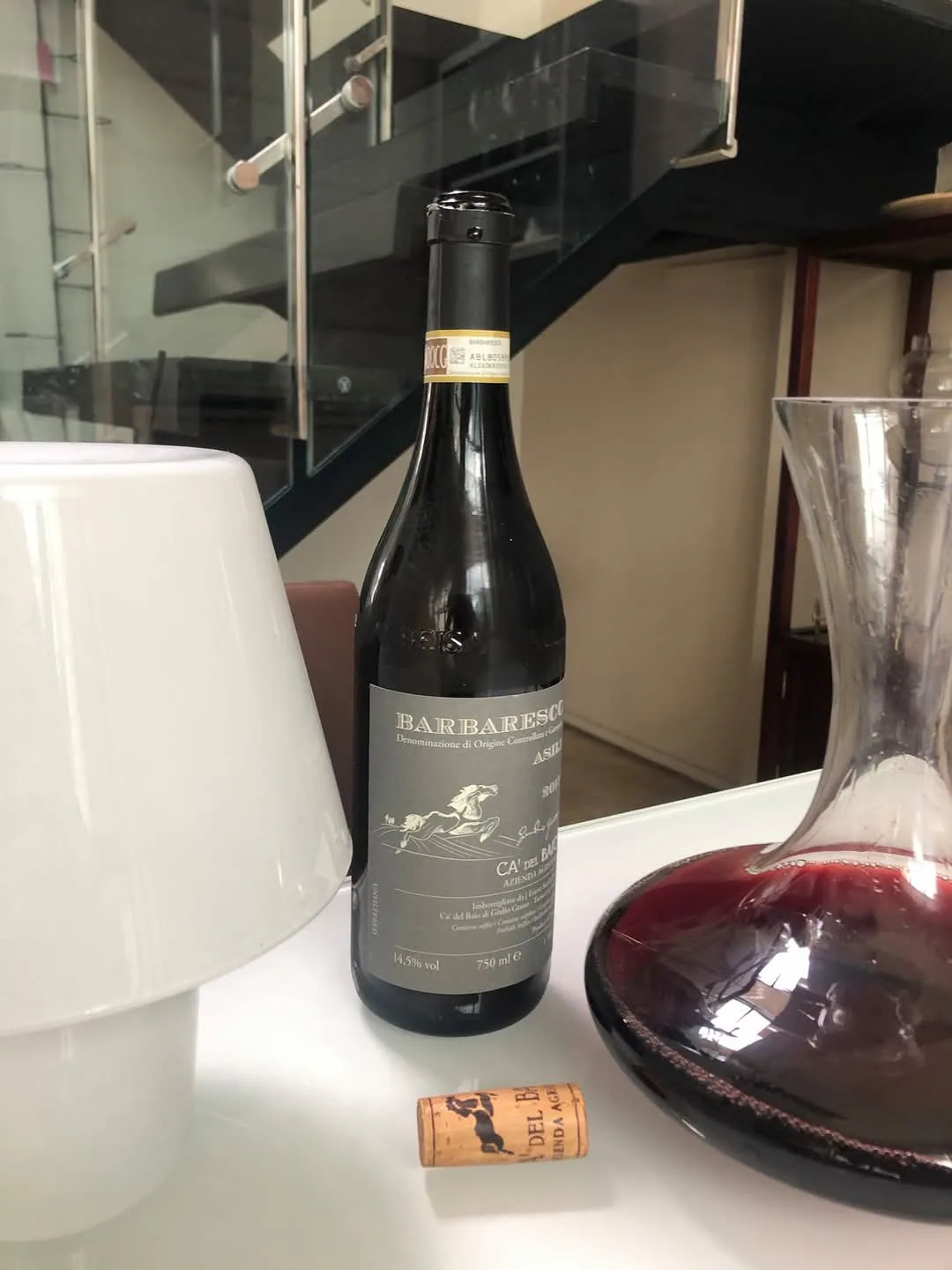
The winemaker I met was Valentina Grosso (Ciao, Valentina!), a granddaughter of the founder of the winery and daughter of Giuliano Grosso, whose signature you see on the label. She was kind enough to give a tour of the winery, share its history, modern-day production, and explain how the Sant'Agata Fossili marls work their magic on the Barbaresco they produce. I tried quite a few of Ca' del Baio's wines during the visit and walked away with several bottles to bring back home. The one that truly stayed with me - as shown here - is their Barbaresco Asili of the 2017 vintage.
The calcareous marl of Barbaresco with sandy deposits specific to the Asili cru typically produces elegance, fineness, and an early velvet-like approachability rather than sheer force. The 2017 Piedmont growing season was shaped by heat, drought, low yields, and earlier picking; Decanter's Barbaresco 2017 coverage notes the vintage often produced tannins that were a bit rustic and dry. Ca' del Baio's style includes fermenting in temperature-controlled steel with 5 to 30 days of skin contact, then aging the wine for 24 months in wood - a mix of oak casks and small French barrels - plus 6 months in the bottle. That regime contributed to the wine's smooth, rich, rounded finish and is exactly the reason why the tannins present as polished rather than aggressively raw.
Pairs well with