As a Vice President of Sales covering the whole of Europe, I spend roughly seventy-five percent of my time on the road. This means that the wines I encounter are found not only at home or in proper restaurants but also in airline cabins and on trains. This reality is the premise for a new series of stories here — Vins de Voyage — dedicated strictly to the bottles encountered while moving from one place to another.
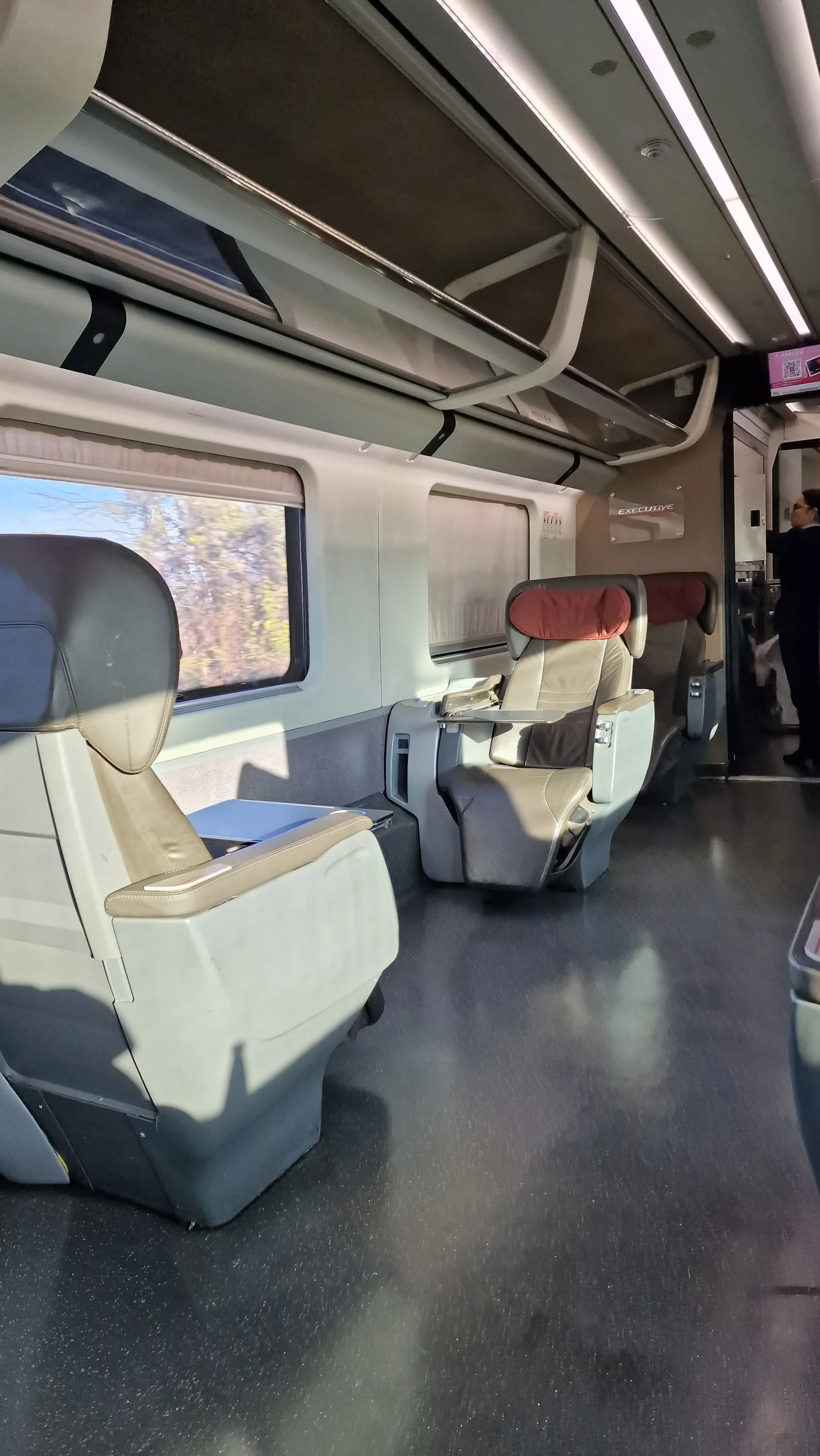
When the Lumière brothers first screened L'Arrivée d'un train en gare de La Ciotat in 1896, the audience reportedly recoiled in terror at the sight of an oncoming locomotive hurtling toward the camera. In December 2023, standing at Verona Porta Nuova and filming the timely arrival of Frecciarossa 9729, the oncoming train provoked only relief. I was in the middle of a heavy European work trip, a conference behind me, and a flight out of Milan ahead. Trenitalia — Italy's primary rail operator — runs these high-speed services, capable of pushing 300 km/h on infrastructure managed by Rete Ferroviaria Italiana — the Italian Railway Network, the state-owned body responsible for the country's rail tracks and infrastructure. The Frecciarossa — which translates to "Red Arrow" — is Trenitalia's premium high-speed brand, and in the Executive coach, the trip becomes deliberately quiet: wide leather seats, very few passengers, proper space, and enough calm for a glass of wine to feel like part of the journey.
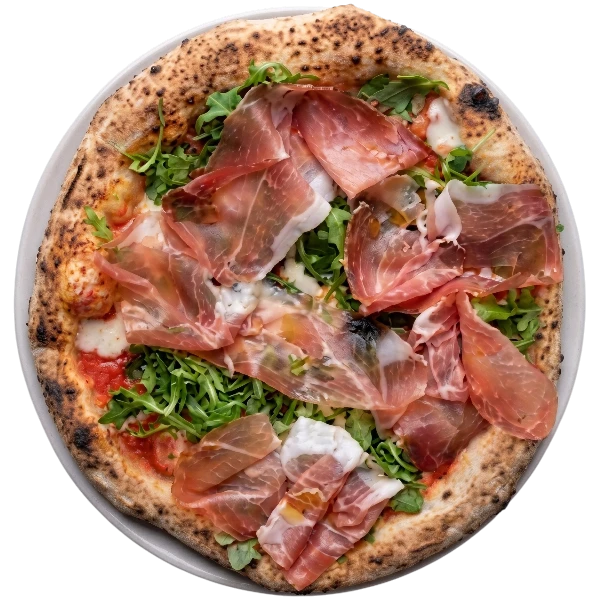
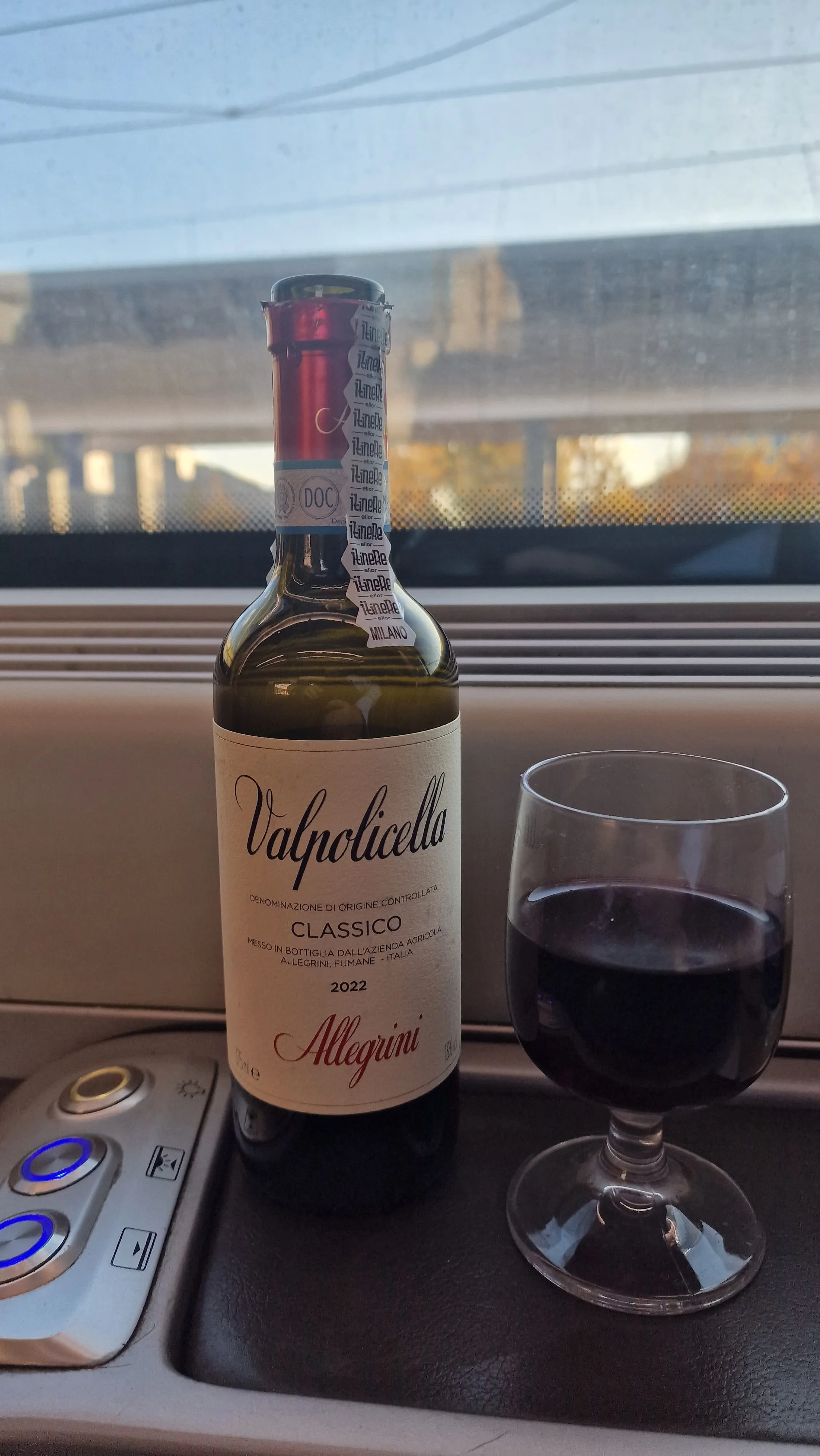
Once we were moving, the geography of Veneto began to blur into Lombardy, and the transition required a drink. In the Executive cabin, wine and snacks were included in the ticket fare, and leaving Verona, the choice of an Allegrini Valpolicella Classico 2022 was obvious. The wine arrived with a plate of prosciutto, and the train simply provided what the moment required.
The wine is built on Corvina Veronese, an indigenous, late-ripening variety that forms the architectural backbone of western Veneto's reds. Corvina is notoriously thick-skinned but vulnerable to rot if deprived of air circulation, demanding well-exposed hillside sites to thrive. When vinified conventionally, it delivers a structural profile defined by sharp Alpine-foothill acidity, low-to-medium fine-grained tannins, and a stark sour-cherry dominance. Here, I am taking the blend as 70% Corvina Veronese and 30% Rondinella — Rondinella being the more dependable, deeply coloured variety that softens Corvina's acidic bite and pads the mid-palate.
Allegrini sources this composite from their hillside parcels across the historic Classico communes — Fumane, Sant'Ambrogio, and San Pietro in Cariano. The terroir here is anchored in Jurassic and Cretaceous limestone, a calcareous-sedimentary soil base with veins of volcanic clay sitting between 150 and 280 metres above sea level. The nearby mass of Lake Garda provides a moderating thermal sweep, ensuring the diurnal temperature shifts necessary to retain the grapes' high-toned aromatic tension. That tension was critical in 2022, a vintage remembered as one of the driest growing seasons on record. Heat and drought pressure typically force earlier picking or yield baked, flabby wines, but meticulous canopy management by the top estates shielded the fruit, producing a remarkably vibrant profile despite the environmental stress.
How the cellar handles that fruit dictates the final identity of the wine. The élevage here is strictly reductive: short fermentation and maturation entirely in temperature-controlled stainless steel, without a single stave of oak. This deliberate avoidance of wood is a structural choice designed to lock in primary red fruit and floral aromatics. The result is an immediate, unmasked expression of its soils, rather than a wine weighed down by cellar ambition.
The Allegrini family has owned land in Fumane since the sixteenth century, though the modern estate was truly defined by Giovanni Allegrini, who pushed for cru-based, quality viticulture in the 1960s when the region was largely drowning in volume-driven mediocrity. His son, Franco Allegrini, spent decades refining the appassimento technique — the process of drying grapes to concentrate sugars and flavours — effectively shaping the contemporary identity of Amarone before his passing in 2022, the same vintage sitting on the fold-out table in front of me. This basic Valpolicella Classico, however, represents the estate’s baseline philosophy: what the land provides before human intervention alters the weight of the harvest.
The tension in European transit usually comes from the friction of delays, the noise of crowds, or the extortionate cost of mediocre food. On Frecciarossa 9729, the tension was the absolute absence of it. The train was perfectly on time, the winter weather outside was crisp, and the pairing of fatty prosciutto against the bone-dry, acidic cut of the Valpolicella was mechanically precise.
Pairs well with