It started with Daniel Chotard's Sancerre 2017 — a bottle that did exactly what classical Sancerre is supposed to do. Limestone in the structure, citrus on the nose, that cool Loire restraint that makes you feel like you understand a place. It was a confident, well-made wine from a well-regarded producer in Sury-en-Vaux, and it gave me a clear entry point into the appellation. For a while, that felt like enough.
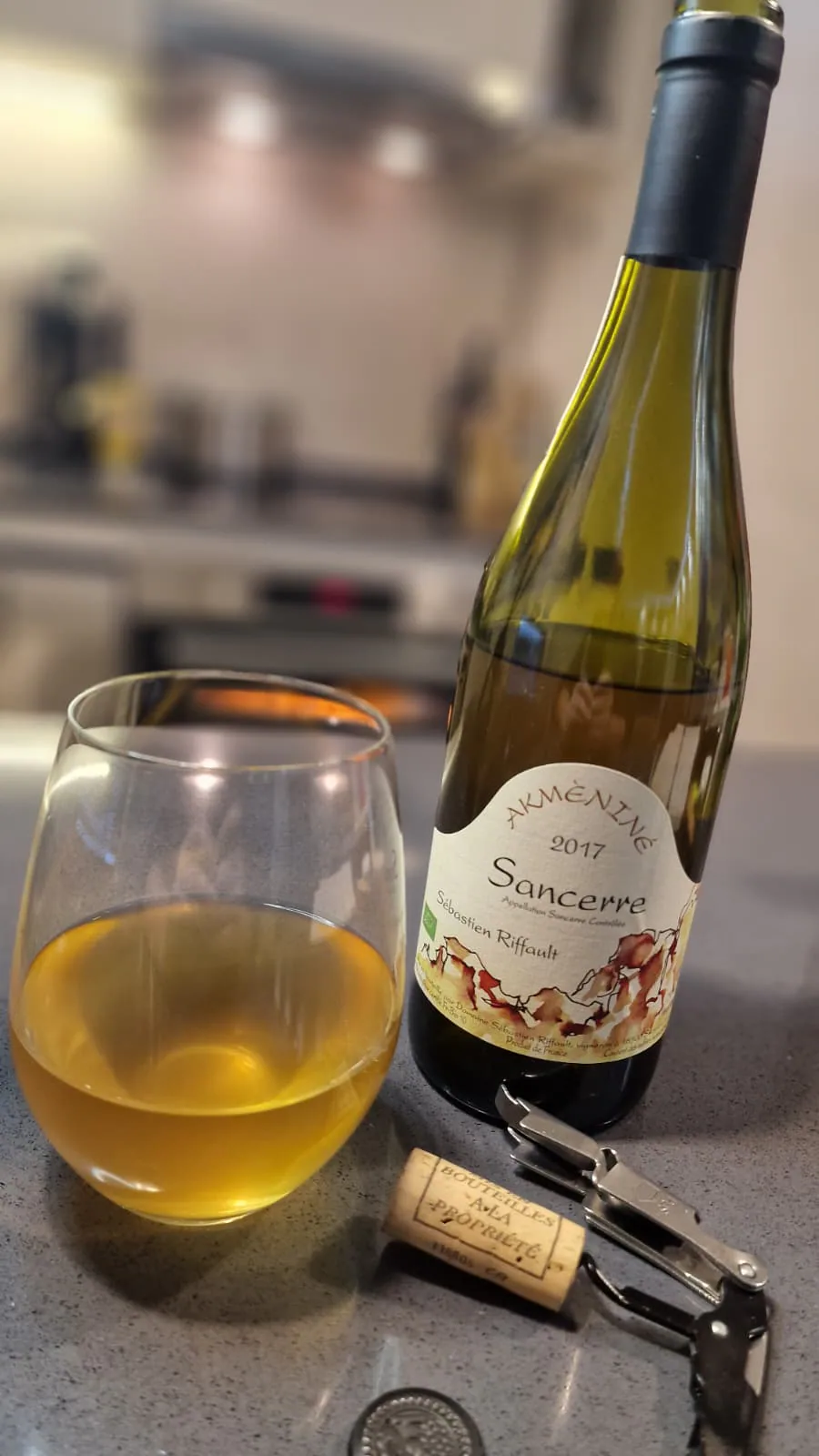
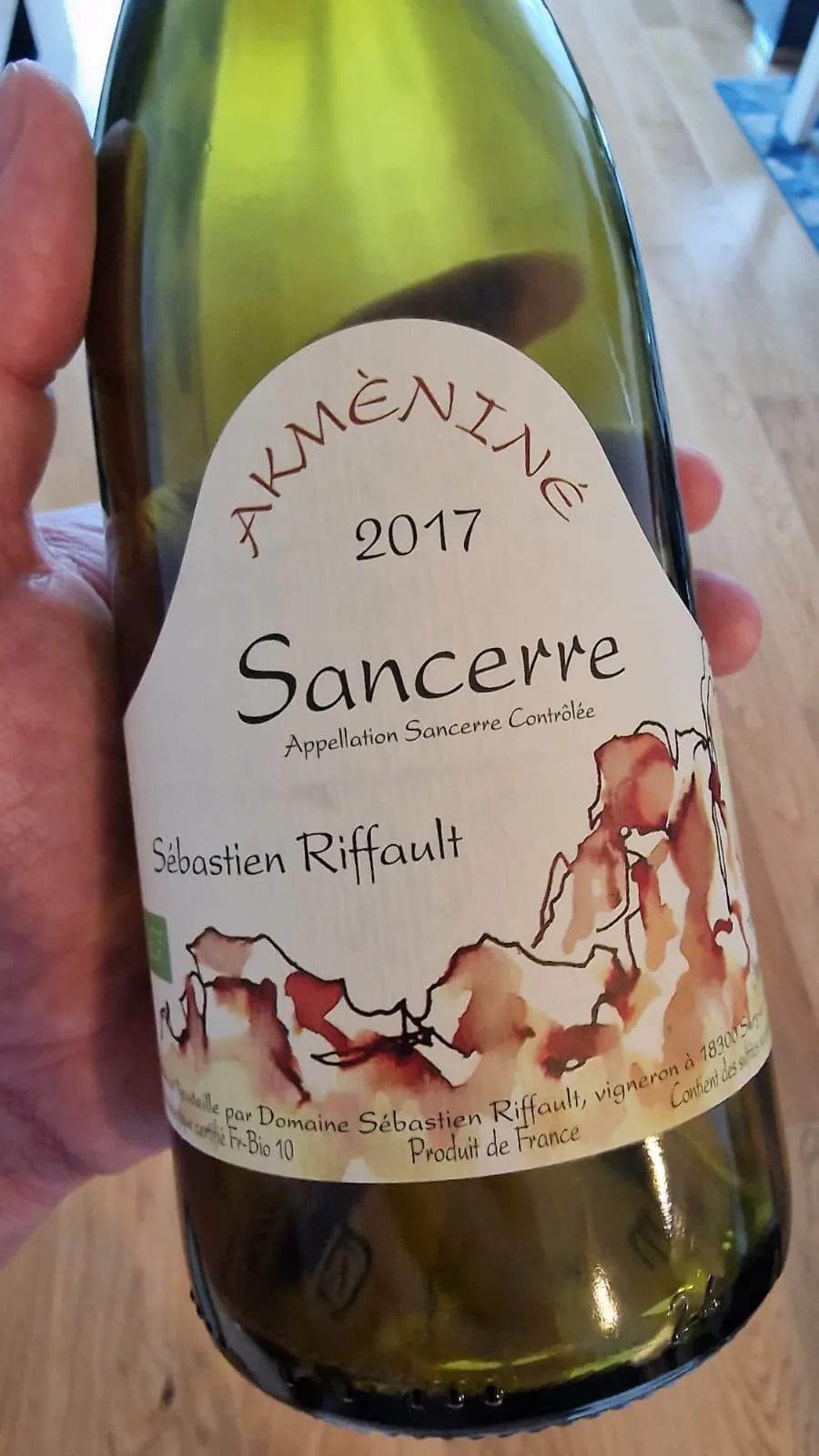
Then I opened Sébastien Riffault's Akmèniné 2017. Same Sancerre AOC, same Sauvignon Blanc, same clay-limestone world of the Upper Loire — but almost nothing else was the same. Riffault harvests deliberately late, waiting until part of the crop has developed botrytis, the noble rot more commonly associated with Sauternes than with dry Sancerre. In the 2017 vintage, up to 30% of the fruit was botrytised, a choice that shifts the wine away from the usual citrus-and-grass profile before anything has even happened in the cellar. From there: wild fermentation, brief skin contact in steel, and 36 months of élevage in used barriques, before bottling with no fining, no filtration, and no added SO₂. The result had almost nothing to do with the citrus-and-grass profile the appellation is known for — texture, salt, dried fruit, honey, and stone instead.
In her "Natural Wine" book, Isabelle Legeron — Master of Wine and one of the most vocal advocates for natural winemaking — includes a pair of microscope images, both of which are reproduced here.
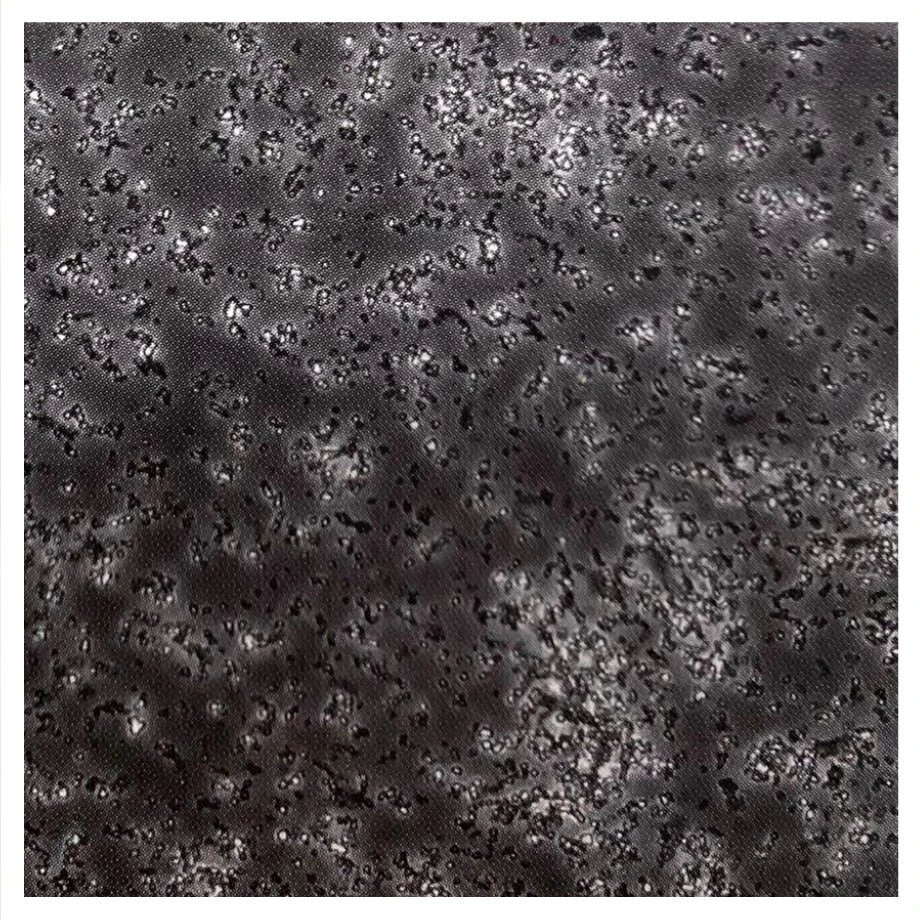 Above: Under the microscope:
a large-store Sancerre (top)
and Riffault's natural Sancerre,
Auksinis (bottom).
Side by side, they show a commercially made Sancerre, flat and nearly featureless under the lens, next to Riffault's Auksinis — another of his natural wines from the same domaine — alive and dense with microbial activity. It is the kind of image that makes a tasting note feel slightly beside the point. Gilles Vergé, a natural winemaker from Burgundy, put the same idea into words: "Looking at it under a microscope, natural wine looks like a small universe". Together, Legeron's images and Vergé's words reframe the whole conversation — this is not about better or worse, it is about the difference between a wine that has been managed into stillness and one that has been allowed to remain alive.
The name Akmèniné means "made of stone" in Lithuanian, a nod to Riffault's wife's Lithuanian origins and to the character of the vineyard itself — a 1.3-hectare parcel on Portlandian limestone in Sury-en-Vaux, with 30-year-old vines farmed biodynamically. What the vineyard shares with Chotard's is the geology; what it does not share is the winemaking logic. Riffault is not trying to escape terroir — he is trying to push it through a form that the appellation has largely forgotten was possible.
That is what these two bottles leave behind as a question. Chotard showed how much precision and calm a classical Sancerre can carry when it has good structure; Riffault showed that the same soil, the same grape, and the same vintage can produce a dry Sauvignon Blanc with botrytis, skin contact, long ageing, and an almost amber logic — without ceasing to be Sancerre. The result does not ask to be judged as a textbook example of the appellation. It asks whether the textbook was ever wide enough in the first place.
Pairs well with